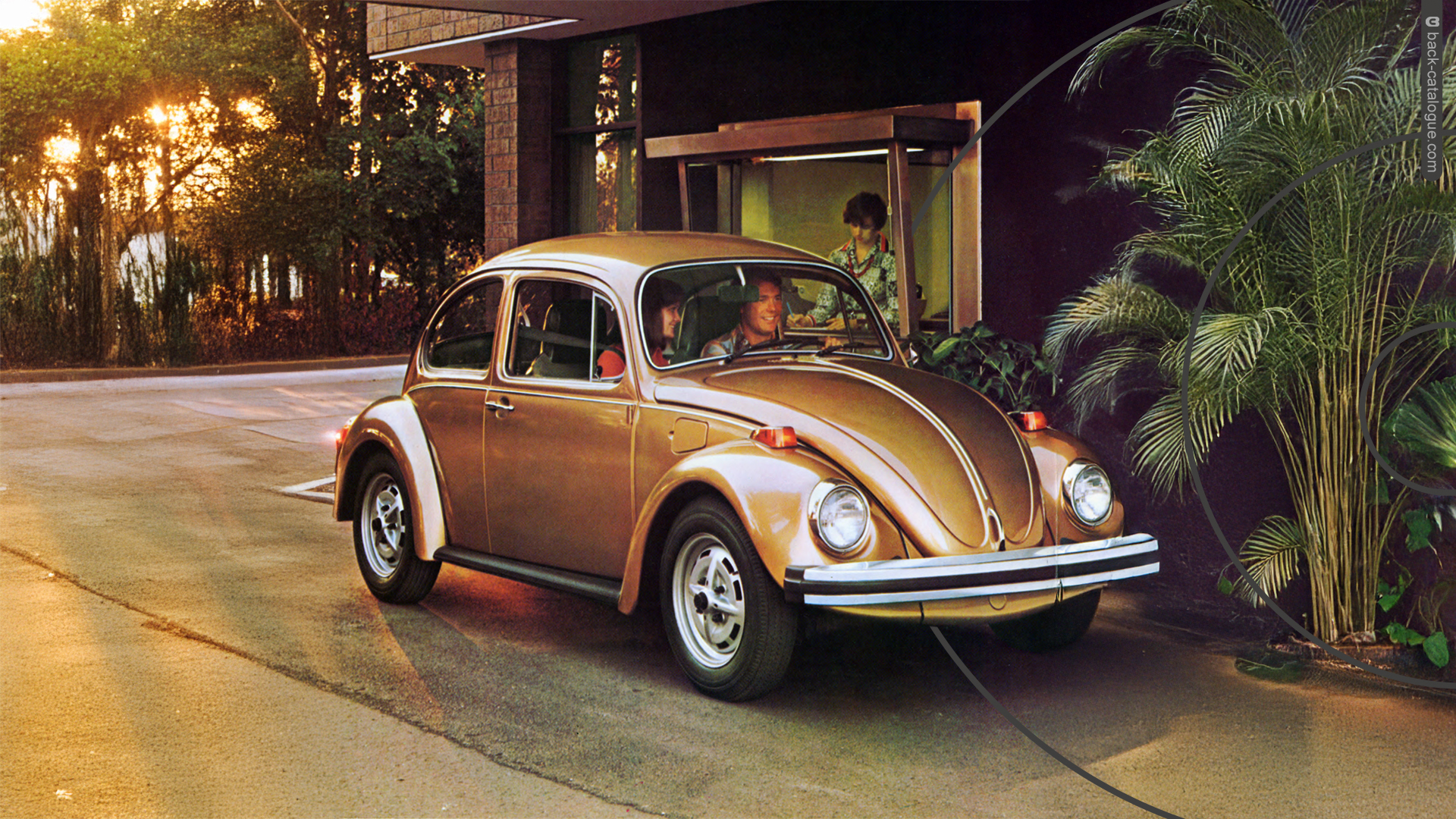
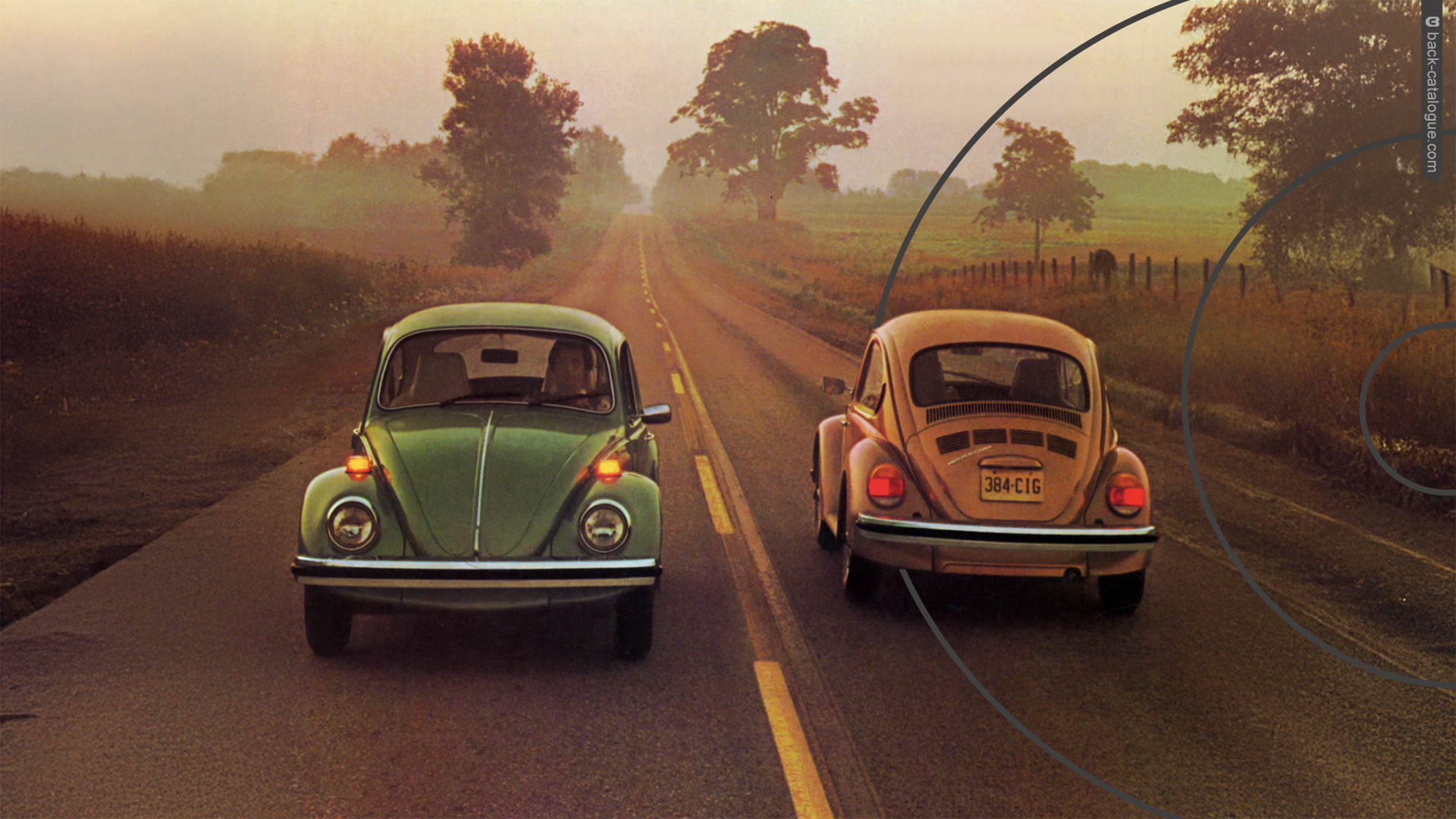
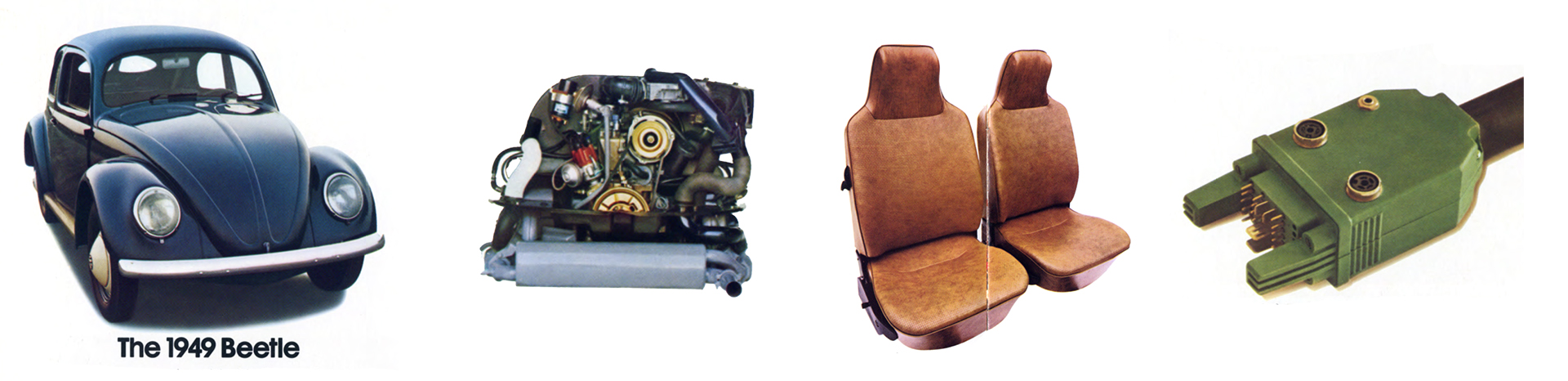
In 1949, two unheralded little cars bearing "Volkswagen" made their way to America. People responded immediately and unanimously: They laughed In a world of sleek Packards, racy Studebakers and streamlined Hud-sons, the Beetle was an oddity. It had an engine in back, a trunk in front, a steel plate underneath. And no radia-tor, anywhere.
Fortunately, a few curious souls stopped laughing To their surprise, the bug averaged 35 miles to the gallon. (And in 1949, gas was up to 22¢.) The rear engine made for superb traction, so the car buzzed through mud, snow and ice. Its parkable size made it easy to maneuver in tight spots. The Beetle was reliable, economical and required little in the way of maintenance.
Before long, it was the Volkswagen owners who were laughing. All the way to the bank.
Engine 4cyl (cc)
0-50 mph (sec)
Top Speed (mph)
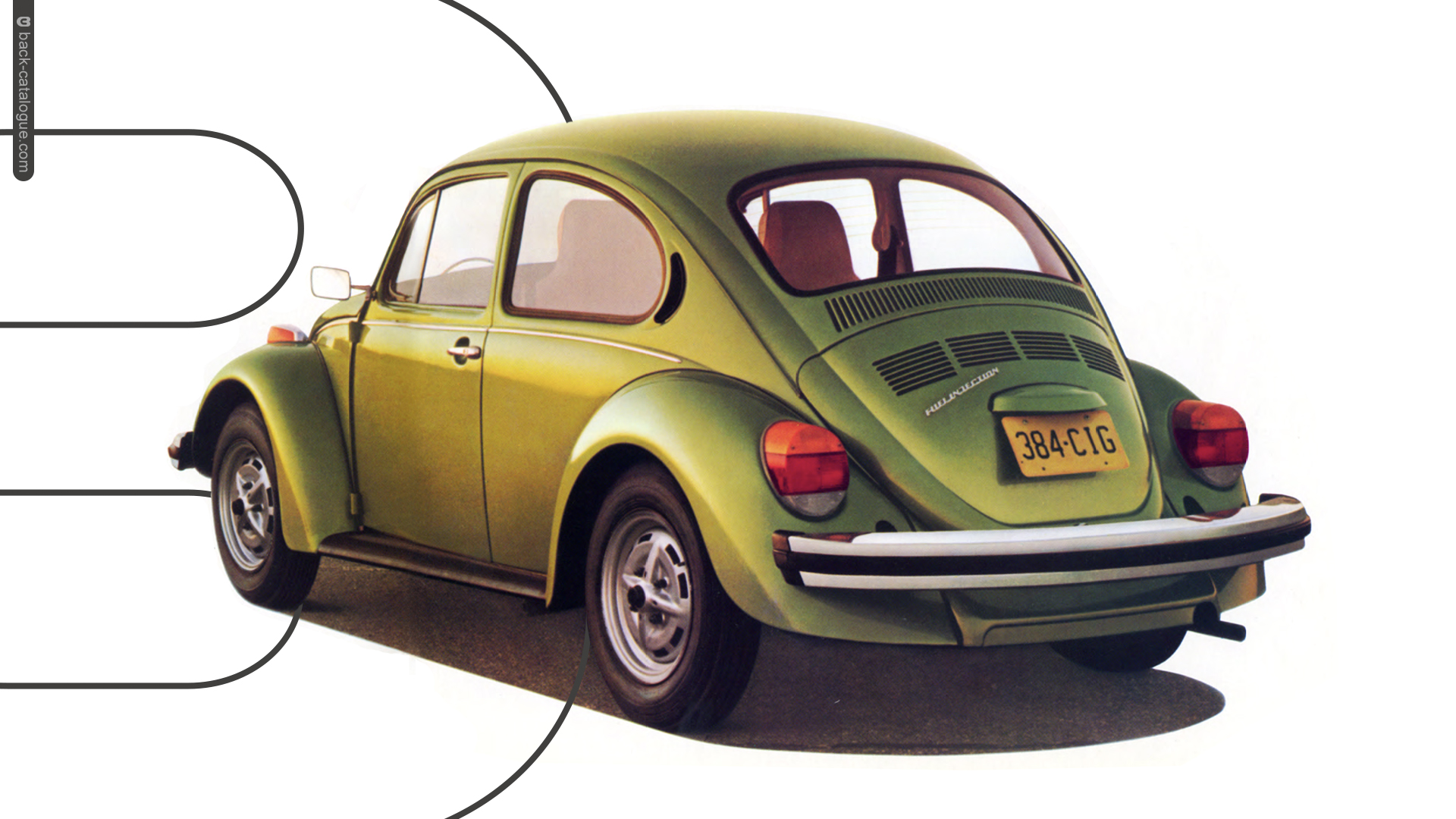
You'd think we'd have had the good sense to leave well enough alone. Instead, we had the good sense to make well enough even better.
Since 1949, we've made some 30,000 changes in the Beetle, making gradual improvements here and there, then improving the im-provements.
While other car makers have been toying with tail-fins and opera windows, we've been concentrating on economy, performance and safety.
Over the years, we've increased the size and horsepower of the Beetle's engine, for better acceleration. The braking system has been improved for surer stops.
The window areas have been enlarged for better visibility.
The front seats have come to be comfortable, contoured buckets. For safety's sake, the Beetle's taillights became almost as big as headlights.
In 1972, we unveiled VW Computer Analysis, which enables the Beetle to tell of any little problem before it has a chance to become a big problem.
And last year, we introduced a fuel injection system that raised the Beetle's already impressive gas mileage figures.
In short, the Beetle has been getting better all the time. And this year is no exception.
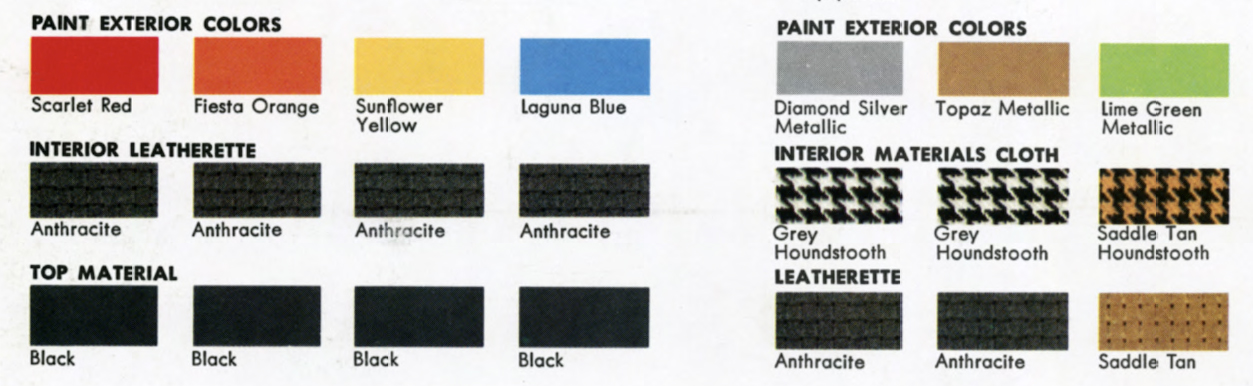
There's one improvement that affects the way the Beetle looks, rather than the way it works. There are three new colors-metallic silver, metallic green and metallic blue But they're still applied the old Volkswagen way, with each car receiving a total of 4 meticulously applied coats of paint.
Other changes for 1976 include wall-to-wall carpeting, sport wheel rims and an electric rear-window defogger. The comfortable flow-through ventilation system is now assisted by a two-speed fresh air blower, for even more comfort. Bumpers, door handles, headlight rims and turn-signal housings are all chrome-plated.
After 27 years and almost 19 million cars, we're happy to report that this year, we've come up with the almost-perfect Beetle.
Take one for a test drive today. It'll be another whole year before you find a better one.
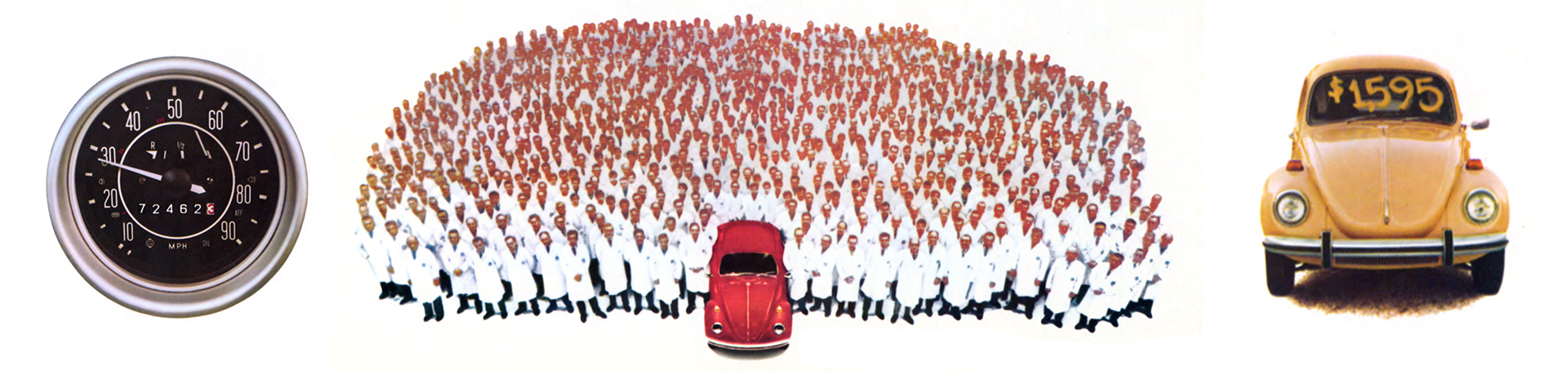
During these unsure times, there are very few sure in-vestments. One is to put your money in a bank. Another is to put your money in a Volkswagen. Either way, you can be certain that the dollars you worked hard for will be working hard for you.
Beetles, after all, are the cars famed for their ability to last and last. That's because we at VW believe in "planned longevity," as opposed to planned obsolescence. We put our cars together to stay together.
Slowly. Carefully. With more than a thousand inspectors looking over each other's shoulder. (In a recent Road & Track survey of nine leading subcompacts, the Beetle received the highest "reliability" rating.) Along with everything else, the bug's value holds up, too. As a look at the used-car ads or the N.A.D.A. Used Car Guide will readily demonstrate.
But you not only save money when you buy and sell a Beetle. You save money when you own one, too. According to EPA estimates, the bug delivers 34 mpg on the highway, and 22 mpg in the city. (Your actual mileage will vary, depending on where and how you drive, your car's condition and optional equipment.)
It barely sips oil. And VW parts are readily available. As if all this isn't comforting enough, there's the VW Owners Security Blanket, one of the best car coverage plans in the industry. Before spending money on a car, consider investing in a Volkswagen Beetle. It's as careful with your money as you are.
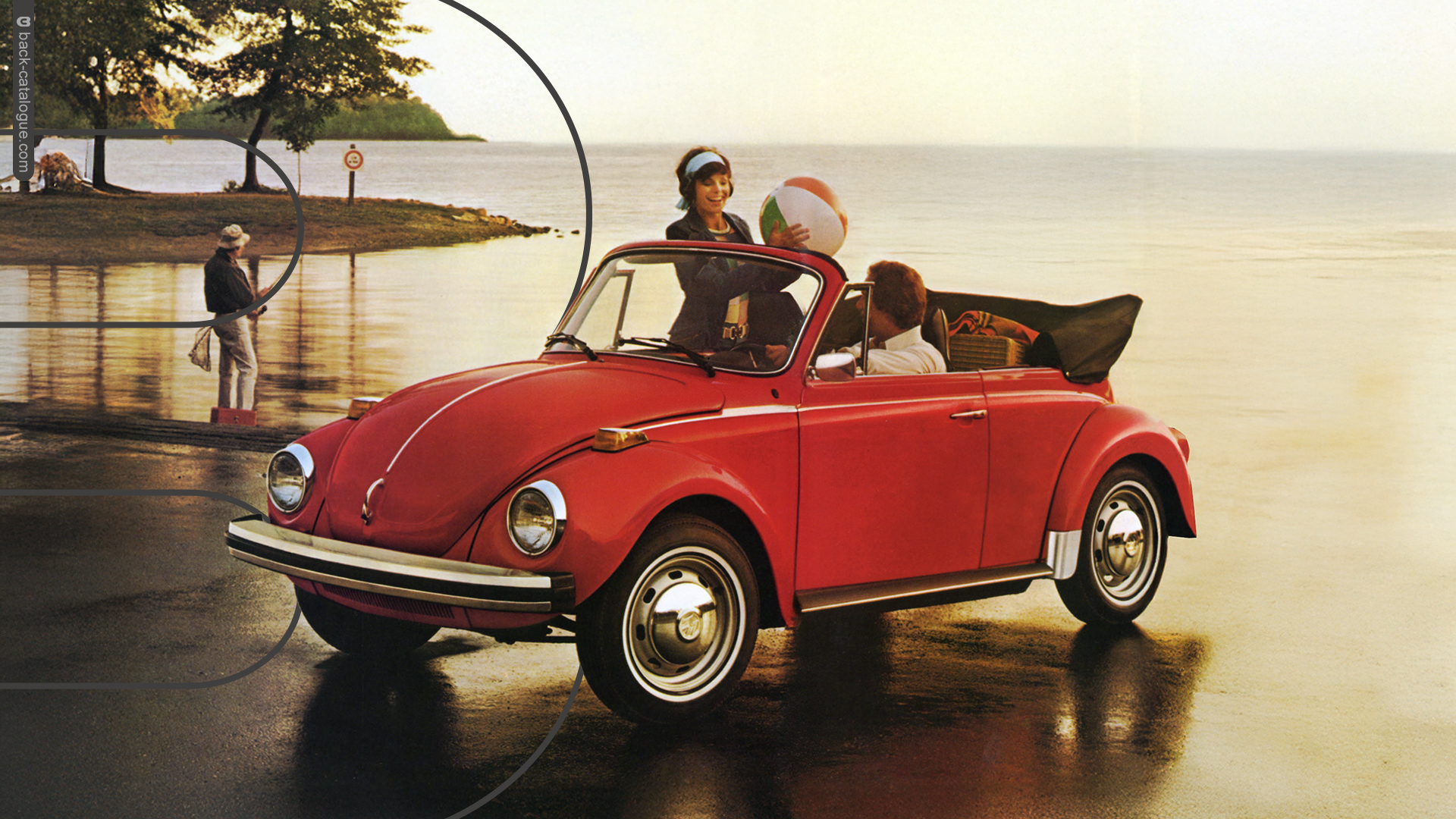
This year, Volkswagen offers, among other options, the sun, the moon and the stars. Which all come your way courtesy of the 1976 Beetle Convertible.
Ours is one of the most inexpensive convertibles you can find. But that doesn't mean we cut any corners. Our top, for example: On the outside it's top-quality vinyl, windproof, waterproof and easy to clean. On the inside it's insulated and fully upholstered (Even the metal braces are covered.) It flips up and down with the flick of a wrist. (There are no complicated motorized devices to get stuck when you're stuck in a rainstorm.)
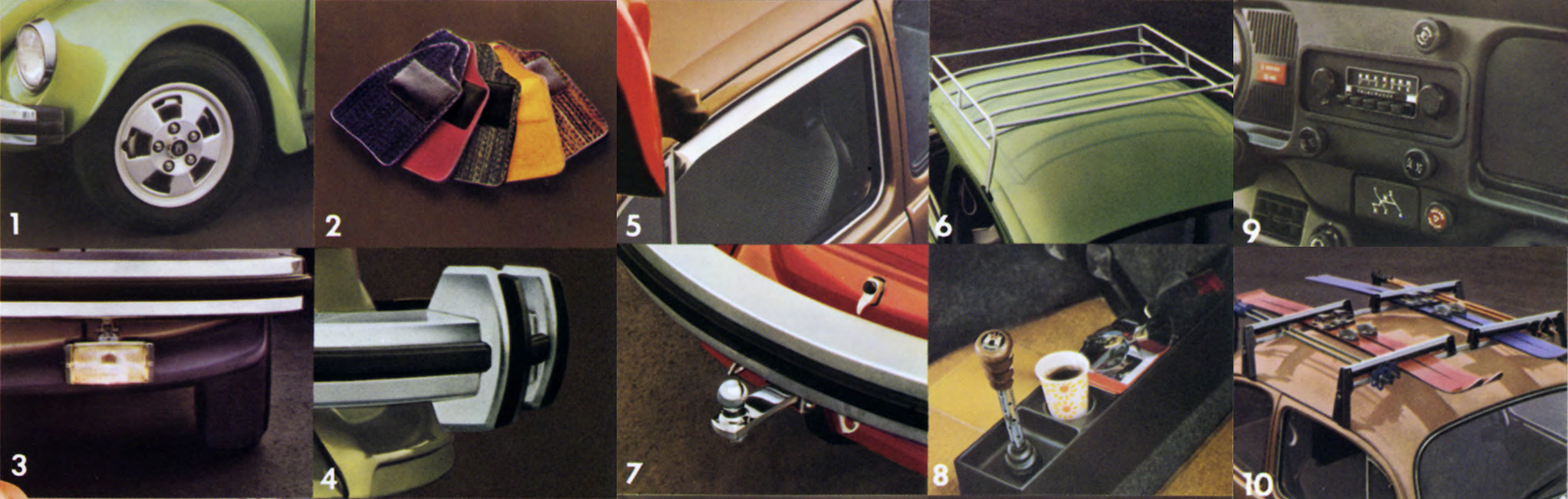
In addition, the rear window is a real window. Made of glass, not plastic. Under the top is the same dependable and economical Volkswagen you get when you buy a regular Beetle. Which means that this year, you can definitely afford not to have a roof over your head. You can also afford to choose from many accessories. Like mag-type wheel covers (1). Floor mats (2). Fog lamps and a front spoiler (3).
Bumper overriders (4). Vent shades (5). Even a tunnel console and a sports gearshift lever (8). A luggage rack (6), lockable ski rack (10) or trailer hitch (7) can help you bear a heavy load.
An AM/FM radio (9) is a sound investment. As is optional air conditioning (9). After all, when you own an economy car like the Beetle, you can afford the luxury of adding on to it.
| Engine | |
| Type | Horizontally opposed, rear mount |
| No. cylinders | 4 |
| Displacement | 1584 cc. (96.7 cu. in.) |
| Horsepower-SAE Net | 48 @ 4200 гр |
| Cooling | Air-cooled, with blower |
| Valve drive | Overhead valves, with blower |
| Fuel/ Air supply | AFC-Fuel injection |
| Drive Train | |
| Type | Rear wheel drive |
| No. speeds | 4 forward, 1 reverse, synchronized |
| Final drive | Ring and pinion, double-jointed drive axles |
| Clutch | Single disc, dry |
| Electrical System | |
| Rated voltage | 12 Volts |
| Alternator | 50 Amp maximum |
| Battery | 12 Volt/45 Amp/Hour |
| Chassis & Suspension | |
| Frame | Semi-unitized, platform chassis |
| Suspension | 4-wheel independent, front stabilizer bar, negative steering roll radius |
| Springing | Front/Coil springs, Rear/Torsion bars |
| Service brakes | Dual circuits, drum brakes |
| Parking brakes | Mechanical, operating on rear wheel |
| Rim size | 4½ J × 15 |
| Tire size | 6.00 x 15 |
| Steering | Rack and pinion |
| Dimensions | |
| Wheelbase | 95.3 inches |
| Overall length | 164.8 inches |
| Width | 62.4 inches |
| Height (unloaded) | 59.1 inches |
| Ground clearance (loaded) | 5.9 inches |
| Turning circle (curb to curb) | 29.5 feet |
| Performance | |
| Top speed | 81 mph |
| Acceleration 0-50 | 13.0 sec. |
| Fuel consumption | 33 mpg-Highway |
| Fuel consumption | 22 mpg-City |
| Engine | |
| Type | Horizontally opposed, rear mount |
| No. cylinders | 4 |
| Displacement | 1584 cc. (96.7 cu. in.) |
| Horsepower-SAE Net | 48 @ 4200 гр |
| Cooling | Air-cooled, with blower |
| Valve drive | Overhead valves, with blower |
| Fuel/ Air supply | AFC-Fuel injection |
| Drive Train | |
| Type | Rear wheel drive |
| No. speeds | 4 forward, 1 reverse, synchronized |
| Final drive | Ring and pinion, double-jointed drive axles |
| Clutch | Single disc, dry |
| Electrical System | |
| Rated voltage | 12 Volts |
| Alternator | 50 Amp maximum |
| Battery | 12 Volt/45 Amp/Hour |
| Chassis & Suspension | |
| Frame | Semi-unitized, platform chassis |
| Suspension | 4-wheel independent, front stabilizer bar, negative steering roll radius |
| Springing | Torsion bars |
| Service brakes | Dual circuits, drum brakes |
| Parking brakes | Mechanical, operating on rear wheel |
| Rim size | 4½ J × 15 |
| Tire size | 6.00 x 15 |
| Steering | Worm and roller |
| Dimensions | |
| Wheelbase | 94.5 inches |
| Overall length | 163.4 inches |
| Width | 61.0 inches |
| Height (unloaded) | 59.1 inches |
| Ground clearance (loaded) | 5.9 inches |
| Turning circle (curb to curb) | 34.4 feet |
| Performance | |
| Top speed | 81 mph |
| Acceleration 0-50 | 13.0 sec. |
| Fuel consumption | 33 mpg-Highway |
| Fuel consumption | 22 mpg-City |