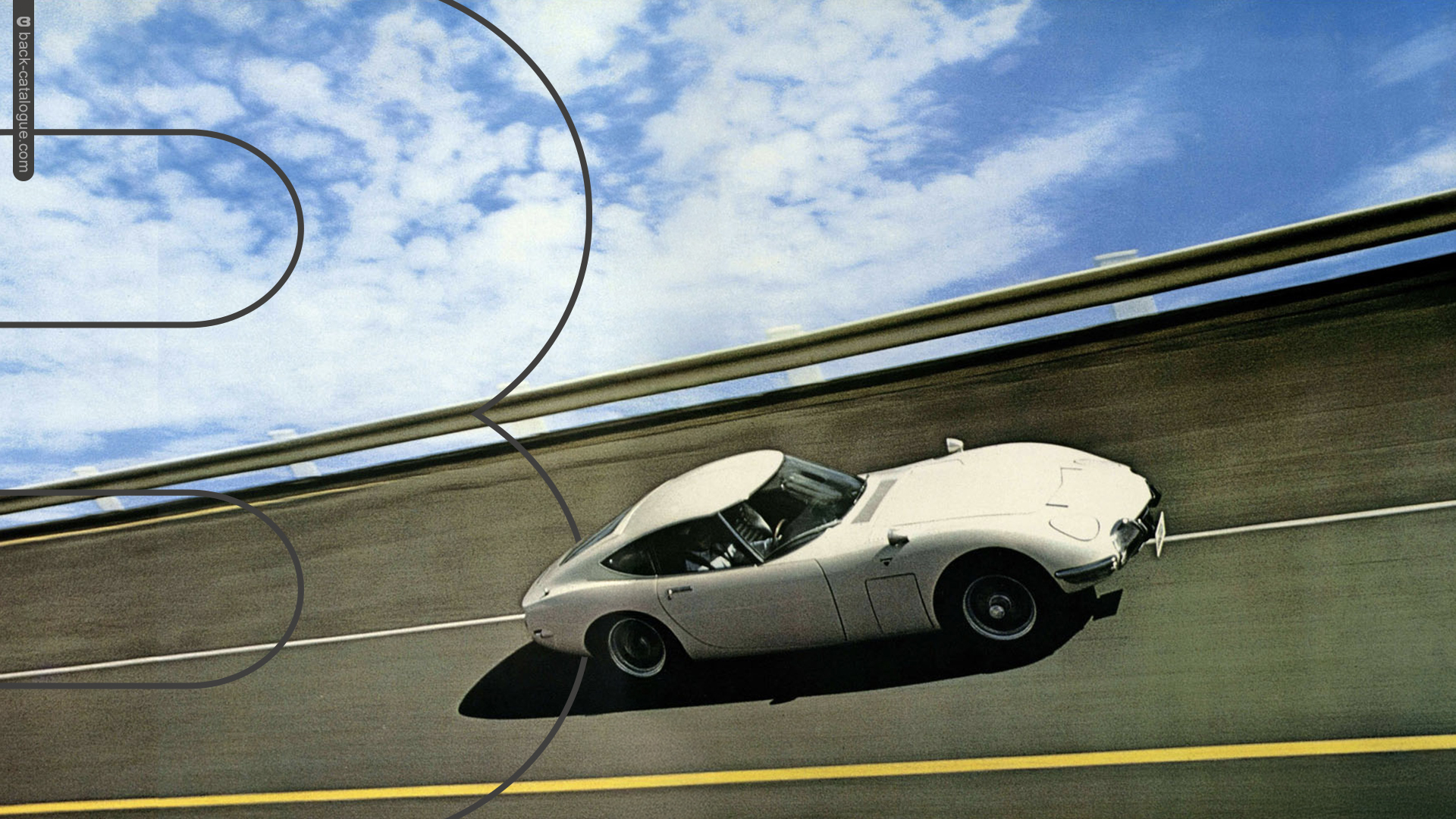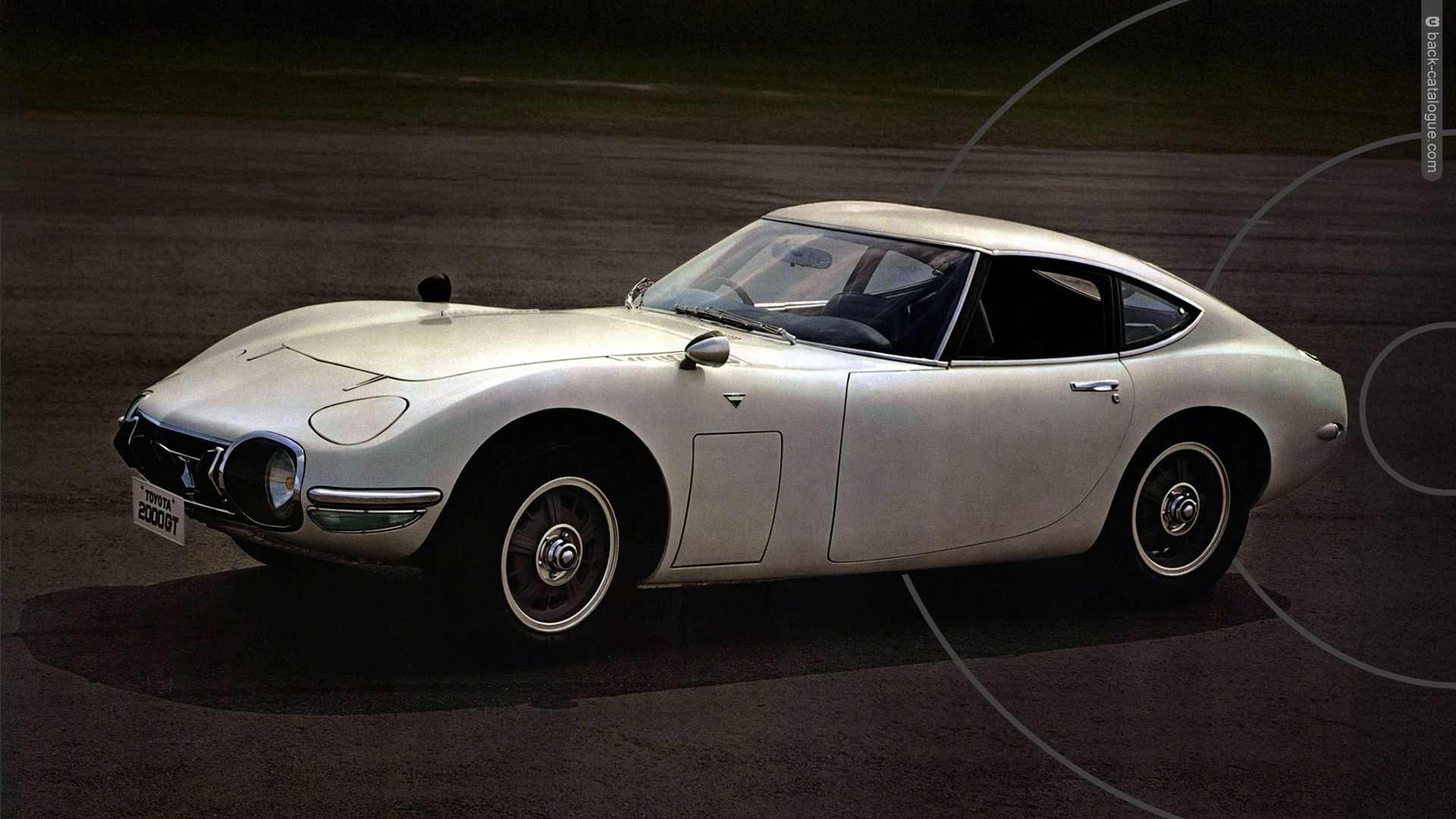

Until now, our country had no sports car that offered the pride and thrill of ownership together with the joy and satisfaction of driving. The Toyota 2000GT is the finest grand touring car from Japan’s leading manufacturer, Toyota. Worldwide, in the 2000 cc class, there is no other sports car so high-performing and so luxurious.
In October 1966, under JAF and FIA regulations, the Toyota 2000GT completed a “super-high-speed endurance trial,” averaging 206.18 km/h over 78 hours and 16,000 km. It set three world records and thirteen international records. Notably, the world-record category had no displacement limit—records that even purpose-built racing machines and large-displacement cars had failed to break were surpassed by this car.
Top speed 220 km/h; maximum cruising speed 205 km/h. 0–400 m in 15.9 seconds; 0–100 km/h in 8.6 seconds. Maximum output 150 PS/6,600 rpm; maximum torque 18 kg-m/5,000 rpm. And yet, the car remains perfectly composed even in crowded city traffic—“luxurious practicality” is its boast.
Engine (cc)
Power (PS)
Top Speed (km/h)
The 2000GT embodies all of Toyota’s cutting-edge engineering: a DOHC inline-six engine, fully independent suspension, Japan’s first four-wheel disc brakes, and a five-speed transmission with overdrive—each feature at world-class level. This car is the very crystallization of Toyota’s advanced technology.
From the styling design down to each individual component, everything in the Toyota 2000GT is made in Japan. Toyota has consistently advanced its technology by its own strength, pioneering new paths rather than relying casually on foreign know-how. This car showcases Japanese automotive technology on the world stage.
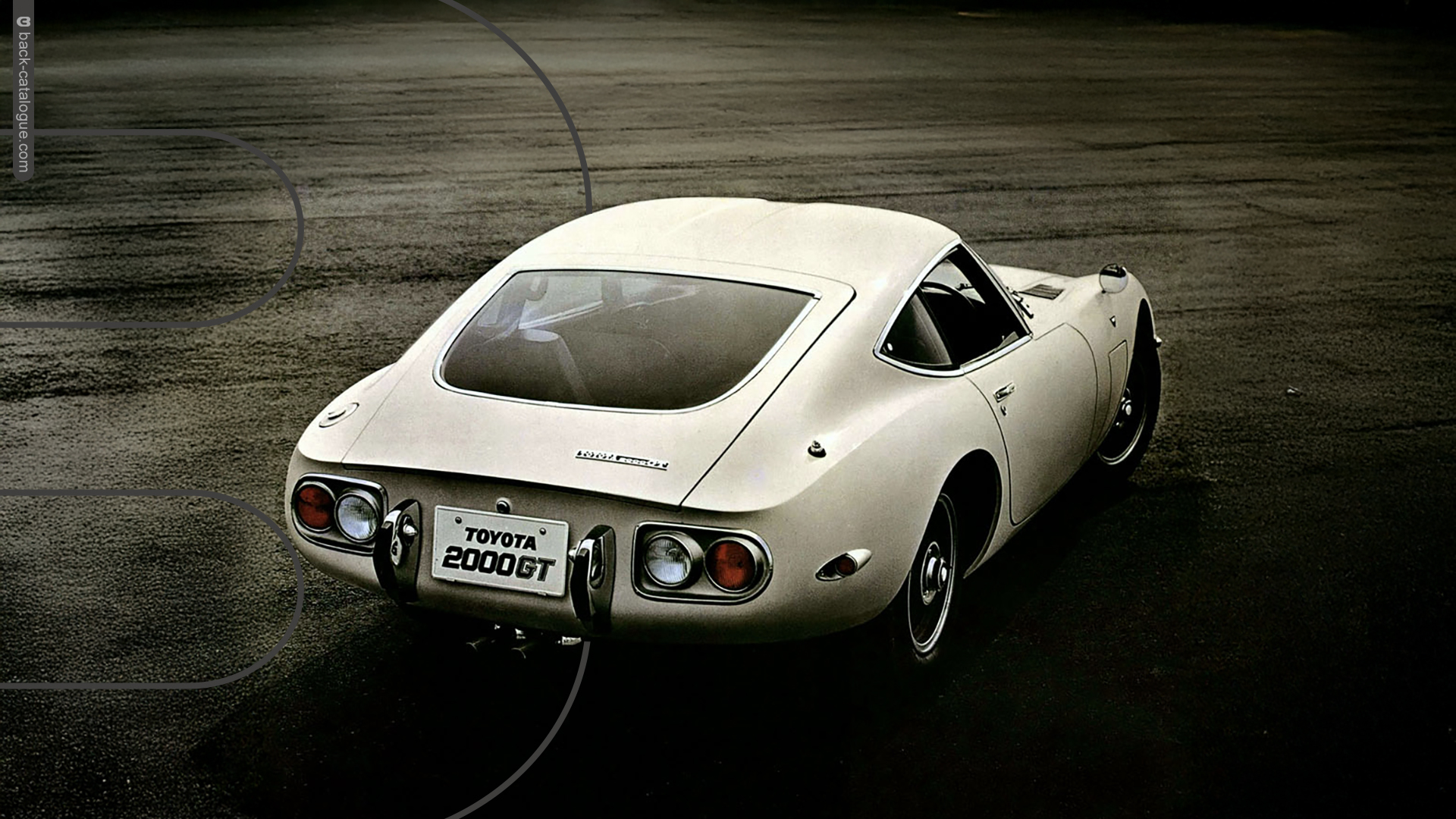
With aerodynamics pushed to the extreme, the body is both splendid and full of vigor. This is not design for design’s sake: in development, the positions and sizes of the engine, chassis, and interior dimensions were set first, then wrapped in an ideally shaped body. It has been met with overwhelming praise in the film 007 and at international motor shows.
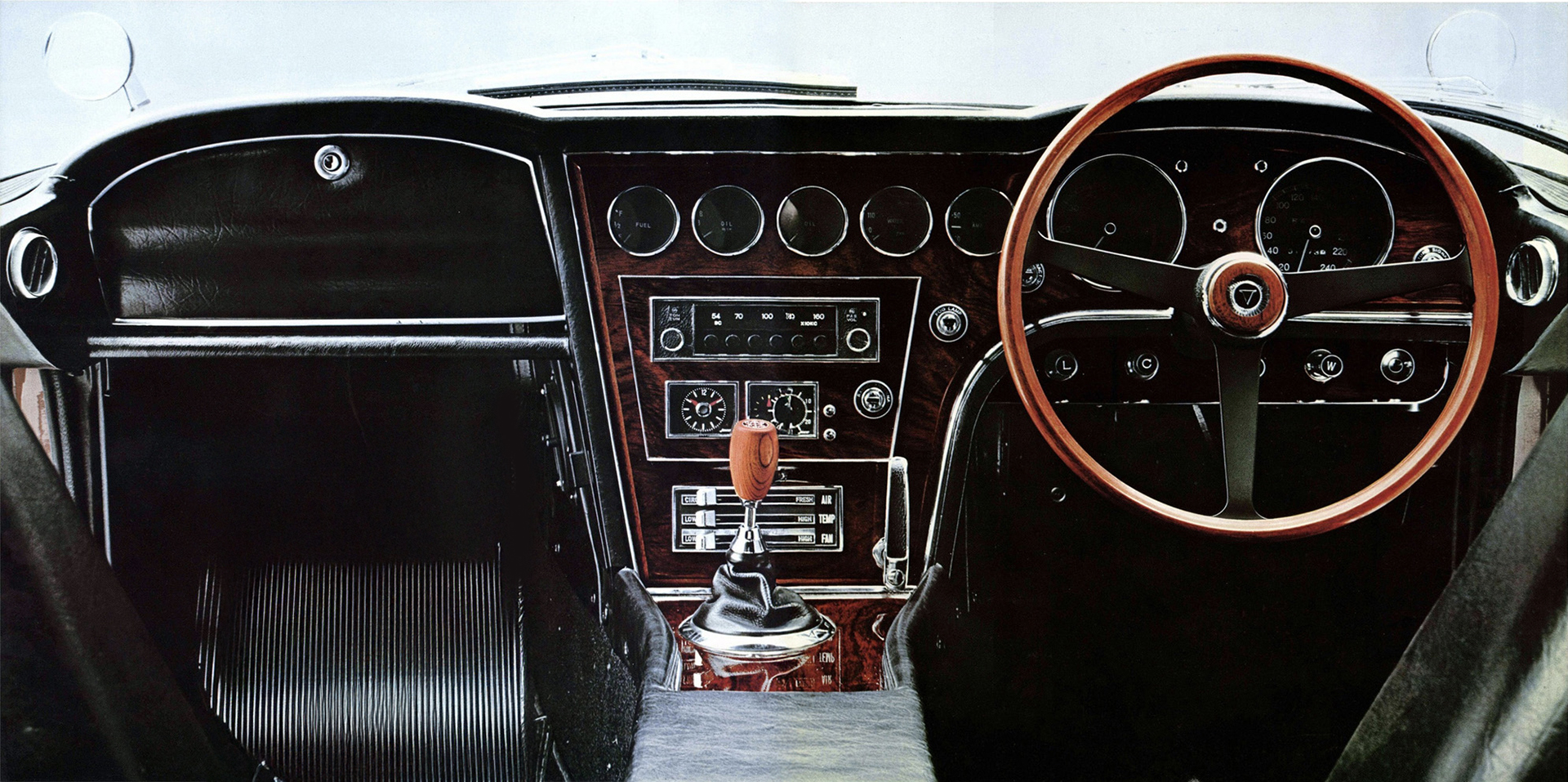
The cabin is pure luxury worthy of the finest sports car: generous woodgrain around the instrument panel, gauges aligned to the driver’s line of sight, a thickly padded dashboard, and reclining bucket seats. Everywhere you look, an elegant, composed, and authentic atmosphere prevails.
The Toyota 2000GT is not a mass-produced car. Each one is built individually: engines are tuned to peak condition; every functional component is carefully selected; the finish of the body and interior is meticulous; and after completion, each car undergoes rigorous road testing. This is the conscientious craftsmanship of which we are proud.
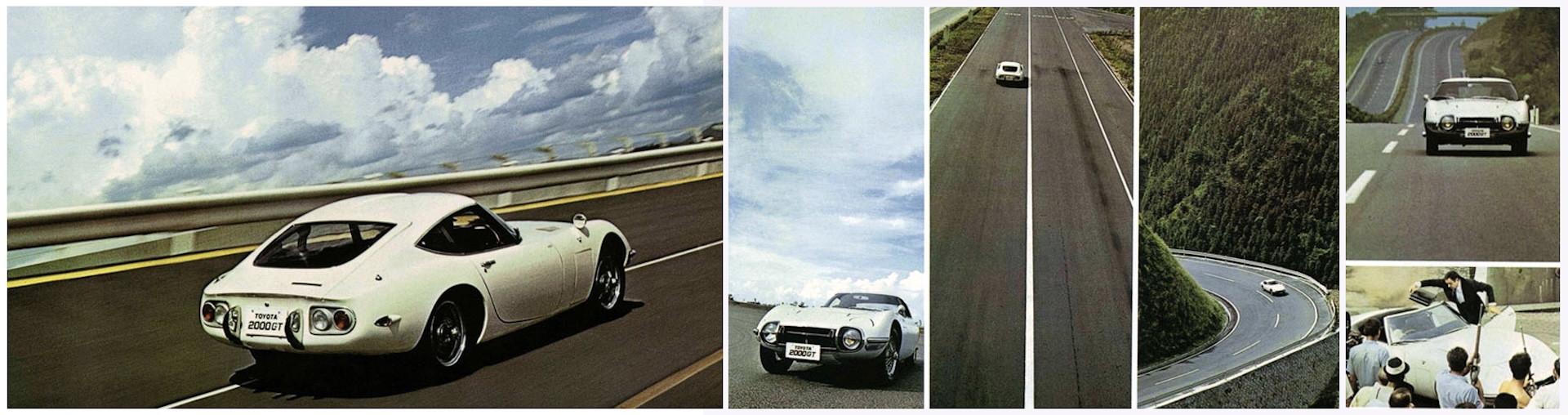
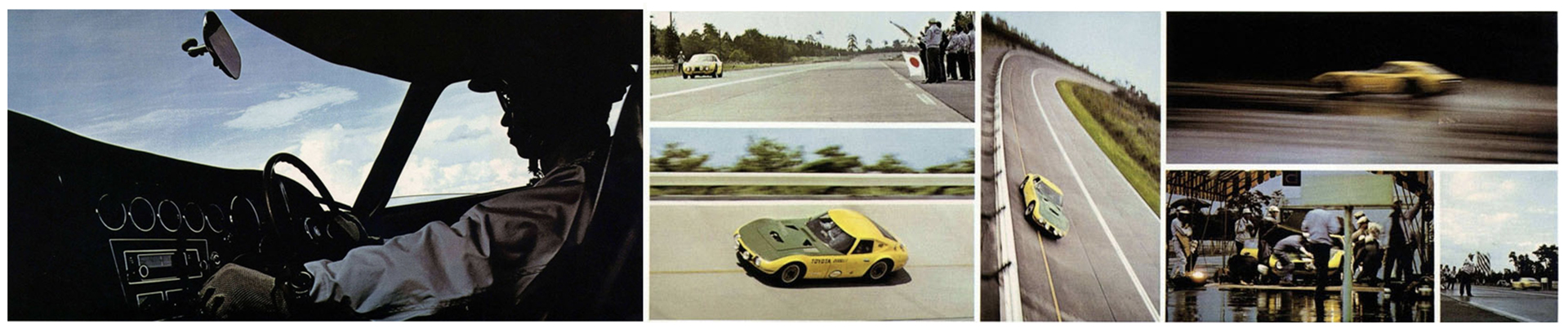
Holder of 3 world records and 13 international records.
The Toyota 2000GT’s ultra–high-speed endurance trial was conducted under the regulations of the FIA/IDP (Fédération Internationale de l’Automobile / International Sporting Commission) and JAF (Japan Automobile Federation). The test took place over three nights starting on October 1, 1966, at the Yatabe test track.
Despite the influence of Typhoon No. 28, which brought rain and strong winds, the Toyota 2000GT continued running for 78 hours straight, covering 16,000 km at an average speed of 206.18 km/h.
As a result, it set three new world records and thirteen new international records, brilliantly proving both Toyota’s world-class engineering and the outstanding performance of the Toyota 2000GT.
This achievement became the first FIA-certified record ever established in Japan.
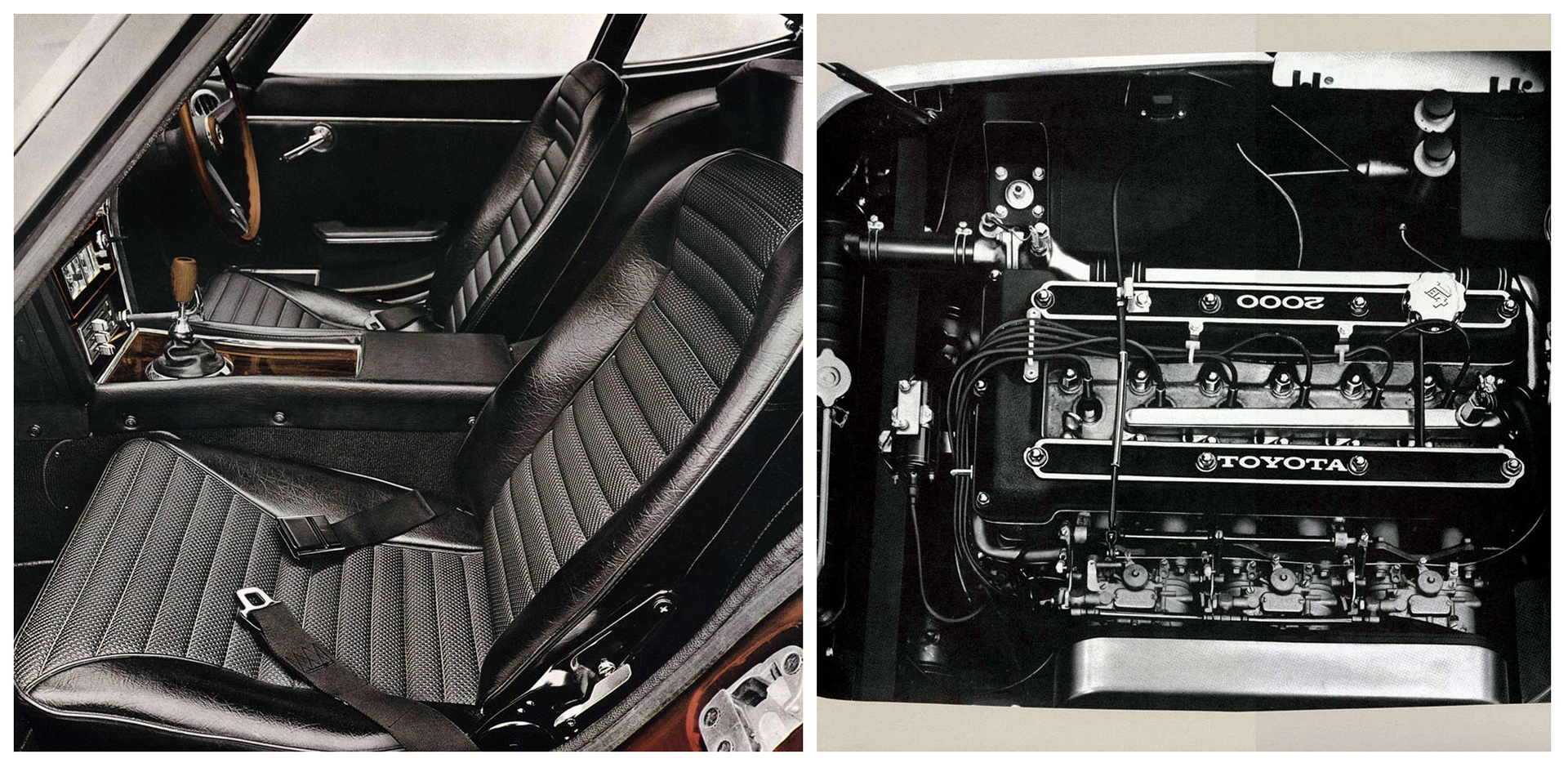
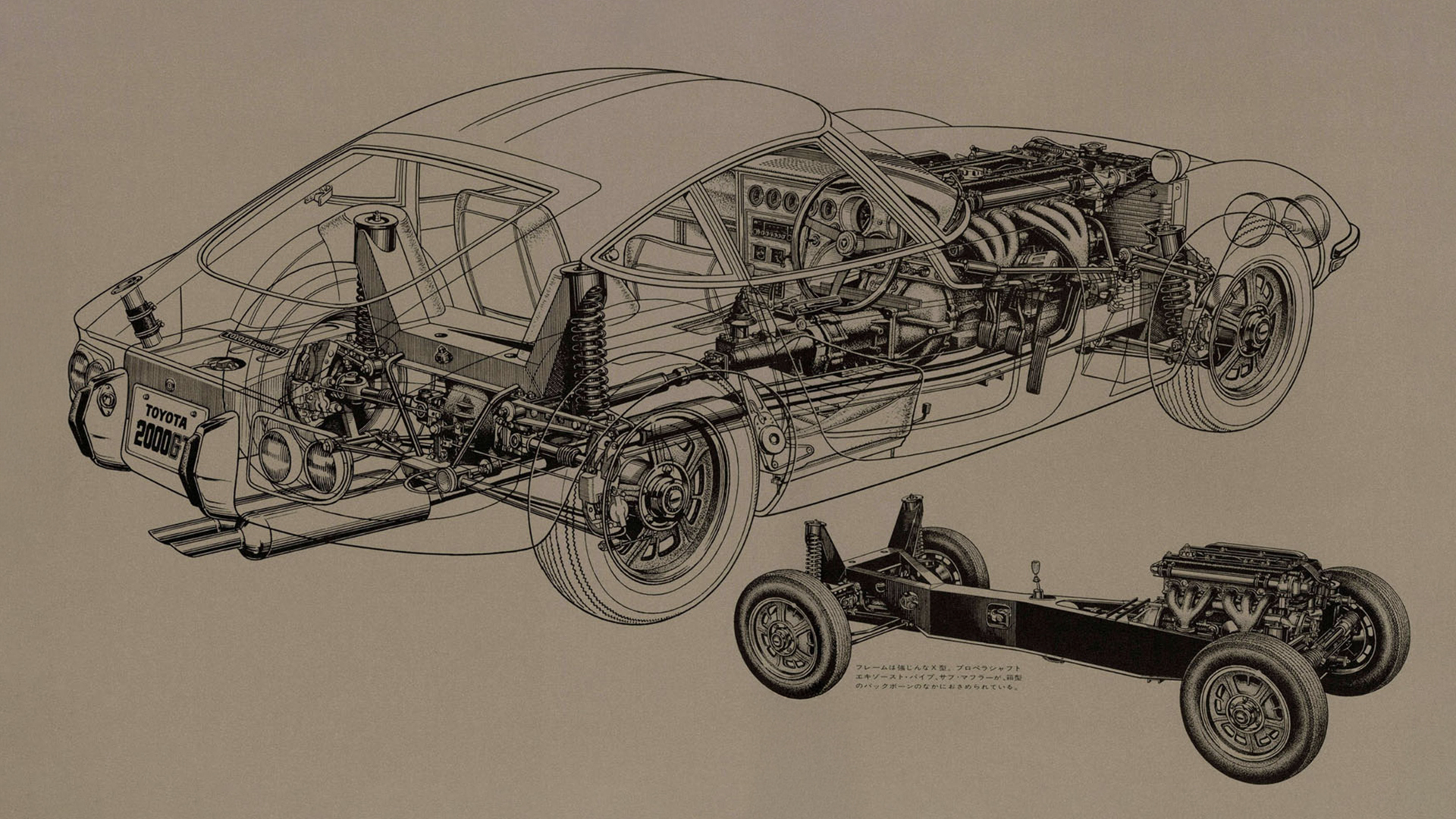
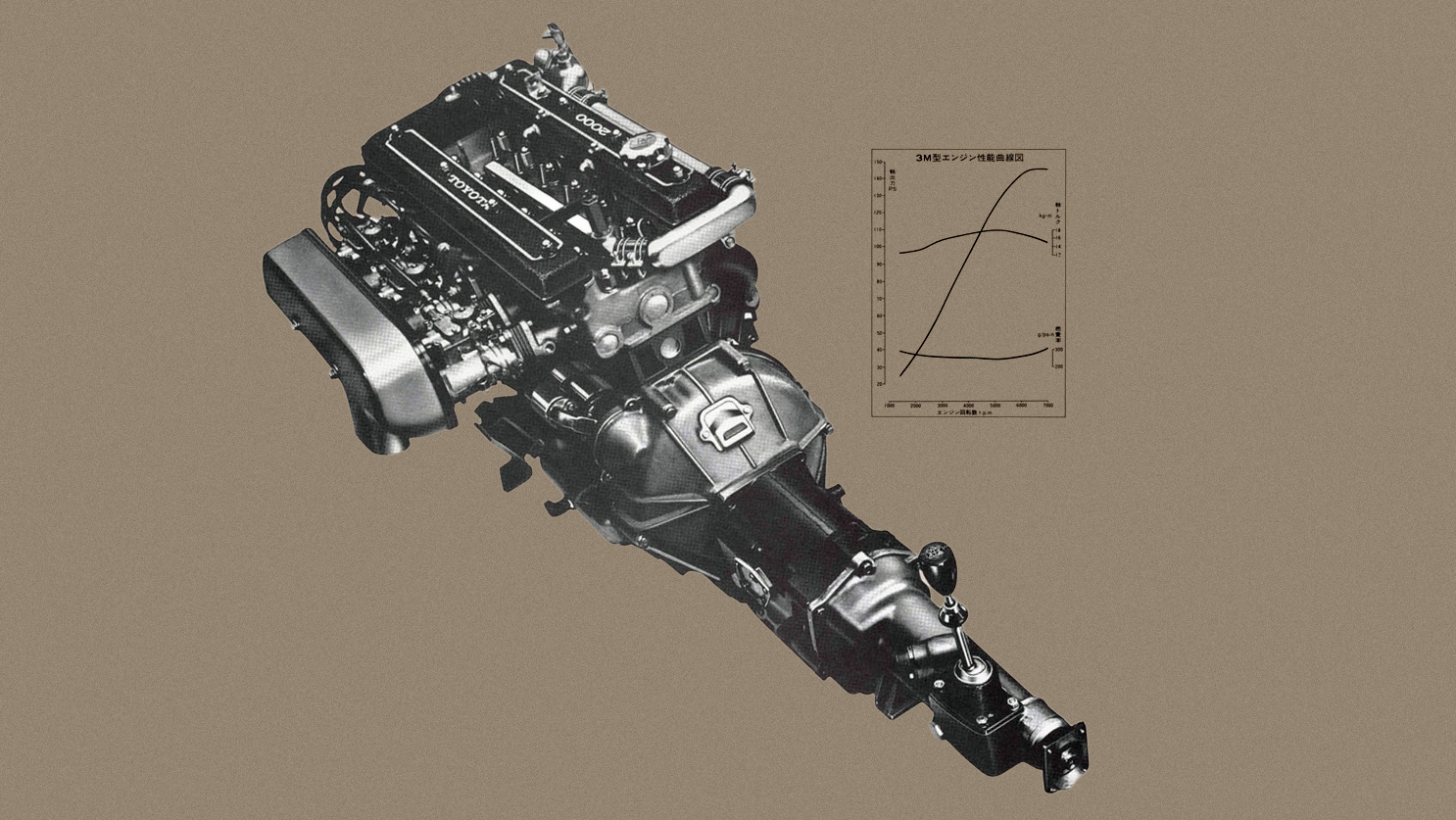
The engine that gives the Toyota 2000GT its astonishing performance is a highly tuned version based on the M-type engine used in the Crown. It is a 2,000 cc inline six-cylinder DOHC engine.
Thanks to the adoption of double overhead camshafts and a triple carburetor setup by Mikuni-Solex, it produces an impressive 150 PS at 6,600 rpm, enabling the car to reach a top speed of 220 km/h.
The engine’s durability is also exceptional. In the high-speed endurance trial where it achieved 16 world and international records, the 2000GT ran continuously for 78 hours, covering 16,000 km at an average speed of 206.12 km/h. Despite such extreme conditions, engine wear was minimal — a vivid demonstration of the engine’s outstanding precision, tuning, cooling, and overall design quality.
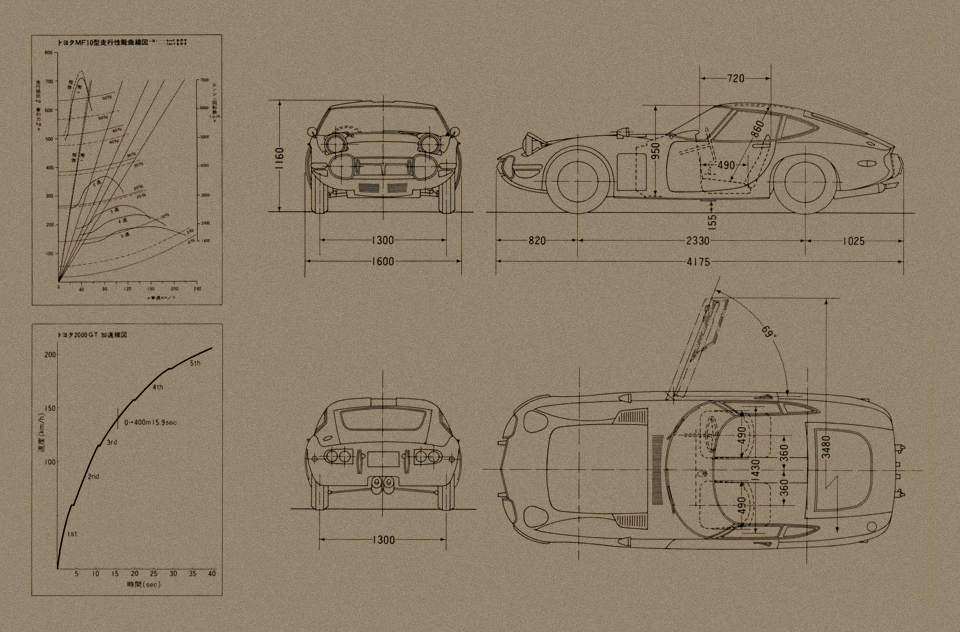
The Toyota 2000GT embodies the spirit of a true high-performance sports car in every detail.
Take the driving position, for example: based on the pedal layout, three types of adjustment are possible — forward and backward seat movement, seat-back recline angle, and steering wheel reach. This allows each driver to find their ideal stretch-arm driving posture.
The array of instruments is housed beneath a deep hood, with completely non-reflective glass. Each gauge is carefully angled toward the driver’s line of sight for optimum visibility. In preparation for rally use, even a stopwatch is provided. In addition to a dome light, a courtesy lamp illuminates the right side of the instrument panel.
The heater uses an air-mix system with freely adjustable temperature control. A powerful three-speed fan allows it to double as a ventilation system, keeping summer driving comfortable.
The headlamps are retractable. The bullet-shaped outside mirrors and skeleton-type wipers are designed to stay stable even at high speeds.
Every detail reflects attention to high-speed driving: four-wheel disc brakes, rack-and-pinion steering, and more.
Available body colors: Thunder Silver Metallic, Pegasus White, and Solar Red.
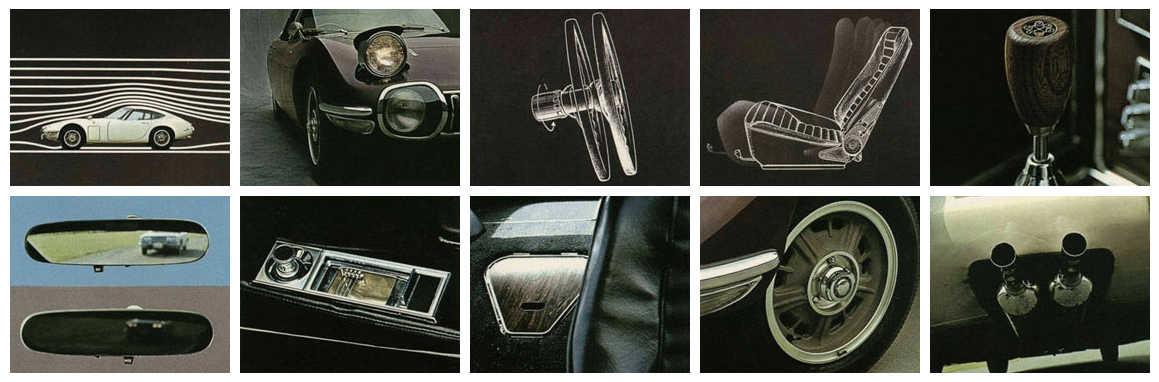
To minimize frontal area, the tip of the nose is reduced almost to a line rather than a surface, resulting in extremely low air resistance. The headlamps are Japan’s first retractable type. They are concealed during the day to reduce drag (fog lamps are standard equipment). The steering column can be adjusted forward and backward to suit the driver’s position — another first for a Japanese car. True bucket seats with 14 cm of fore-and-aft adjustment and reclining backrests provide ideal support. The five-speed floor-shift lever has a beautifully finished wooden knob shaped like the top of an egg, comfortable to hold. The rearview mirror can be switched between day and night positions with a single knob, dimming the glare of following headlights. Both driver and passenger doors feature built-in ashtrays with cigarette lighters. Behind the console is a courtesy box — another refined touch. The wheels are lightweight, well-balanced magnesium alloy with convenient center knock-off hubs. The dual exhaust pipes, beautifully chromed, give a strong and sporty impression. The rear window is made of heated glass, quickly clearing fog or frost, and the large size provides excellent rear visibility. Opening the rear hatch reveals a luggage compartment that easily accommodates small bags or personal items, making loading and unloading effortless. Beneath the rear floorboard, the spare tire, tools, and fuel tank are compactly arranged — with no wasted space anywhere.