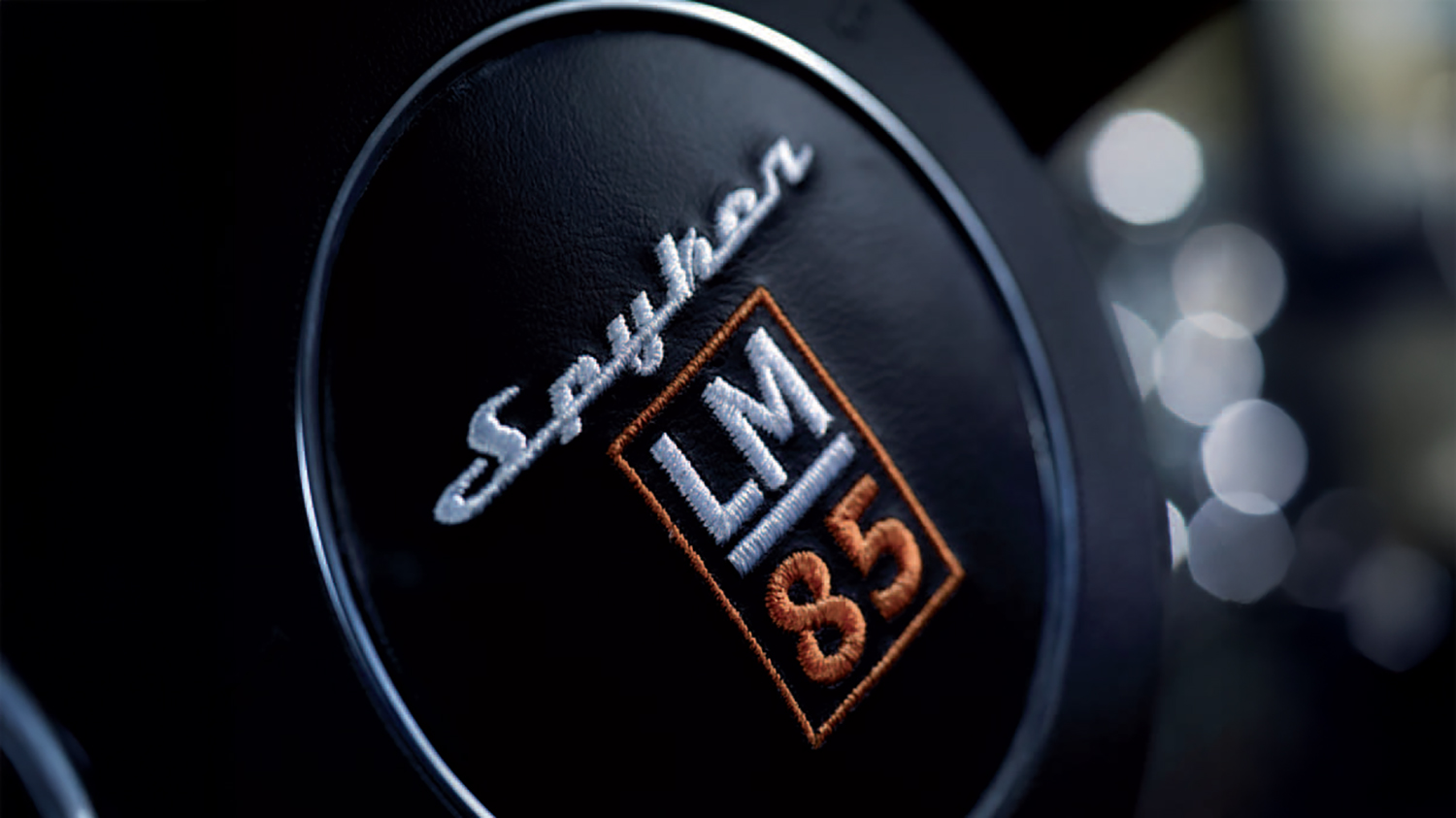
When Spyker was founded in 2000 after an absence of 75 years, we adopted the axiom “Nulla tenaci invia est via” - for the tenacious no road is impassable -. This axiom was first introduced in 1914 when Spyker merged with the Dutch Aircraft Factory N.V. On that occasion Spyker introduced its new logo as we use it today, consisting of an aircraft propeller and a wire wheel. The axiom has held true for Spyker ever since its introduction in 1914 and in particular since 2000. Getting to the point where we are today has been a massive undertaking, but so rewarding. Nine years into a our young history and we introduce the Spyker C8 Laviolette, C8 Laviolette GT2R and C8 Laviolette LM85.
Engine
Top Speed (km/h)
0-100 km/h (sec)
Spyker’s design philosophy is that design details should enhance the beauty of the basic shape of a car. Designing a car, however, is more than creating a shape. It is creating a shape with the right proportions.
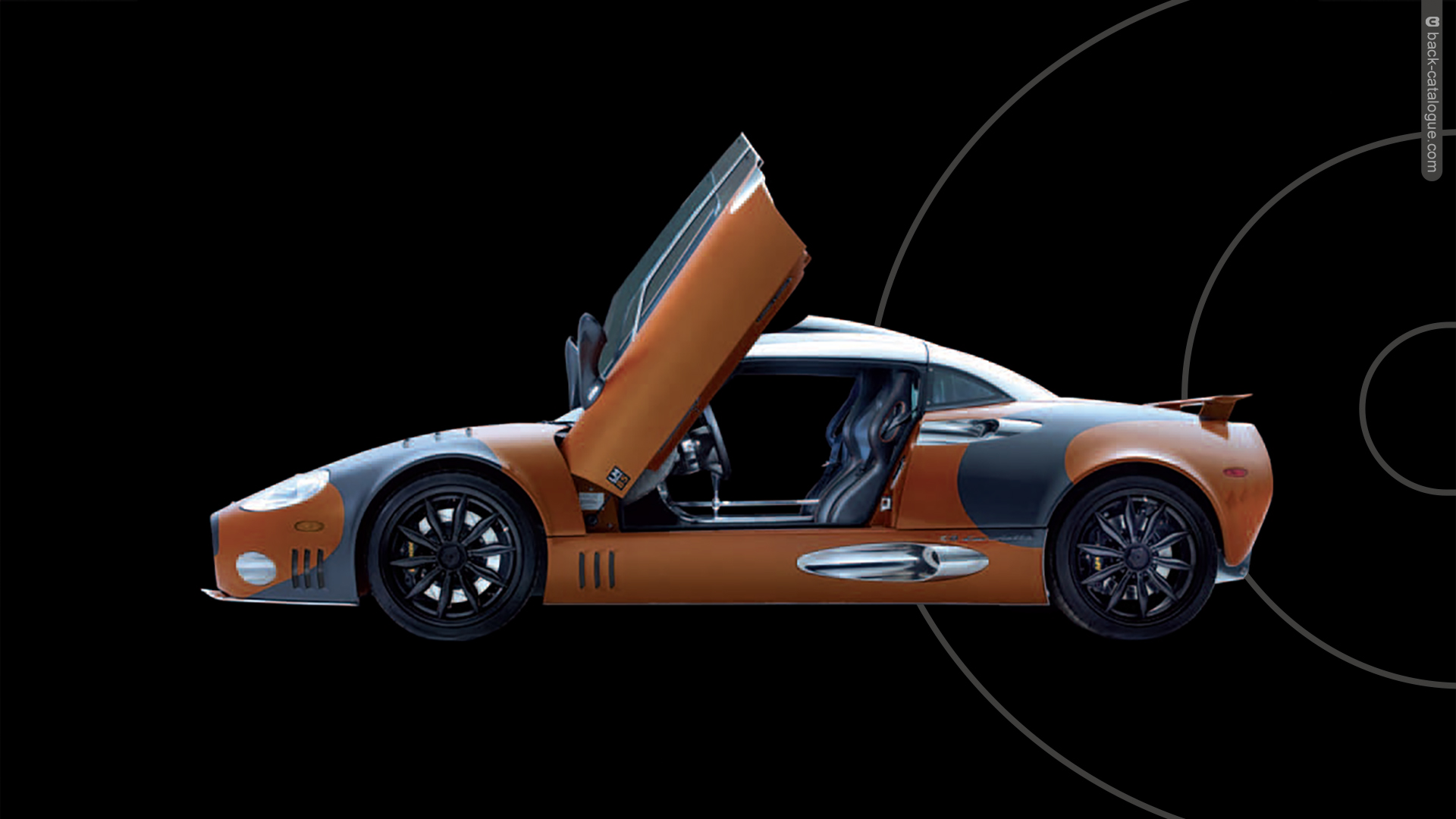
Spyker’s design is prominently inspired by the company’s aviation heritage. In the first generation cars the propeller design was consistently applied to many elements of the car. The design of the handcrafted Spyker C8 Laviolette represent the latest evolution of Spyker’s signature architecture, whereby the emphasis was shifted from the propeller engine to the turbine engine. As a result, for instance the bright polished air inlets of the earlier models were converted into turbine engine shaped air scoops. At Spyker we clearly adhere to “form follows function”, which entails that every design element of the car should be purely functional too. Consistency in design is one of the most difficult tasks to achieve when designing a car. Every element should be originating from the same handwriting and be consistent with the overall design.
The Spyker C8 is an advanced mid-engined two-seat sports car, characterized by lightweight construction and purity of design, with an uncompromising engineering package developed from scratch. The ultra-stiff space frame is manufactured from aluminium sheet and extrusions. The handcrafted body panels are supplied by Coventry Prototype Panels from the U.K. where craftsmanship is still considered an art.
Spyker has chosen to use only the best materials in building the Spyker C8. The material of choice for the construction of the car is aluminium, a complex material that requires handling by highly skilled professionals to get the best out of it, but that gives unparalleled results.
Spyker has put tremendous effort in the space frame of the C8, specifically the structure’s effi ciency. The utilisation of modern finite element and numerical optimization methods has allowed Spyker’s engineers to arrive at an exceptionally stiff structure of 22.000Nm/ degree. Rigid-node and load-path technology has been employed in order to ensure that the minimum amount of aluminium is used to achieve this performance, thus reducing the overall weight of the vehicle. The dynamic stiffness characteristics of the structure have been carefully tuned in order to minimize unwanted cabin noises and vibrations, which may otherwise detract from the driving experience. These technologies and measures have allowed Spyker to arrive at the most effi cient chassis in its history.
Because the main design principle of the Spyker C8 is that the shape of the car should always follow function, every part of the car, every detail must be genuine and have a proper use.
Every engineering detail reveals that the Spyker C8 is in effect a road-going race car. The streamlined fl oor section of the car creates the down force that keeps the car hugged to the ground at even the highest speed levels. The visible body details that help provide this ground effect are the splitter plate at the front and the diffuser at the rear, which is beautifully integrated in the rear body section.
One of Spyker’s many sporting successes in the early years of the last century was breaking the Double Twelve record. In the hands of the then popular race driver Selwyn F. Edge, a long time factory racer for Napier, a Spyker broke that 24-hours endurance record at Brookland’s racetrack in the UK. Edge intended to beat his 1907 record in a Napier racer by using a standard production car: A 1922 Spyker C4 with 6-cylinder Maybach engine.
The record attempt was aimed at proving that by 1922 standard production cars could break records, which formerly could only be achieved by race cars. As the Brookland race track could only be used during the daytime in those days, the 24-hours record was spread over two days, hence the Double Twelve record name. On 19 and 20 July 1922, Edge achieved an averaged speed of 119 km/h (72 mph) and put 1782 miles and 1006 yards on the clock (2860 km), thus beating his 15-year old record massively.
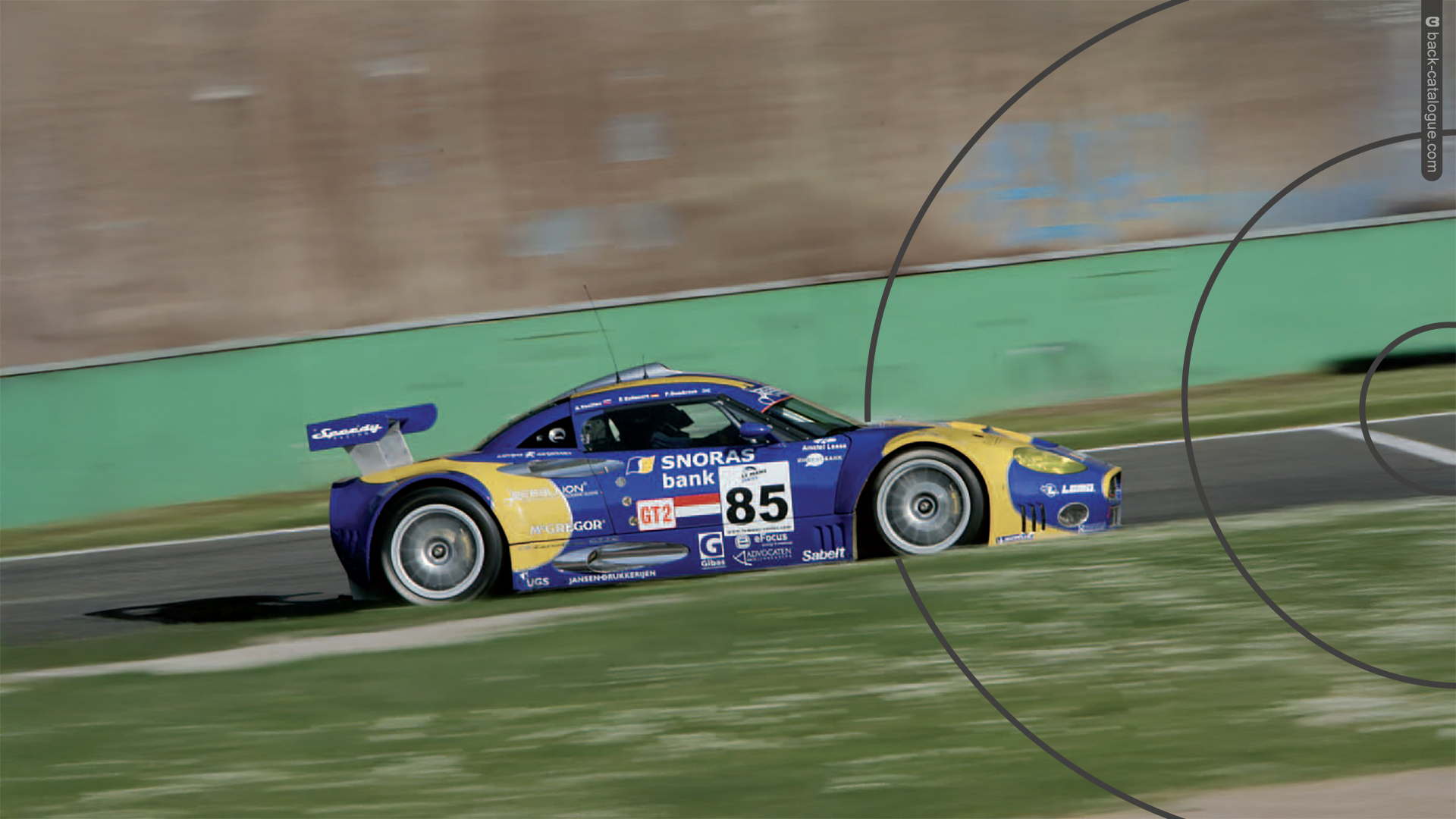
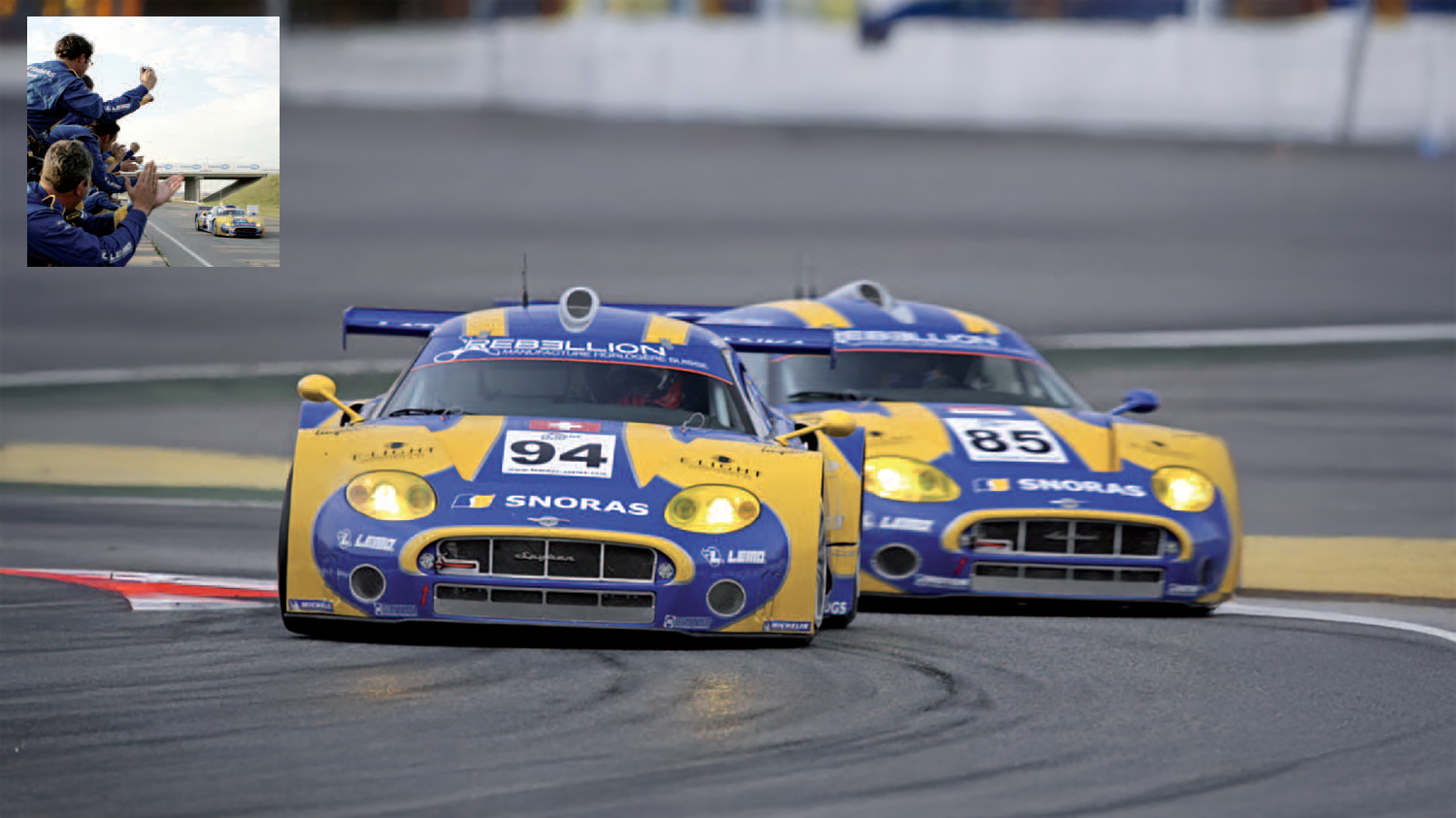
This formidable performance was the inspiration to create Spyker’s contemporary endurance racer, the Spyker C8 Laviolette GT2R. Some 80 years later, Spyker again proves that its standard production cars are capable of sporting successes: the Spyker C8 Laviolette GT2R is basically identical to the standard road car.
The Spyker C8 models have fully enclosed undersides, which generates considerable ground effect. Since most race rules prohibit ground effect on GT class race cars the underside of the endurance race model, the Spyker C8 Laviolette GT2R, is entirely flat with no venturies or diffusers. Instead the GT2R model has a fully adjustable rear wing.
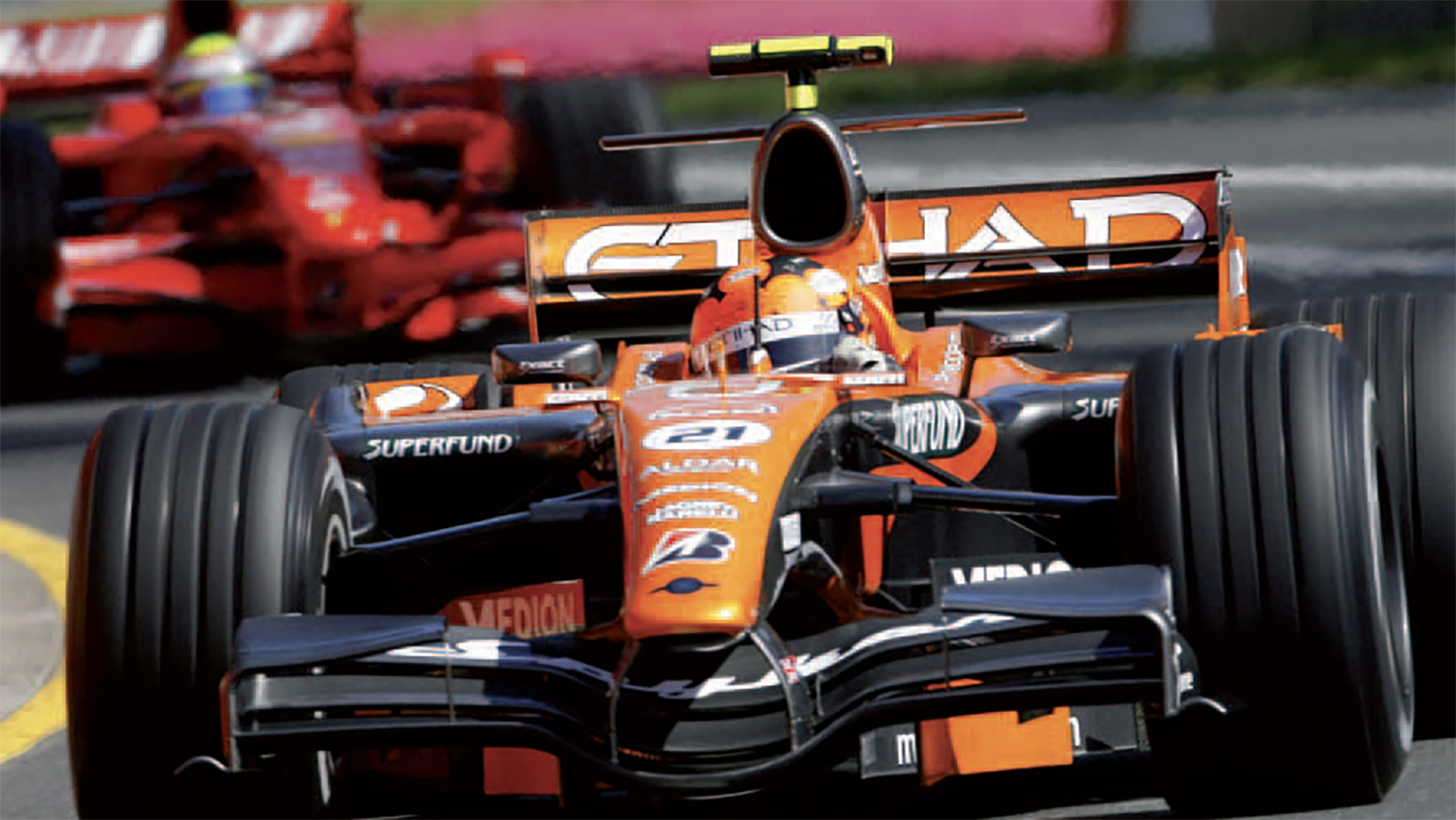

In September 2006, during the Grand Prix of Italy, Spyker Cars N.V. announced the acquisition of Midland F1 Racing Limited, based in Silverstone, UK. The team was renamed Spyker F1 Team and competed in the FIA Formula One World Championship in 2007. Spyker’s entry in the world of Formula One was a milestone in the history of Spyker, 103 years after the creation of its fi rst Gran Prix car, the Spyker 60-80 HP 4WD racer. The entry into the Formula One arena, one of the world’s largest spectator sports, was an unparalleled way to both underline Spyker’s commitment to racing and to benefit from a massive increase in brand awareness around the globe. Moreover Formula One racing transmitted values which are in line with Spyker’s own brand values: heritage, design, craftsmanship, performance and exclusivity. Unfortunately, in October 2007, after its fi rst racing season, Spyker’s experience in this most demanding area within the motor sports arena came to an end. From its brief but intense excursion into the world of Formula One, Spyker gained important know-how and expertise, which will be applied to its core activities – the manufacturing of high end sports cars and improving its GT2 racing performance.
| Laviolette SWB | Laviolette GT2R | Laviolette LM85 | |
| Engine | V8 | V8 | V8 |
| Capacity | 4172 cc | 3799 cc | 4172 cc |
| Power | 298 kW (400 hp) | 354 kW (475 hp) | 298 kW (400 hp) |
| Torque | 480 Nm | 420 Nm | 480 Nm |
| Max. revolutions | 7200 rpm | 8500 rpm | 7200 rpm |
| Sizes and weights | |||
| KERB weight | 1275 kg (2805 lbs) | 1125 kg (2435 lbs) | 1275 kg (2805 lbs) |
| Wheelbase | 2575 mm (101”) | 2575 mm (101”) | 2575 mm (101”) |
| Front track | 1400 mm (55”) | 1400 mm (55”) | 1400 mm (55”) |
| Rear track | 1580 mm (62”) | 1580 mm (62”) | 1580 mm (62”) |
| Length | 4185 mm (165”) | 4185 mm (165”) | 4185 mm (165”) |
| Width (ex mirrors) | 1880 mm (74”) | 1920 mm (75,7”) | 1880 mm (74”) |
| Height | 1245 mm (49”) | 1110 mm (43,7”) | 1245 mm (49”) |
| Fuel tank capacity | 75 litre (16,5 gallons) | 100 litre (22 gallons) | 75 litre (16,5 gallons) |
| Performance | |||
| Top speed km/h (mph) | 300 (187) | 305 (191) | 300 (187) |
| Acceleration 0-100 km/h (0-60 mph) | 4.5 seconds | 3.8 seconds | 4.5 seconds |