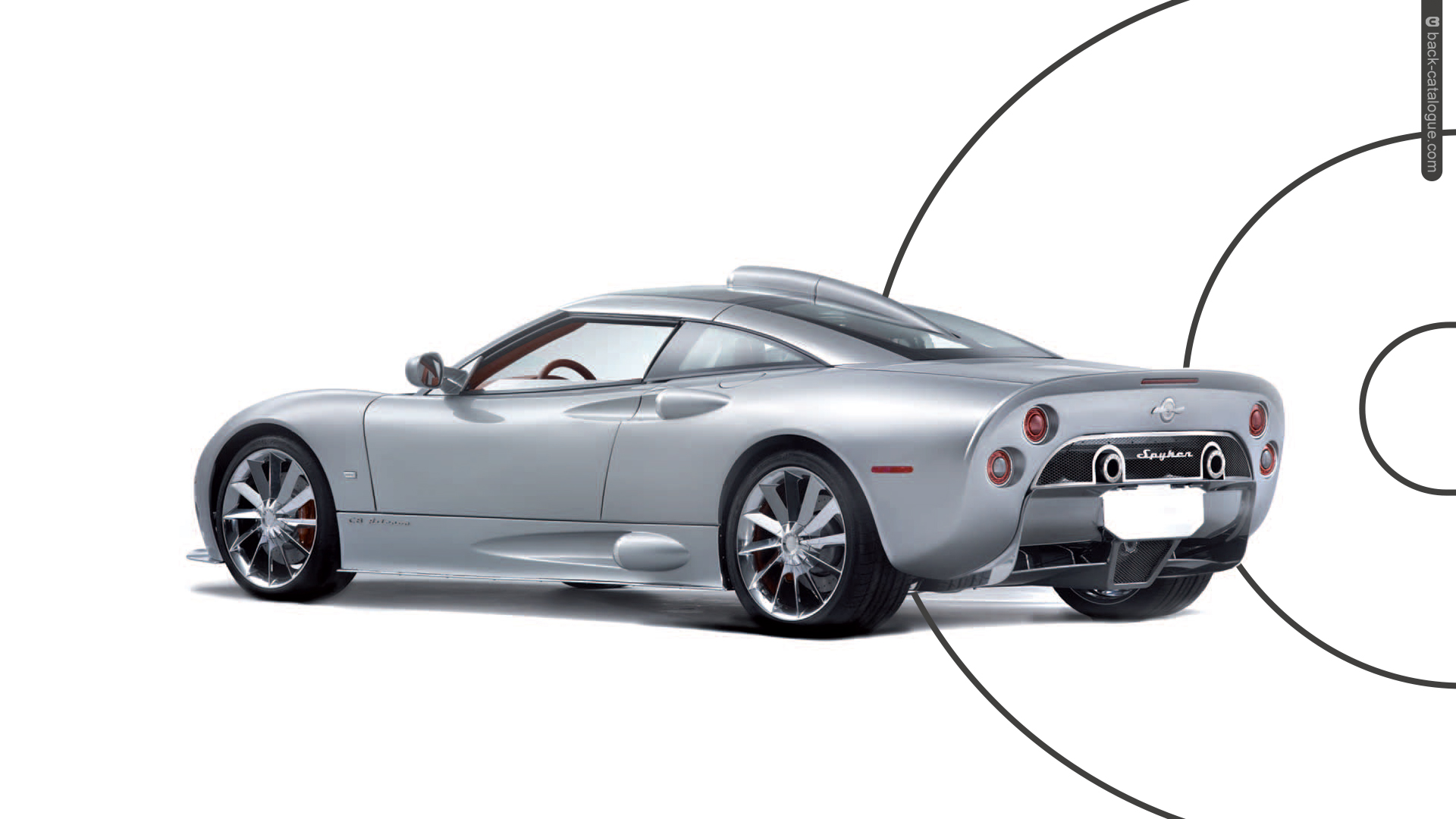
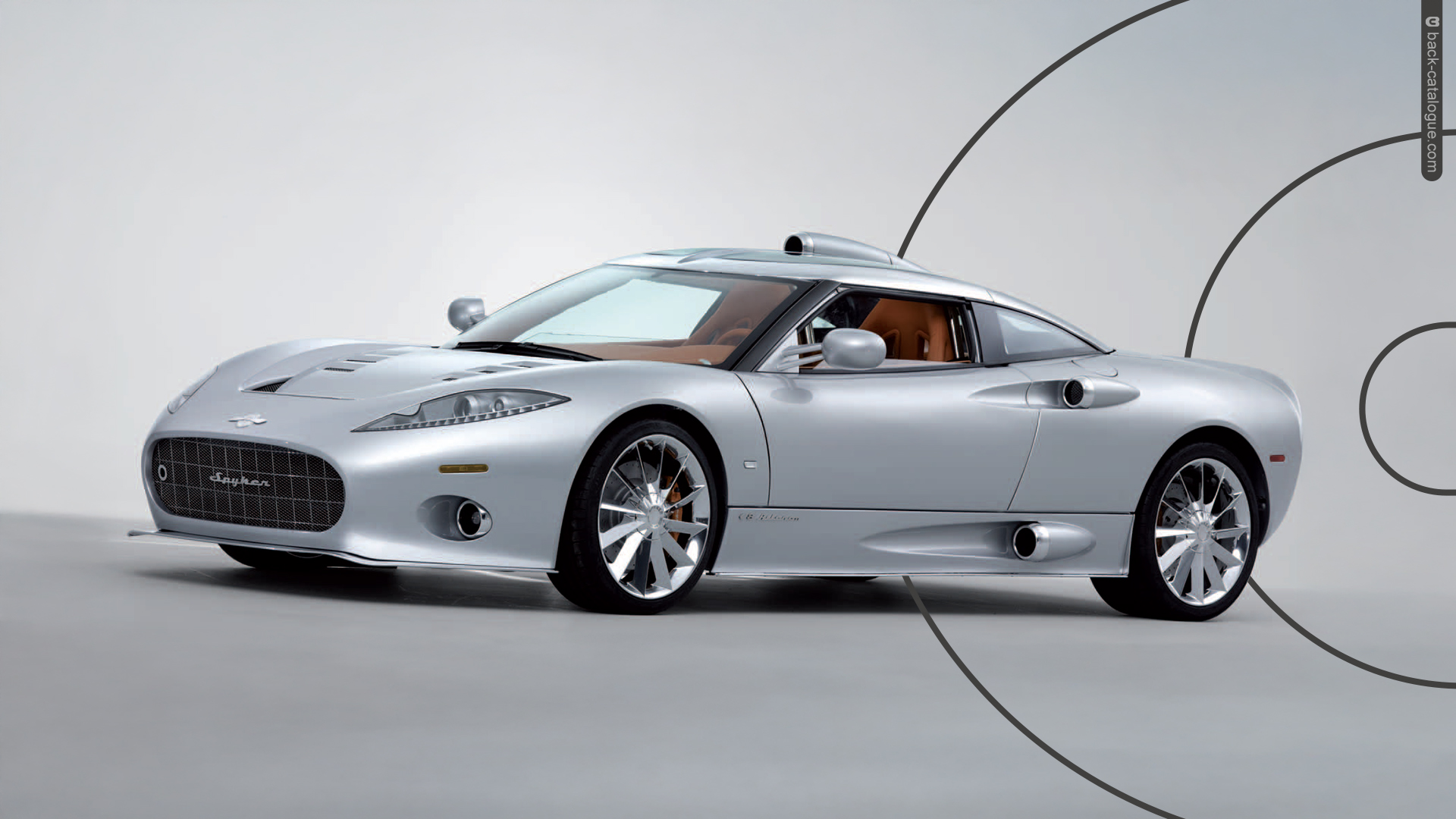
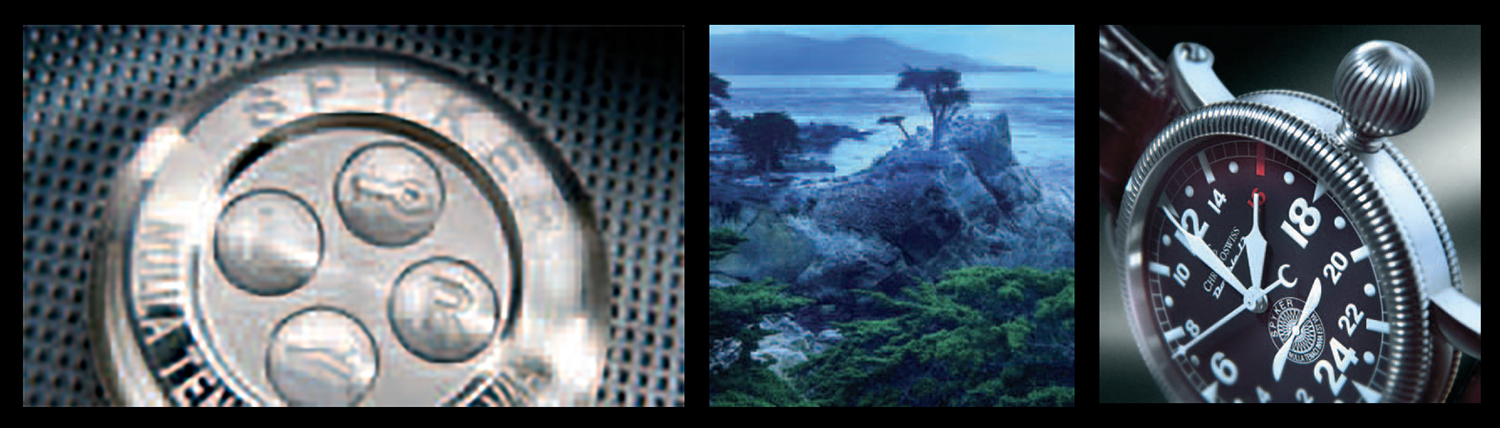
When Spyker was founded in 2000 after an absence of 75 years, we adopted the axiom “Nulla tenaci invia est via” - for the tenacious no road is impassable -. This axiom was first introduced in 1914 when Spyker merged with the Dutch Aircraft Factory N.V. On that occasion Spyker introduced its new logo as we use it today, consisting of an aircraft propeller and a wire wheel. The axiom has held true for Spyker ever since its introduction in 1914 and in particular since 2000. Getting to the point where we are today has been a massive undertaking, but so rewarding. Nine years into a our young history and we introduce our second generation car: the Spyker C8 Aileron. The Spyker C8 Aileron’s design is heavily inspired by Spyker’s aviation heritage, as was the case with all previous models, but with a clear emphasis on the second generation aircraft propulsion: the turbine rather than the propeller that adorned so many elements of the fi rst generation cars. Similarly the “Aileron” name pays tribute to that aviation heritage, it is the device that makes an aircraft turn and symbolises the turning point that the Aileron is for Spyker.
Engine
Top Speed (km/h)
0-100 km/h (sec)
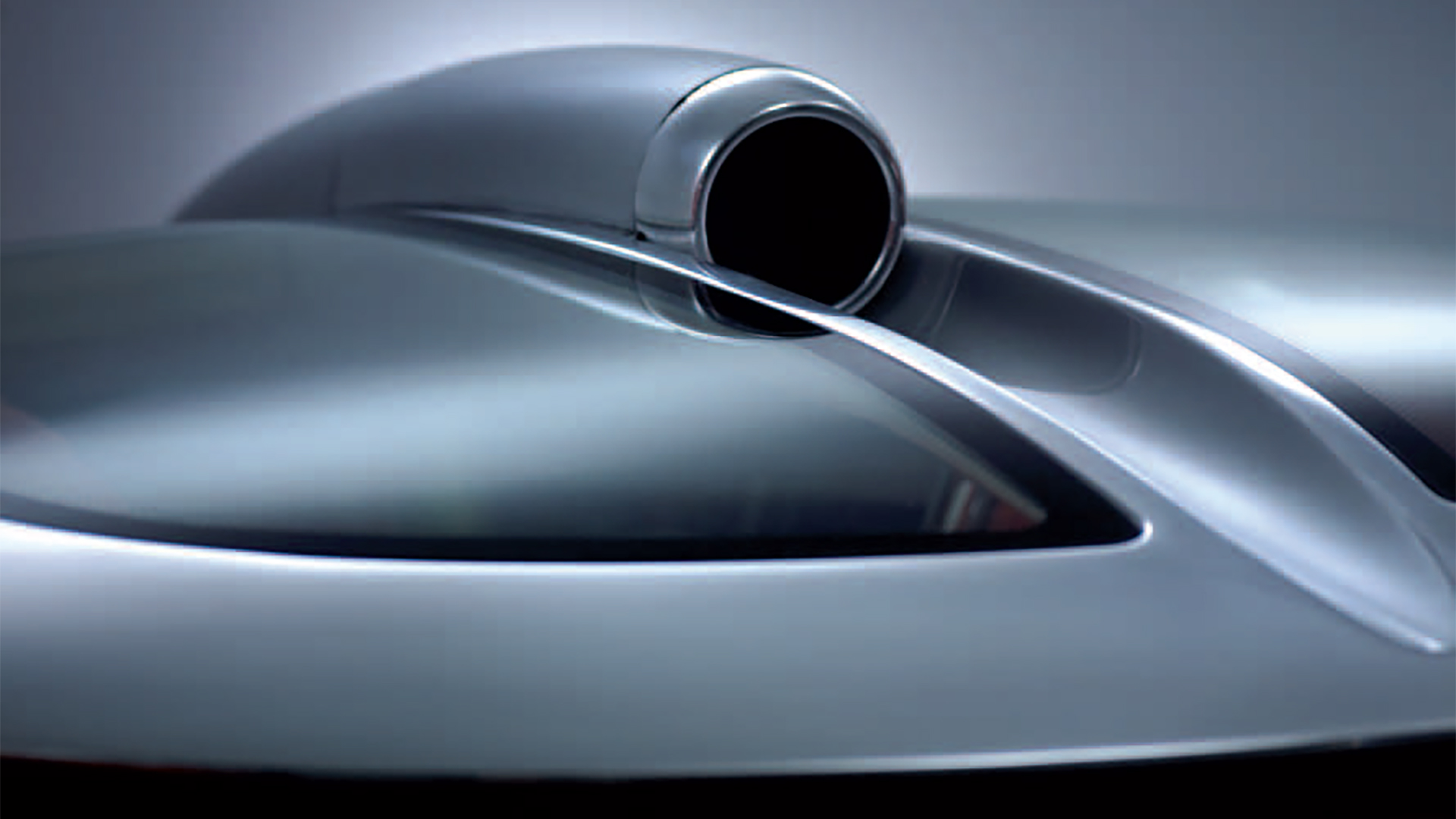
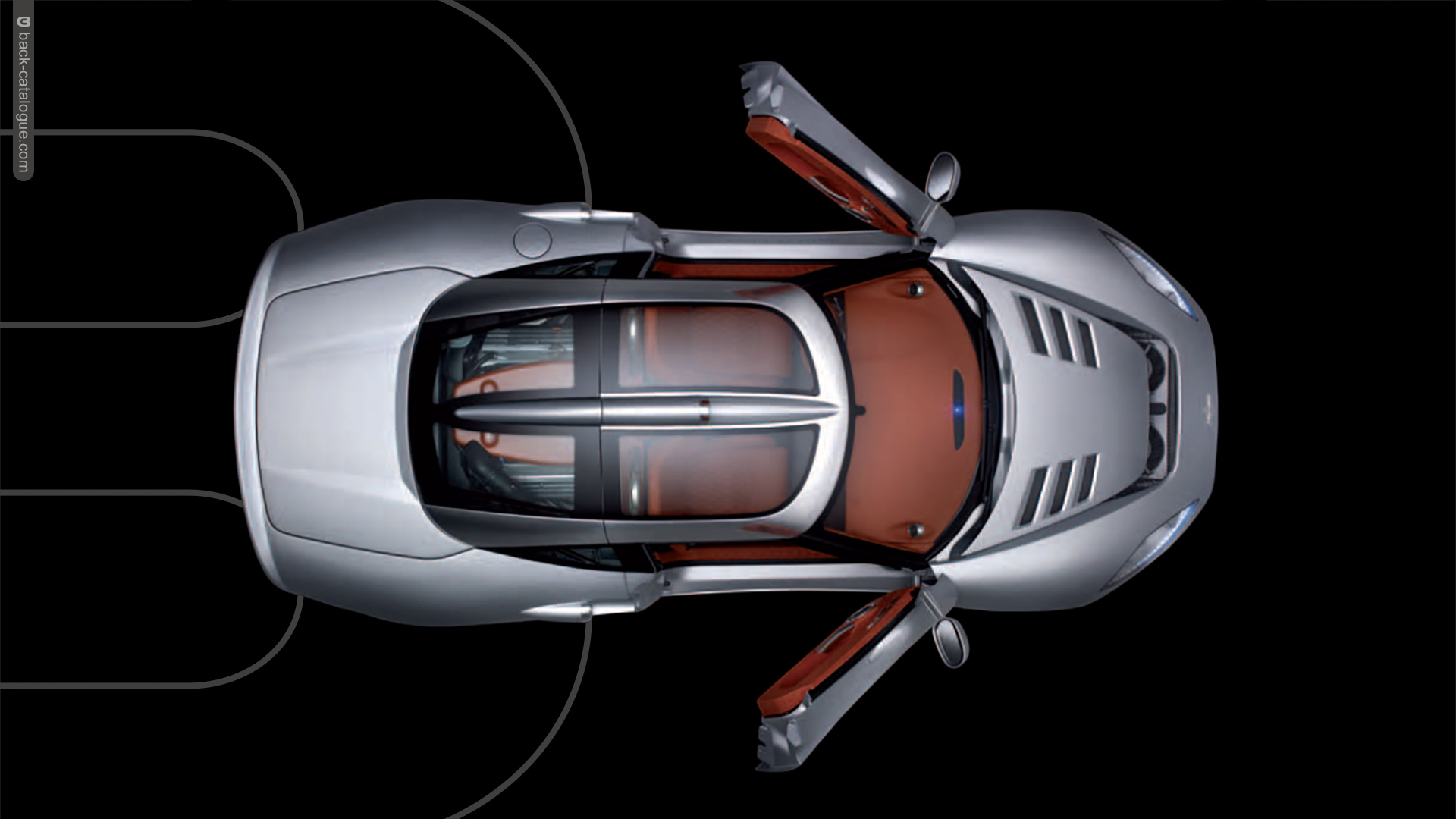
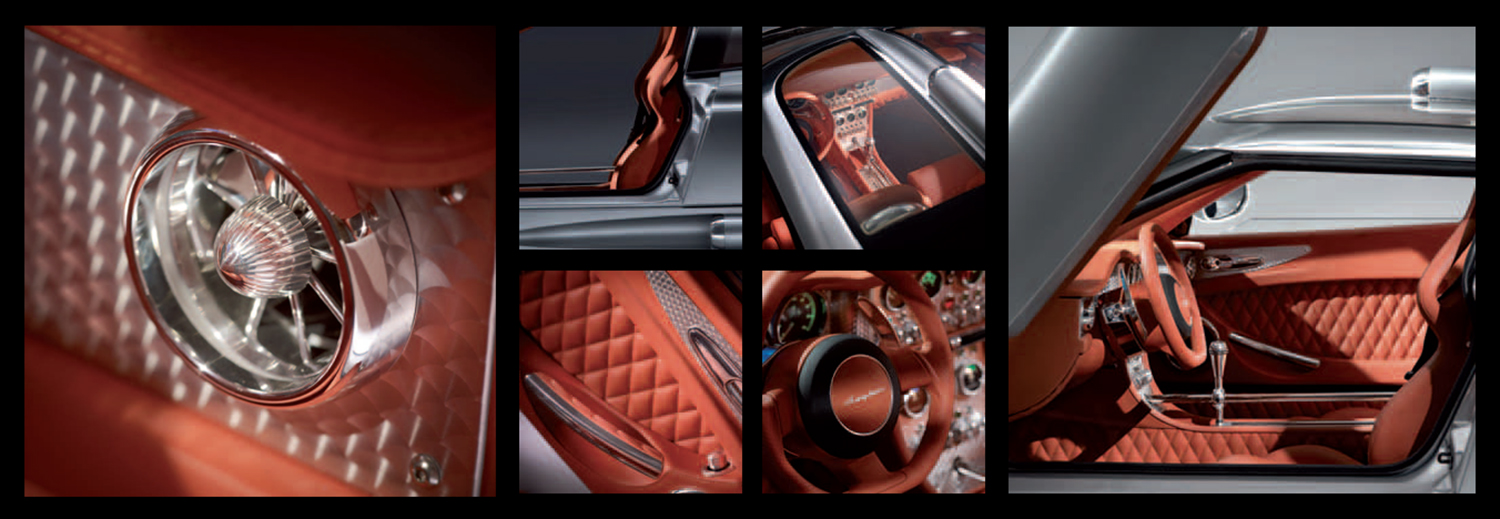
Spyker’s design philosophy is that design details should enhance the beauty of the basic shape of a car. Designing a car, however, is more than creating a shape. It is creating a shape with the right proportions.
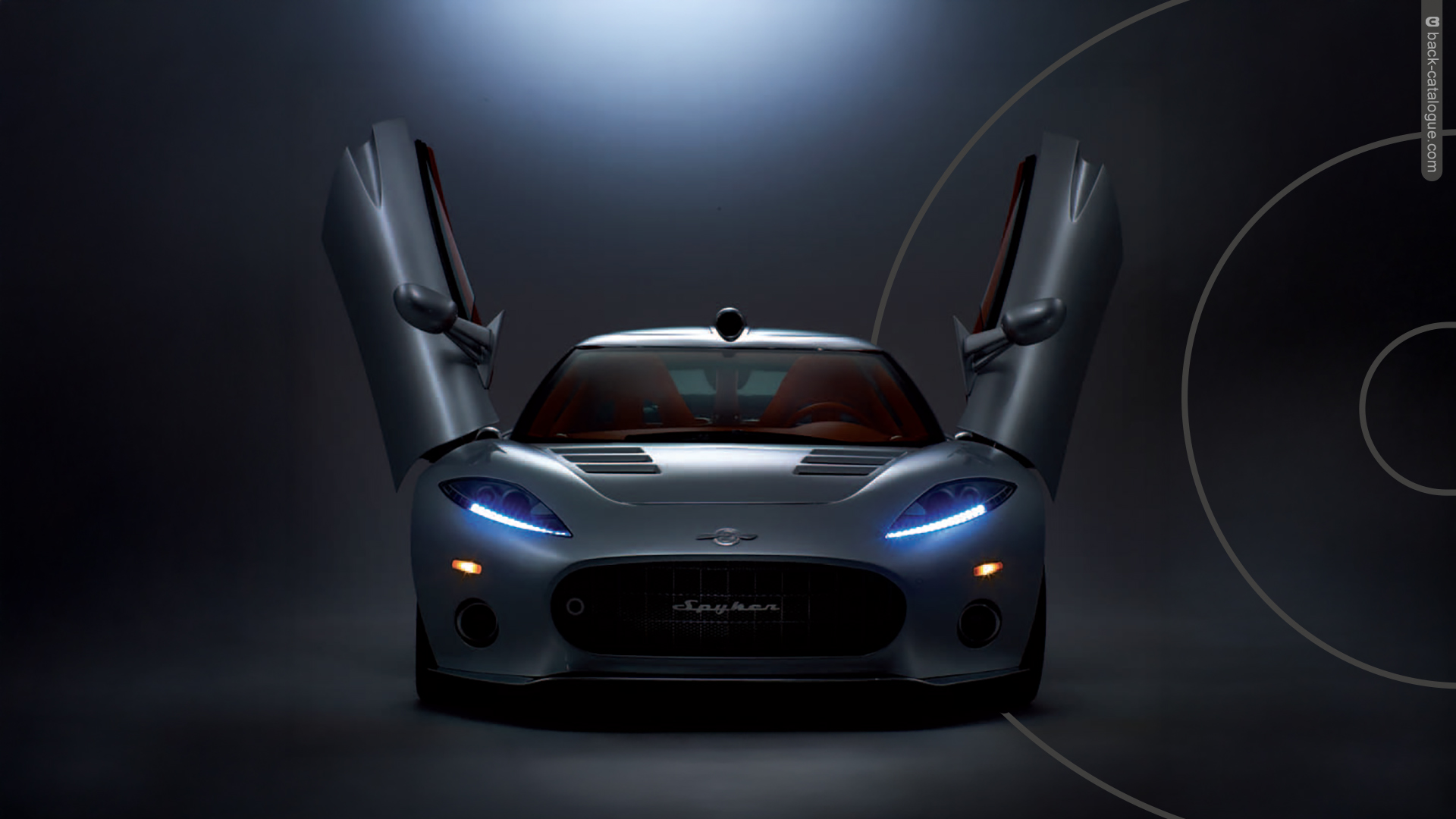
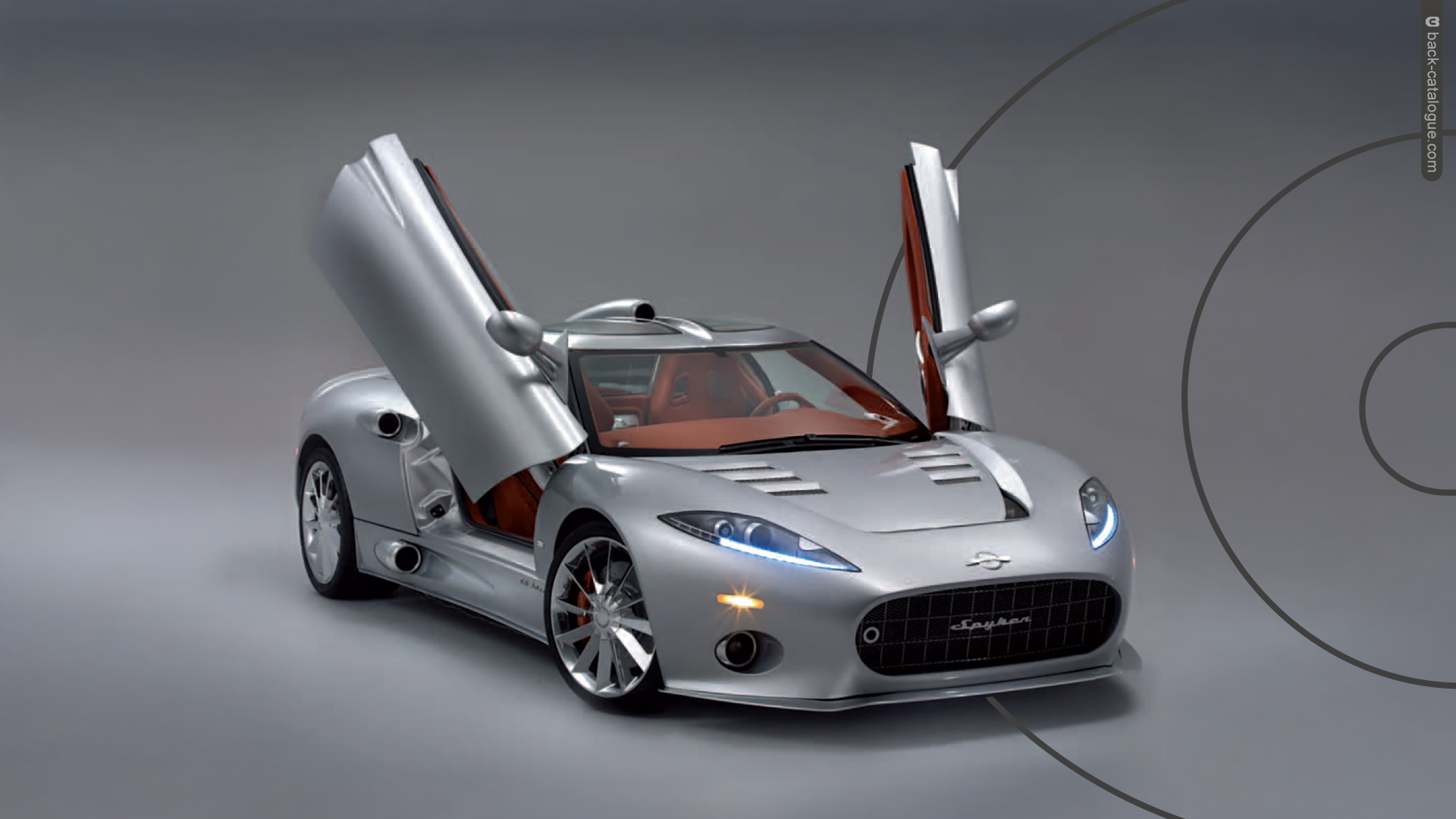
Spyker’s design is prominently inspired by the company’s aviation heritage. In the first generation cars the propeller design was consistently applied to many elements of the car. The design of the handcrafted Spyker C8 Aileron represent the latest evolution of Spyker’s signature architecture, whereby the emphasis was shifted from the propeller engine to the turbine engine. As a result, for instance the bright polished air inlets of the earlier models were converted into turbine engine shaped air scoops. At Spyker we clearly adhere to “form follows function”, which entails that every design element of the car should be purely functional too. Consistency in design is one of the most diffi cult tasks to achieve when designing a car. Every element should be originating from the same handwriting and be consistent with the overall design.
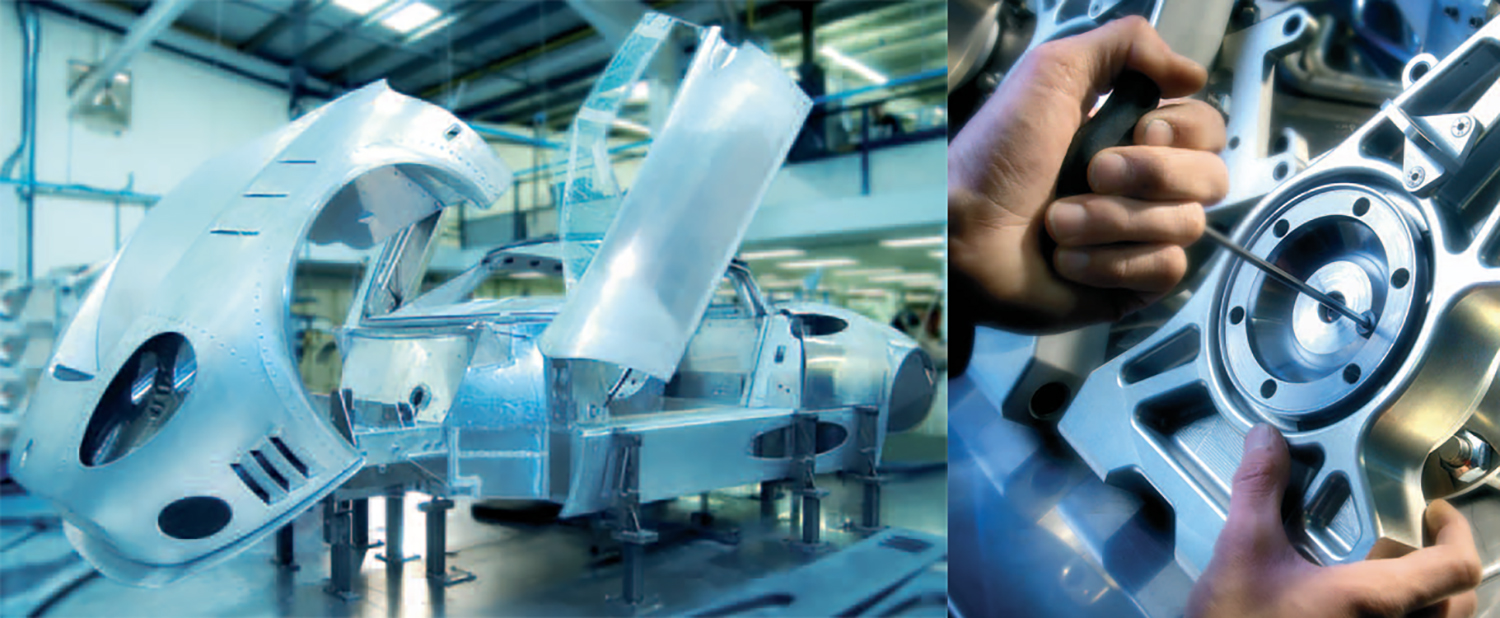
The Spyker C8 is an advanced mid-engined two-seat sports car, characterized by lightweight construction and purity of design, with an uncompromising engineering package developed from scratch. The ultra-stiff space frame is manufactured from aluminium sheet and extrusions. The handcrafted body panels are supplied by Coventry Prototype Panels from the U.K. where craftsmanship is still considered an art.
Spyker has chosen to use only the best materials in building the Spyker C8. The material of choice for the construction of the car is aluminium, a complex material that requires handling by highly skilled professionals to get the best out of it, but that gives unparalleled results.
Spyker has put tremendous effort in the space frame of the C8, specifically the structure’s effi ciency. The utilisation of modern finite element and numerical optimization methods has allowed Spyker’s engineers to arrive at an exceptionally stiff structure of 22.000Nm/ degree. Rigid-node and load-path technology has been employed in order to ensure that the minimum amount of aluminium is used to achieve this performance, thus reducing the overall weight of the vehicle. The dynamic stiffness characteristics of the structure have been carefully tuned in order to minimize unwanted cabin noises and vibrations, which may otherwise detract from the driving experience. These technologies and measures have allowed Spyker to arrive at the most effi cient chassis in its history.
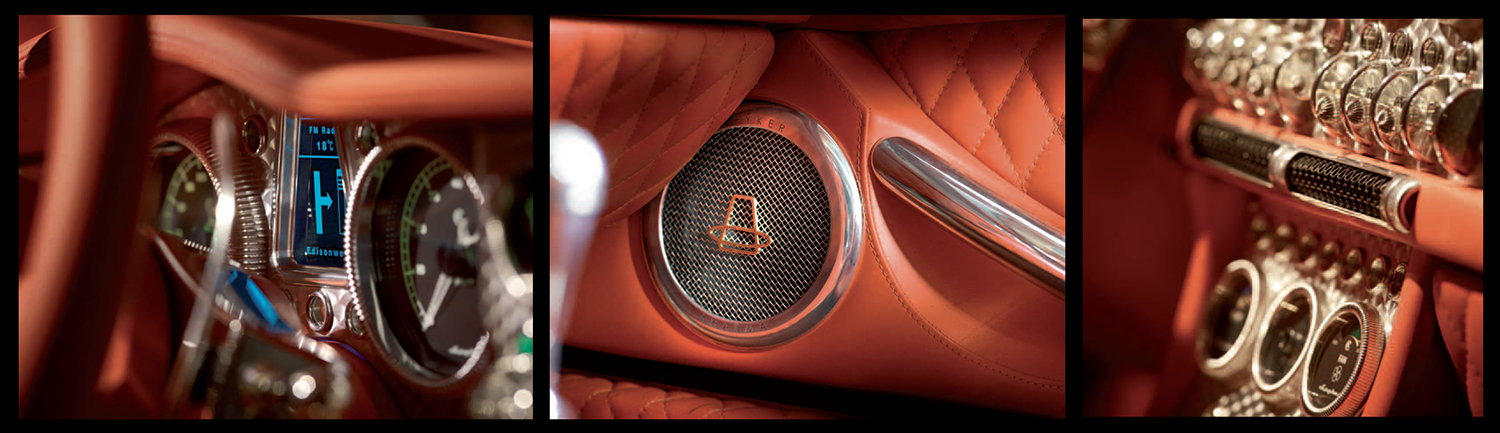
Every Spyker’s personality is further enhanced by a number of unusual and eye catching interior features. Most noticeable perhaps on entering the car is the dashboard and instrument panel. The design of the instrumentation is reminiscent of those found in airplanes, refl ecting Spykers aviation heritage. Once seated behind the controls, drivers will appreciate the remarkable design of the exposed gearlever so shaped to highlight the unusual shift mechanism that adds to the uniqueness of this motorcar. All Spykers feature keyless entry.
Moreover extra-ordinary elegant 19” Rotorblade™ wheels in magnesium featuring ten turbine fan blades are available as an option.
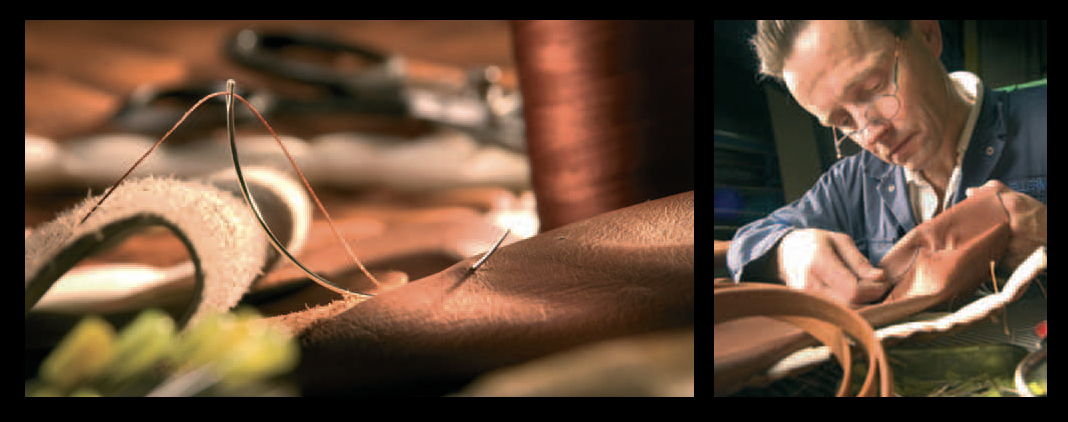
Luxury and performance are further encapsulated in a number of interior features such as the tasteful incorporation of aluminium design elements as well as the exclusive leather trim. Owners may order every conceivable body colour to their own taste as well as leather to match. Xenon headlights are standard.
Because the main design principle of the Spyker C8 is that the shape of the car should always follow function, every part of the car, every detail must be genuine and have a proper use.
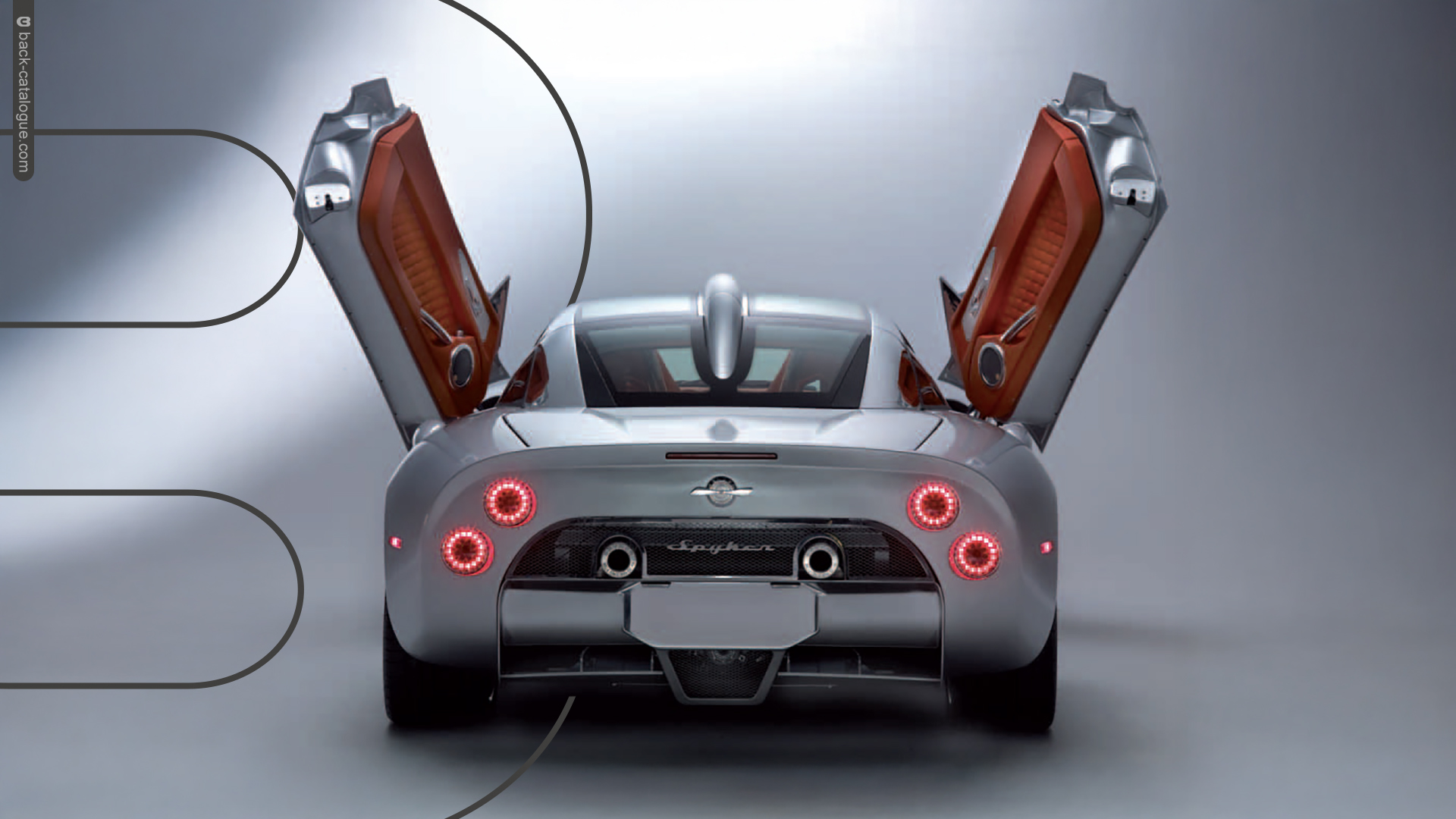
Every engineering detail reveals that the Spyker C8 is in effect a road-going race car. The streamlined fl oor section of the car creates the down force that keeps the car hugged to the ground at even the highest speed levels. The visible body details that help provide this ground effect are the splitter plate at the front and the diffuser at the rear, which is beautifully integrated in the rear body section.
The resources to handcraft our cars are very limited and as a result Spykers will never be mass produced. Hence, exclusivity is warranted and owners will experience that wherever they drive or park their cars, making heads turn wherever they go.
By acquiring a Spyker, the owner becomes a member of a very exclusive group of car enthusiasts who share the passion for performance and craftsmanship, who cherish the quality of their car, the fact that is was hand-built for them and no one else. Now that some 200 cars are on the road worldwide, the factory will start organising Spyker Owner events in the United States and Europe in 2009 and as of 2010 in other regions as well.
Further exclusivity can be found in the special Spyker options such as a Limited Edition Chronoswiss Spyker watch range (both in stainless steal and platinum) and the Chronoswiss dashboard instrumentation. Customers may even order a five piece Louis Vuitton luggage set exclusively made for their Spyker by this famous French brand that sponsored Spyker in 1907 on the occasion of the gruelling Peking-to-Paris Raid. This must be one of the first known cases of sport sponsoring, if not the very first one.
Finally, Spyker has teamed up with one of the leading manufacturers of high-end sound systems, Kharma International of The Netherlands. Every Spyker C8 Aileron will be equipped with a sound system of unprecedented quality.
A Spyker is crafted for individuals. For the most passionate of car enthusiasts who not only want to buy the best car they can get, but who want to have their car built for them, to their individual specifi cations. This is why Spyker offers an almost infi nite number of options on its cars. And this is why every owner can personalize his Spyker in any way he wants. And this is why every owner of a Spyker is personally involved in the building process of his car.
After ordering a Spyker, the identity of the car - its chassis number - and that of its owner becomes inseparable. The owner is provided with a personalized web page, which contains every important piece of information on the car. The car’s buildsheet is updated every time work is done to the car so that the owner can keep track of the building process and maintenance history of his car. Via his personal web pages the owner can even follow the building process of his car with a web cam as it is assembled in the Spyker factory. This level of involvement is unique in today’s car industry. We are proud to build a desirable, exciting car like the Spyker.
We are just as proud of the people who buy them; after all, no road is impassable for the tenacious.
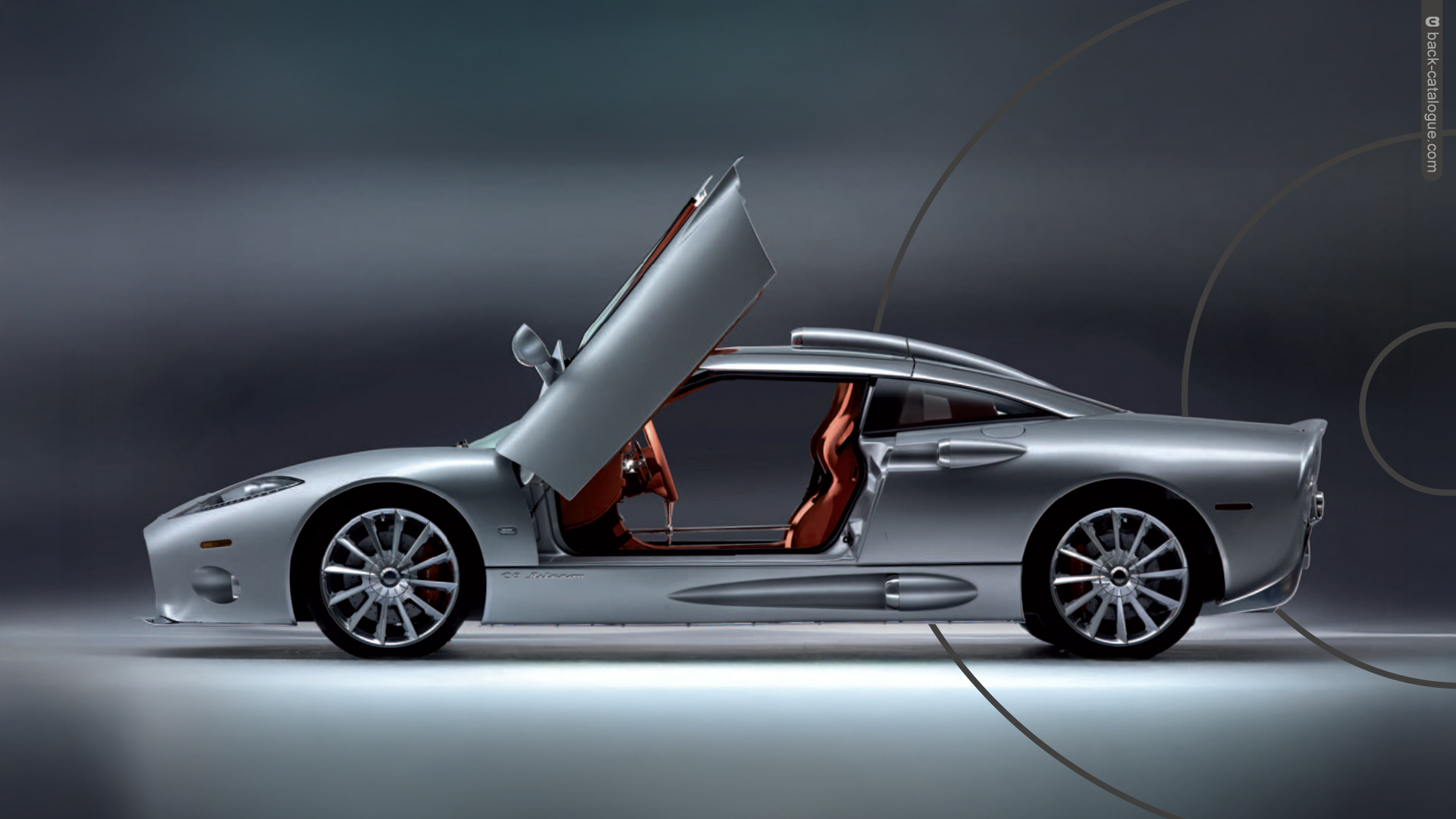

All aluminium hand built, mid-engined sports car with aerodynamic ground effect and electrically operated single hinge tilting doors. Interior trimmed in Hulshof leather. Luggage compartment in front and rear, including two made-to-measure Hulshof leather suitcases. Fuel tanks integrated in left and right inner chassis members.
Engine Design
All aluminum Audi V8 engine with 90-degree block angle. Natural aspiration through eight injection throttle bodies. Four overhead camshafts and fi ve valves per cylinder. Stainless steel 4-into-1 high performance exhausts on either side of the engine.
Transmission
Manual six-speed Getrag gearbox without electronic intervention. Rear wheel drive. Drexler limited slip differential. ABS. Optional ZF automatic six-speed gearbox.
Chassis and suspension
Aluminum space frame clad with aluminium panels carries fully adjustable F1-style independent suspension in stainless steel, with Koni in-board shock absorbers. Uprights CNC machined from solid billets of aluminum.
Brake system
AP Racing twin-circuit brake system with adjustable brake balance. 6-piston aluminium brake callipers at the front, 4-piston aluminum brake calipers at the rear with ventilated brake discs. Brake disc diameter, front and rear, 356/330 mm.
Wheels and tires
Forged ATS alloy rims with central locknuts. Front tires, 225/40ZR 18 (Dunlop Sport). Rear tires, 255/35ZR 18 (Dunlop Sport). Magnesium Spyker 19” Rotorblade™ wheels are optional.
| Engine | V8 |
| Capacity | 4172 cc |
| Power | 298 kW (400 hp) |
| Torque | 480 Nm |
| Max. revolutions | 7200 rpm |
| Sizes and weights | |
| KERB weight | 1425 kg (3142 lbs) |
| Wheelbase | 2727 mm (107”) |
| Front track | 1625 mm (64”) |
| Rear track | 1645 mm (65”) |
| Length | 4617 mm (182”) |
| Width (ex mirrors) | 1972 mm (77”) |
| Height | 1270 mm (50”) |
| Fuel tank capacity | 57 litre (15 gallons) |
| Performance | |
| Top speed | 300 km/h (187 mph) |
| Acceleration | 0-100 km/h (0-60 mph) in 4.5 seconds |