
Saabs are different. There are, in fact, people who buy Saabs largely for that reason. They relish the feeling of driving a car that looks and performs differently from ordinary cars. But that isn't why Saabs are different. They are different because Saab honors a tradition of finding original solutions to the challenges of personal transportation. That tradition has its roots in the 1940s, when a small group of Swedish engineers and designers turned from building some of Europe's most advanced military aircraft to carmaking. Even today, Saab's automotive engineers continue to draw on the technical resources of the company's military and commercial aircraft divisions. Saab's engineers and designers continue to find their own solutions to the challenge of safe, comfortable, practical and pleasurable personal transportation. Saab has always created cars with the intention that they will do everything they are called upon to do superbly. It is this refusal to compromise that makes Saabs a little ditterent.
Horsepower @ 6,000 rpm
Torque (ft.lb) @ 3,000 rpm
Transmission
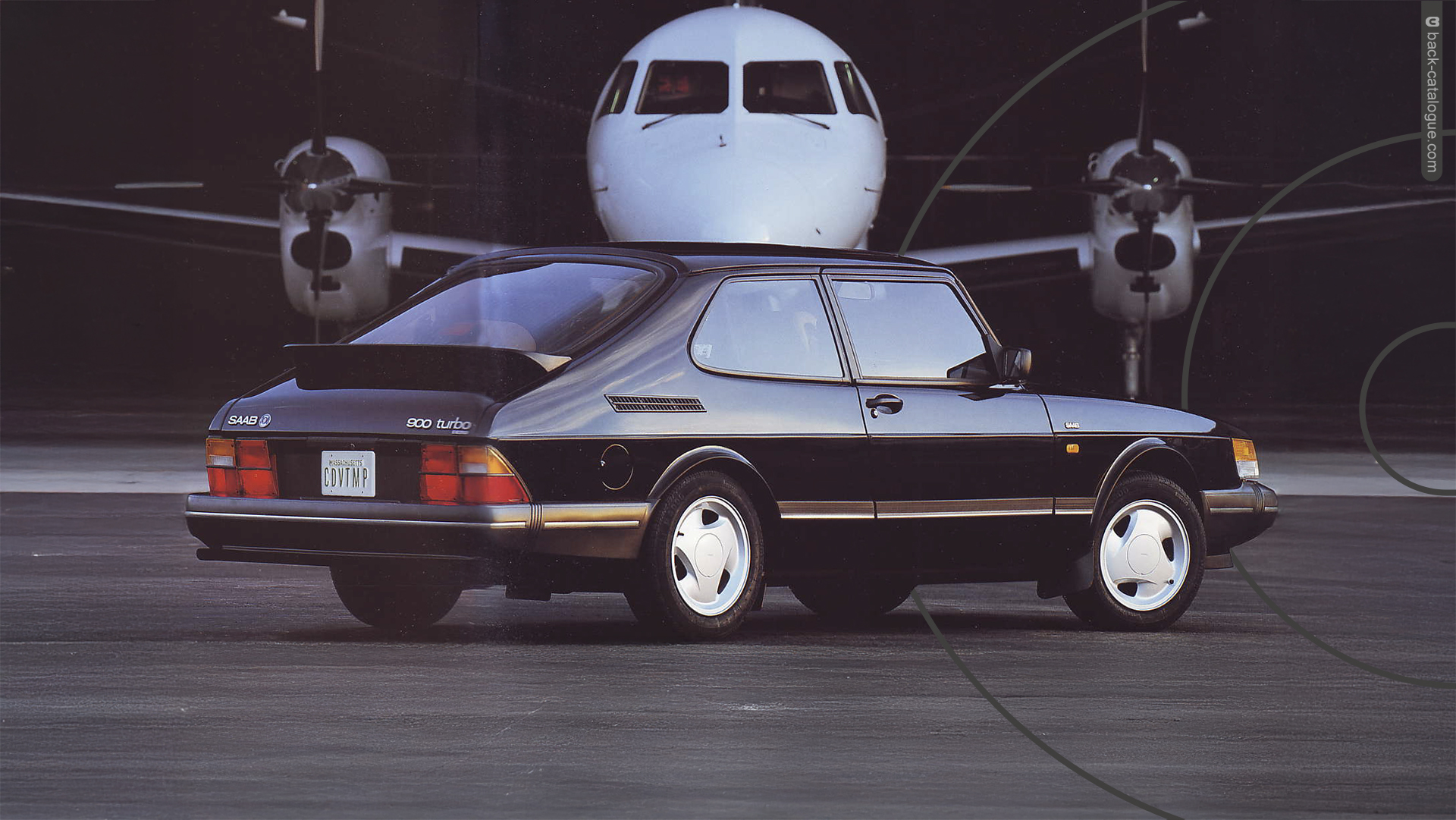
Building a car that handles superbly is a complicated task. One of the first decisions that Saab engineers made was to use front-wheel drive, long before it was widely used or even widely heard of elsewhere. That decision and the placement of at least 60 percent of the car's weight over the driven wheels give Saabs strong directional stability and a powerful grip on the road. The Saab Anti-lock Braking System (ABS), standard on all Saabs, incorporates recent electronic braking technology with the redundancy and security for which Saab brake systems have always been famous. Combined with large disc brakes and precise rack-and-pinion steering, Saab ABS enables a driver to stop and maneuver with control. The handling that every 900-Series Saab delivers is the result of a painstaking balance of the total car's systems: front-wheel drive, four-wheel disc brakes, rack-and-pinion steering and the double-wishbone suspension with pivot-mounted springs. The result is an automobile that is capable both of getting out of harm's way and of deriving unusual amounts of pleasure from even ordinary driving tasks.
The deeply curved windshield improves aerodynamics, uses wind force to push rain, snow and dirt to the sides, and enhances safety by moving the glass farther forward from the front-seat occupants.
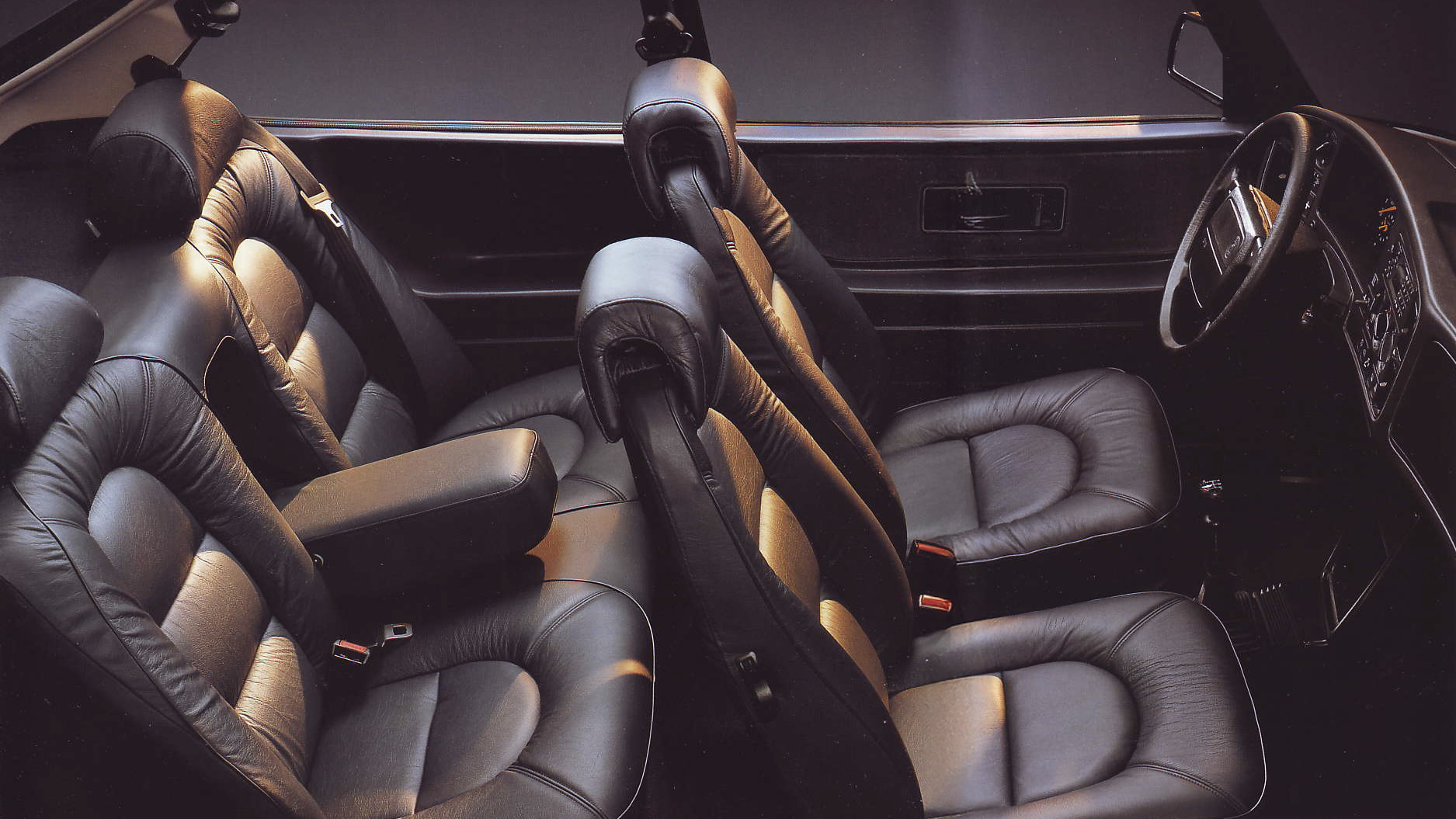
The front seats of all Saabs are famous for their supportive orthopedic design, built-in electric heaters, and wide range of personal adjustment.
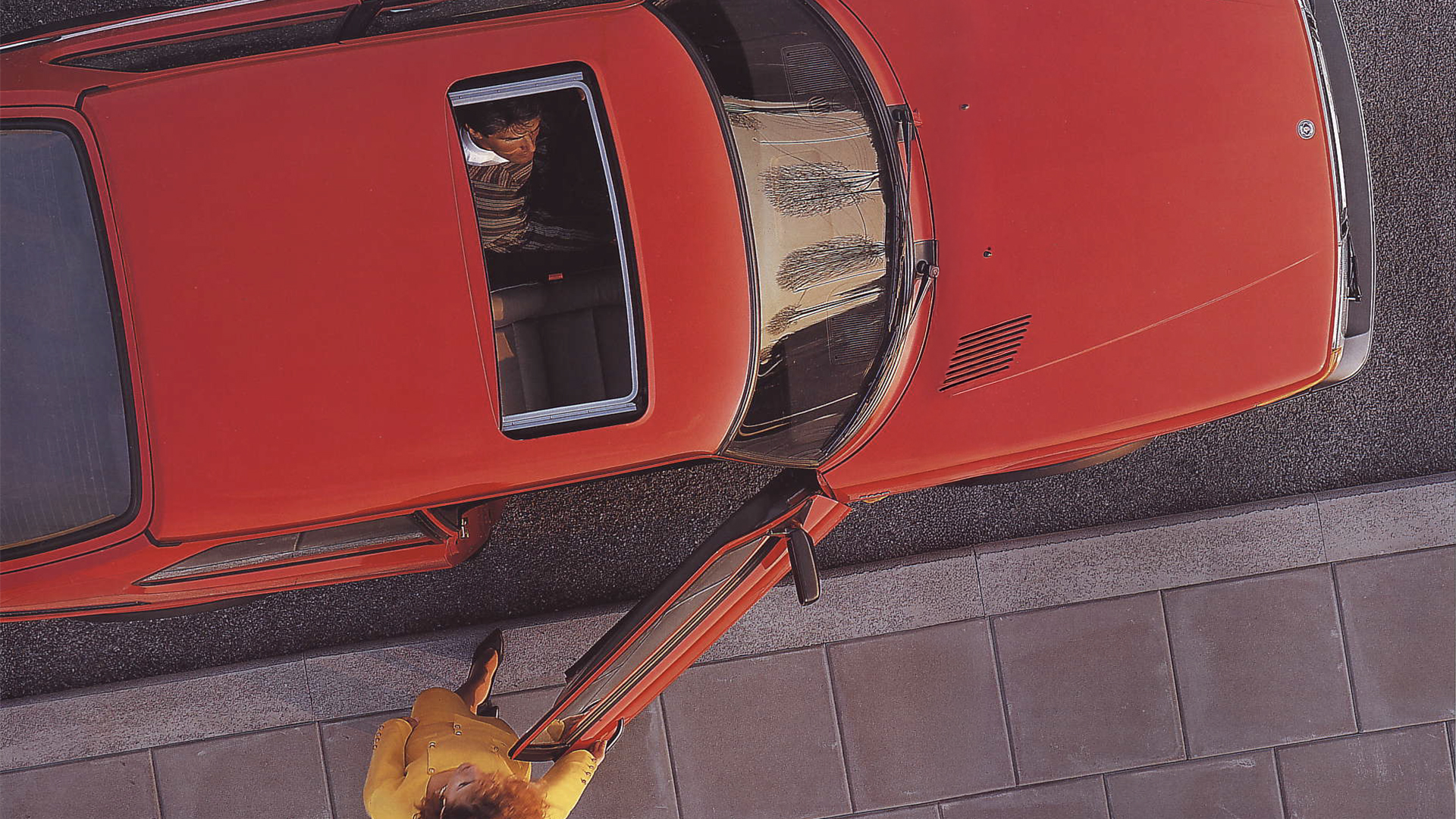
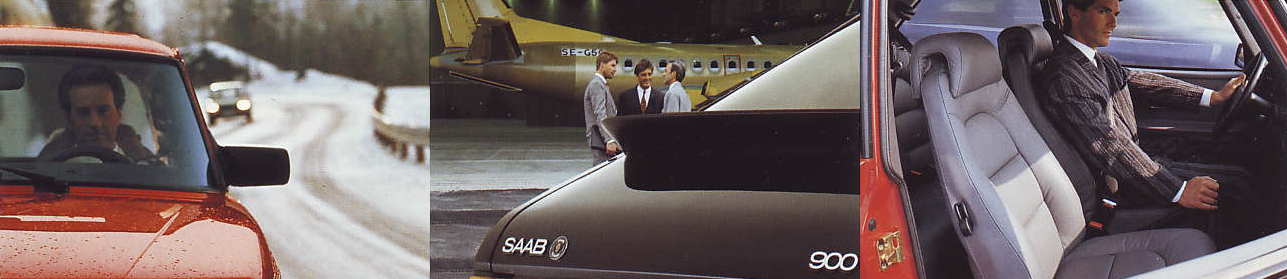
Every carmaker has a responsibility to limit the environmental impact of its products. Just as Saab has always been a leader in automotive technology, it's also a leader in environmental efforts. One outstanding illustration of Saab's environmental leadership is the development of turbocharging technology. Beginning in the 1970s, Saab pioneered the use of turbochargers to give extra power, as needed, to their engines. Today, three generations of technical growth later, Saab is still a leading producer of powerful, lightweight, fuel-efficient, turbocharged engines. Saab was an industry leader in the elimination of asbestos in brake pads, clutches and gaskets; in the introduction of three-way catalytic converters on cars to control exhaust emissions; and in the elimination of chlorofluorocarbons (CFCs) in the production of the soft foams used in car interiors. Of course, carmakers are not alone in their responsibility to protect the environ-ment. Car owners bear a responsibility, as well. Regular maintenance of their cars, sensible driving practices and limiting the number of trips through the use of public transportation or car pooling are some of the positive steps that Saab owners can take on behalf of the rest of the planet.
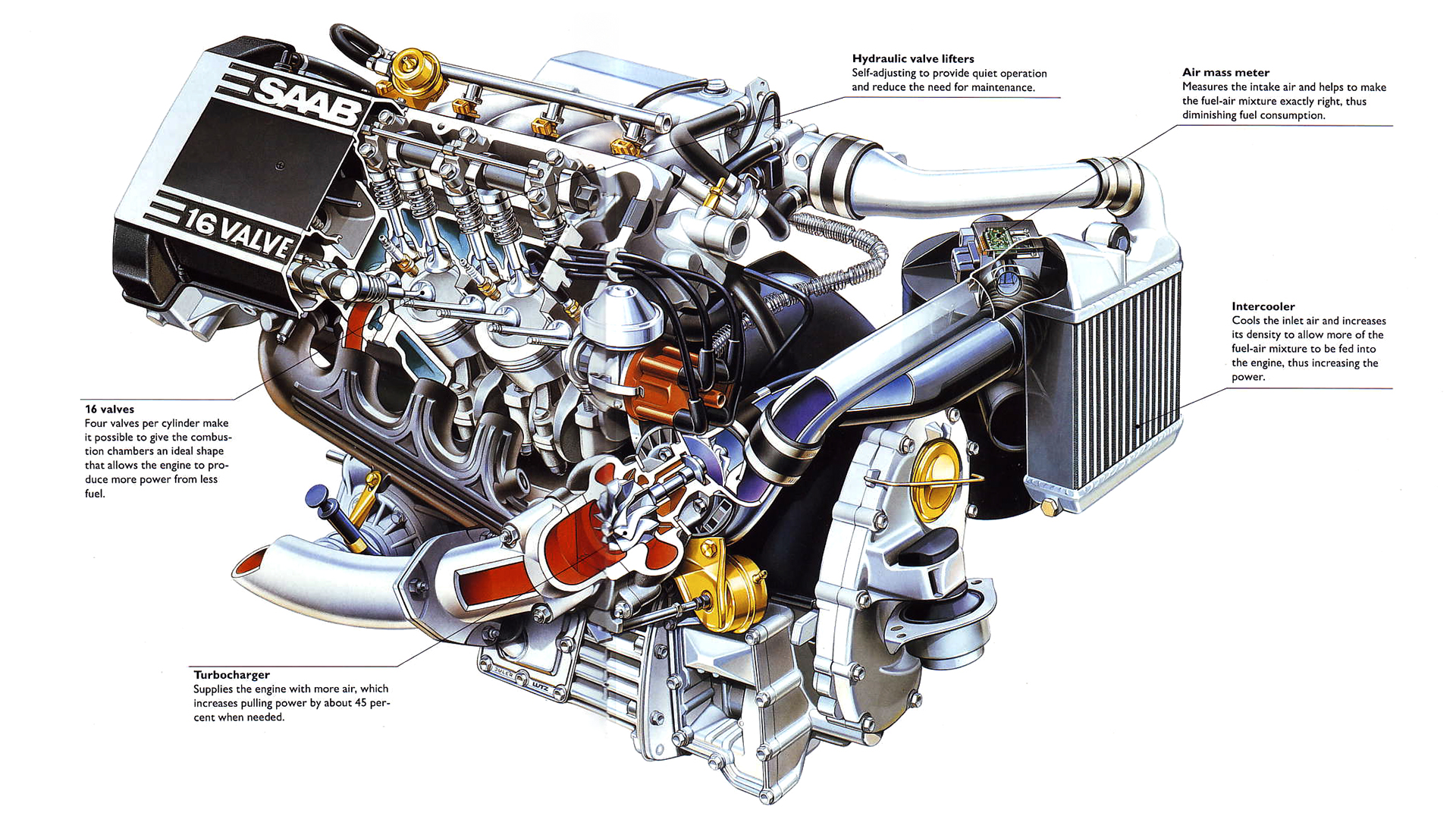
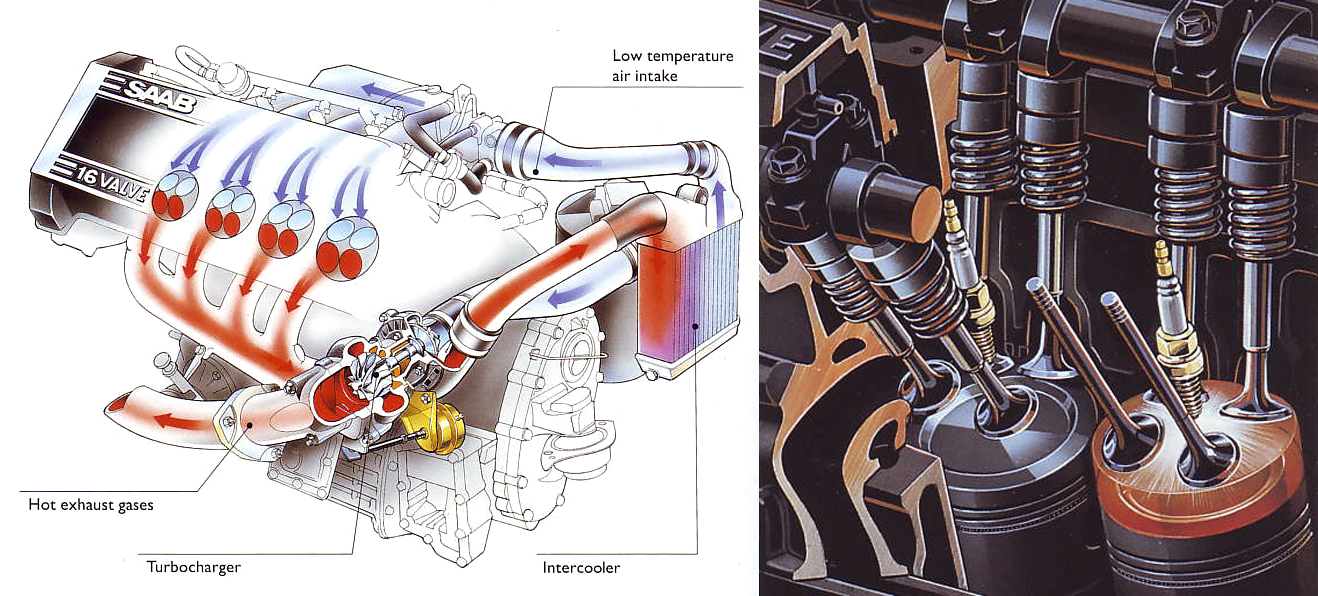
Saab's third generation of turbocharging technology provides strong acceleration with good fuel economy
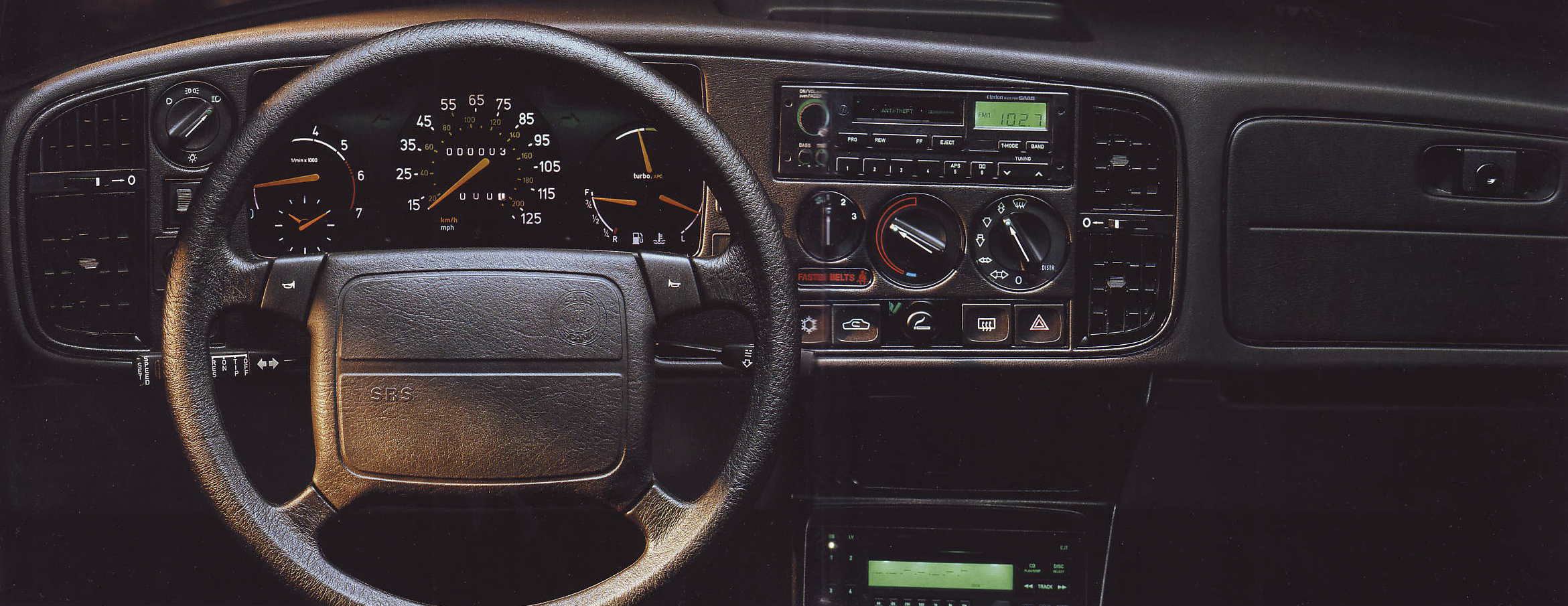
Engineering alone isn't going to improve anyone's judgment or shorten their reaction time. Not even Saab engineering. But Saab 900 engineering will give your own judgment and reflexes the opportunity to work efficiently and well for long periods of driving. Information reaches the driver clearly and instantly thanks to excellent visibility in all directions, and through the cluster of analog instruments positioned comfortably within the driver's vision. Saab's front seats are firmly supportive. They are orthopedically designed and their fabrics and fillings are chosen to hold you comfortably in place with a minimum of muscular exertion on your part. At the end of hours of driving, most people feel far less fatigued than other cars have taught them to expect. Throughout the 1992 Saab 900 interior, engineers have created an environment that helps the driver to stay relaxed and alert for as long as he or she is at the wheel. An efficient system for heating, cooling and ventilating the interior, electrically heated front seats, and effective sound-dampening materials all contribute to that feeling. It may not actually make you a better driver than you already are, but a 900-Series Saab will help you perform more often at your best.
Four cylinder, two-liter, in-line engine, longitudinally mounted and inclined at an angle of 45 degrees. Cast iron cylinder block. Light-alloy cylinder head of crossflow design. Five-bearing crankshaft. Cooling system with electrically driven, thermostatically controlled radiator fan. Breakerless electronic ignition system. Three-way catalytic converter and Lambda sensor: Electronic fuel injection. Turbocharger with water-cooled bearing housings and integrated waste gate (boost pressure control valve). Intercooler: Saab APC system for continuous boost pressure control. Dome-shaped combustion chambers with centrally located spark plugs. Double chain-driven overhead camshafts. Self-adjusting hydraulic lifters (maintenance-free). Four valves per cylinder: Engine oil cooler:
| Power Rating | SAE net, 160 bhp at 5500 rpm. |
| Peak torque | SAE net, 188 ft.lb. at 3000 rpm. |
| Max boost pressure | 0.75 bar: |
| Compression ratio | 9.0:1. |
| Displacement | 121 cu.in. |
| Bore | 3.54 in. |
| Stroke | 3.07 in. |
| Fuel tank capacity | 18.0 gallons. |
| Alternator | 1070W, 80 A. |
| Battery | 12V, 62 Ah. |
| Starter motor | 1.9 hp. |
| Cooling system capacity | 2.6 gallons. |
Front wheel drive. Hydraulically actuated, single dry-plate clutch. Hydraulic torque converter instead of the clutch on cars with automatic transmission. The engine, clutch, gearbox and differential are integrated into a compact unit.
| Manual gearbox | Ratios 4.57:1, 2.62:1, 1.74:1, 1.26:1, 1.00:1; Reverse 5.03:1; Final drive 3.89:1 |
| Automatic transmission | Ratios 2.39:1, 1.45:1, 1.00:1: Reverse 2.09:1; Final drive 3.89:1 |
Front: Double wishbones, with pivot-mount-ed, progressive action coil springs and gas shock absorbers. Stabilizer bar: Rear: Lightweight, beam-type rear axle with coil springs, gas shock absorbers, two leading and two trailing arms and a Panhard rod. Disc brakes all around, ventilated in front. Self-adjusting, single piston system with floating brake caliper. Asbestos-free pads. Power-assisted. Saab Anti-lock Brake System with dual microprocessor control unit and three separate hydraulic circuits-one for each front wheel and one for the rear wheels. Mechanical action of hand brake on rear wheel discs. Power-assisted rack-and-pinion steering.
| Turning circle diameter | 33.8 ft. |
| Number of steering wheel turns lock-to-lock | 3.7 |
| Wheels | 5.5 J x 15" light-alloy. |
| Tires | 195/60 VR 15 high-speed, low profile steel belted radials. |
| Saab 900 Turbo Convertible Capacity | EPA Luggage Capacity, 10.7 cu.ft. |
| Saab 900 Turbo Capacity | EPA Cargo Volume Index with the back seat raised, 21.9 cu.ft. Total Cargo Space with the back seat folded down, 56.5 cu.ft. |
| Curb weight | Convertible, 3058 lb., Hatchback, 2904 lb. |
| Weight distribution at curb weight | About 60% front, 40% rear. |
| Maximum permissible load on the roof | 220 lb., except convertible. |
| Maximum permissible trailer weight | 2000 lb. |
Four cylinder, 2.1-liter, in-line engine, longitudinally mounted and inclined at an angle of 45 degrees. Cast iron cylinder block. Light-alloy cylinder head of crossflow design. Five-bearing crankshaft. Cooling system with electrically driven, thermostatically controlled radiator fan. Breakerless electronic ignition system. Three-way catalytic converter and Lambda sensor. Electronic fuel injection. Dome-shaped combustion chambers with centrally located spark plugs. Double chain-driven overhead camshafts. Self-adjusting hydraulic lifters (maintenance-free). Four valves per cylinder. Breakerless electronic gnition with knock sensor control system.
| Power Rating | SAE net, 140 bhp at 6000 rpm. |
| Peak torque | SAE net, 133 ft.lb. at 2900 rpm. |
| Compression ratio | 10.1:1. |
| Displacement | 121 cu.in. |
| Bore | 3.66 in. |
| Stroke | 3.07 in. |
| Fuel tank capacity | 18.0 gallons. |
| Alternator | 1070W, 80 A. |
| Battery | 12V, 60 Ah. |
| Starter motor | 1.9 hp. |
| Cooling system capacity | 2.6 gallons. |
Front wheel drive. Hydraulically actuated, single dry-plate clutch. Hydraulic torque converter instead of the clutch on cars with automatic transmission. The engine, clutch, gearbox and differential are integrated into a compact unit,
| Manual gearbox | Ratios 4.57:1, 2.62:1, 1.74:1, 1.26:1, 1.00:1; Reverse 5.03:1; Final drive 3.89:1 |
| Automatic transmission | Ratios 2.39:1, 1.45:1, 1.00:1: Reverse 2.09:1; Final drive 3.89:1 |
Front: Double wishbones, with pivot-mounted, progressive action coil springs and gas shock absorbers. Stabilizer bar: Rear: Lightweight, beam-type rear axle with coil springs, gas shock absorbers, two leading and two trailing arms and a Panhard rod. Disc brakes all around, ventilated in front. Self-adjusting, single piston system with floating brake caliper. Asbestos-free pads. Power-assisted. Saab Anti-lock Brake System with dual microprocessor control unit and three separate hydraulic circuits-one for each front wheel and one for the rear wheels. Mechanical action of hand brake on rear wheel discs. Power-assisted rack-and-pinion steering.
| Turning circle diameter | 33.8 ft. |
| Number of steering wheel turns lock-to-lock | 3.7 |
| Wheels | 900S Convertible and 900S, 5.5 J × 15" light-alloy. 900, 5.5 J × 15" steel with full wheel covers. |
| Tires | 185/65 TR 15 low rolling resistance, low profile steel belted radials. |
| Saab 900S Turbo Convertible Capacity | EPA Luggage Capacity, 10.7 cu.ft. |
| Saab 900S and 900 3-door Capacity | EPA Cargo Volume Index with the back seat raised, 21.9 cu.ft. Total Cargo Space with the back seat folded down, 56.5 cu.ft. |
| Saab 900S and 900 4-door Capacity | EPA Cargo Volume Index with the back seat raised, 14.4 cu.ft. Total Cargo Space with the back seat folded down, 53 cu.ft |
| Curb weight | 900S Convertible, 2947 lb. 900S: Hatchback, 2779 Ib.; Sedan, 2821 lb. 900: Hatchback, 2734 Ib.; Sedan, 2776 lb |
| Weight distribution at curb weight | About 60% front, 40% rear. |
| Maximum permissible load on the roof | 220 lb., except convertible. |
| Maximum permissible trailer weight | 2000 lb. |
| 900 Turbo Conv | 900 S Conv | 900 Turbo | 900 S | 900 | 900 S 4dr | 900 4dr | |
| Double overhead camshaft 2.1-liter | ◾️ | ◾️ | ◾️ | ◾️ | ◾️ | ||
| Double overhead camshaft 2.0-liter engine | ◾️ | ◾️ | |||||
| 16-valve, light-alloy cylinder head | ◾️ | ◾️ | ◾️ | ◾️ | ◾️ | ◾️ | ◾️ |
| Electronic fuel injection | ◾️ | ◾️ | ◾️ | ◾️ | ◾️ | ◾️ | ◾️ |
| Knock detector | ◾️ | ◾️ | ◾️ | ◾️ | ◾️ | ◾️ | ◾️ |
| Water-cooled turbocharger | ◾️ | ◾️ | |||||
| Air-to-air charge-air intercooler | ◾️ | ◾️ | |||||
| Air-to-air charge-air intercooler | ◾️ | ◾️ | |||||
| Saab APC charge-pressure control | ◾️ | ◾️ | |||||
| Engine oil cooler | ◾️ | ◾️ | |||||
| Four-wheel, power-assisted disc brakes with ABS | ◾️ | ◾️ | ◾️ | ◾️ | ◾️ | ◾️ | ◾️ |
| Ventilated front discs | ◾️ | ◾️ | ◾️ | ◾️ | ◾️ | ◾️ | ◾️ |
| Power-assisted rack-and-pinion steering | ◾️ | ◾️ | ◾️ | ◾️ | ◾️ | ◾️ | ◾️ |
| Double "wishbone" independent front suspension | ◾️ | ◾️ | ◾️ | ◾️ | ◾️ | ◾️ | ◾️ |
| Front and rear stabilizer bars | ◾️ | ◾️ | ◾️ | ◾️ | ◾️ | ◾️ | ◾️ |
| Steel-belted radial tires | ◾️ | ◾️ | ◾️ | ◾️ | ◾️ | ◾️ | ◾️ |
| Light-alloy wheels | ◾️ | ◾️ | ◾️ | ◾️ | ◾️ | ||
| 5-speed manual trans | ◾️ | ◾️ | ◾️ | ◾️ | ◾️ | ◾️ | ◾️ |
| Automatic trans | O | O | O | O | O | O | O |
| 900 Turbo Conv | 900 S Conv | 900 Turbo | 900 S | 900 | 900 S 4dr | 900 4dr | |
| Saab Supplemental Restraint System (SRS) | ◾️ | ◾️ | ◾️ | ◾️ | ◾️ | ◾️ | ◾️ |
| Driver's-side air bag | ◾️ | ◾️ | ◾️ | ◾️ | ◾️ | ◾️ | ◾️ |
| Padded knee bolsters for front-seat occupants | ◾️ | ◾️ | ◾️ | ◾️ | ◾️ | ◾️ | ◾️ |
| 3-point safety belts at all outboard seating positions | ◾️ | ◾️ | ◾️ | ◾️ | ◾️ | ◾️ | ◾️ |
| Rear center lap belt | ◾️ | ◾️ | ◾️ | ◾️ | ◾️ | ||
| Welded unit-body construction | ◾️ | ◾️ | ◾️ | ◾️ | ◾️ | ◾️ | ◾️ |
| Designed in front and rear "crumple zones" | ◾️ | ◾️ | ◾️ | ◾️ | ◾️ | ◾️ | ◾️ |
| Reinforced guard members in side doors | ◾️ | ◾️ | ◾️ | ◾️ | ◾️ | ◾️ | ◾️ |
| Well-isolated fuel tank location | ◾️ | ◾️ | ◾️ | ◾️ | ◾️ | ◾️ | ◾️ |
| Collapsible steering column | ◾️ | ◾️ | ◾️ | ◾️ | ◾️ | ◾️ | ◾️ |
| Manually activated "childproof" rear door locks | ◾️ | ◾️ | |||||
| Lock-out switch for rear door power window switches | ◾️ | ◾️ | |||||
| Saab Anti-lock Braking System (ABS) | ◾️ | ◾️ | ◾️ | ◾️ | ◾️ | ◾️ | ◾️ |
| Dual microprocessor control unit | ◾️ | ◾️ | ◾️ | ◾️ | ◾️ | ◾️ | ◾️ |
| Self-diagnostic capabilities | ◾️ | ◾️ | ◾️ | ◾️ | ◾️ | ◾️ | ◾️ |
| Three separate hydraulic circuits | ◾️ | ◾️ | ◾️ | ◾️ | ◾️ | ◾️ | ◾️ |
| Mechanically activated rear-wheel hand brake | ◾️ | ◾️ | ◾️ | ◾️ | ◾️ | ◾️ | ◾️ |
| Headlamp wiper and washer system | ◾️ | ◾️ | ◾️ | ◾️ | ◾️ | ◾️ | ◾️ |
| Pre-wired for daytime running lights | ◾️ | ◾️ | ◾️ | ◾️ | ◾️ | ◾️ | ◾️ |
| 900 Turbo Conv | 900 S Conv | 900 Turbo | 900 S | 900 | 900 S 4dr | 900 4dr | |
| Electric sliding steel sunroof | ◾️ | ◾️ | ◾️ | ||||
| "Self-restoring" front and rear bumpers | ◾️ | ◾️ | ◾️ | ◾️ | ◾️ | ◾️ | ◾️ |
| Protective body side moldings | ◾️ | ◾️ | ◾️ | ◾️ | ◾️ | ◾️ | ◾️ |
| Aerodynamic headlamps with flush lenses | ◾️ | ◾️ | ◾️ | ◾️ | ◾️ | ◾️ | ◾️ |
| Replaceable halogen headlamp bulbs | ◾️ | ◾️ | ◾️ | ◾️ | ◾️ | ◾️ | ◾️ |
| Cornering lights | ◾️ | ◾️ | ◾️ | ◾️ | ◾️ | ◾️ | ◾️ |
| Side guidance reversing lights | ◾️ | ◾️ | ◾️ | ◾️ | ◾️ | ◾️ | ◾️ |
| Side-mounted direction indicator lights | ◾️ | ◾️ | ◾️ | ◾️ | ◾️ | ◾️ | ◾️ |
| Front fog lights | ◾️ | ◾️ | ◾️ | ◾️ | ◾️ | ||
| Front Spoiler | ◾️ | ◾️ | ◾️ | ◾️ | ◾️ | ◾️ | ◾️ |
| Front Spoiler | ◾️ | ||||||
| Wrap-around rear spoiler with integrated center brake light | ◾️ | ◾️ | |||||
| Cambria cloth power top with full headliner | ◾️ | ◾️ | |||||
| Molded plastic boot cover with storage pouch | ◾️ | ◾️ | |||||
| Undercoating and anti-corrosion treatment | ◾️ | ◾️ | ◾️ | ◾️ | ◾️ | ◾️ | ◾️ |
| 900 Turbo Conv | 900 S Conv | 900 Turbo | 900 S | 900 | 900 S 4dr | 900 4dr | |
| Air-conditioning | ◾️ | ◾️ | ◾️ | ◾️ | ◾️ | ◾️ | ◾️ |
| Electrically heated, reclining front bucket seats | ◾️ | ◾️ | ◾️ | ◾️ | ◾️ | ◾️ | ◾️ |
| Temperature control switch for driver's seat heater | ◾️ | ◾️ | ◾️ | ◾️ | ◾️ | ◾️ | ◾️ |
| Power, 8-way adjustable front seats | ◾️ | ◾️ | |||||
| Power, 8-way adjustable driver's seat | ◾️ | ||||||
| Central locking for doors and trunk | ◾️ | ◾️ | ◾️ | ◾️ | ◾️ | ◾️ | ◾️ |
| Power windows | ◾️ | ◾️ | ◾️ | ◾️ | ◾️ | ◾️ | ◾️ |
| "One touch" opening for front windows | ◾️ | ◾️ | ◾️ | ◾️ | ◾️ | ◾️ | ◾️ |
| Electronic speed control with "Cruise On" indicator light | ◾️ | ◾️ | ◾️ | ◾️ | ◾️ | ||
| Electrically adjustable and heated sideview mirrors | ◾️ | ◾️ | ◾️ | ◾️ | ◾️ | ◾️ | ◾️ |
| Windshield wiper/washer system with interval wipe feature | ◾️ | ◾️ | ◾️ | ◾️ | ◾️ | ◾️ | ◾️ |
| Head restraints at front and rear outboard seating positions | ◾️ | ◾️ | ◾️ | ◾️ | ◾️ | ◾️ | ◾️ |
| Fold-down rear center armrest | ◾️ | ◾️ | ◾️ | ◾️ | ◾️ | ||
| Front console with storage compartment | ◾️ | ◾️ | ◾️ | ◾️ | ◾️ | ◾️ | ◾️ |
| Automatic headlamp shutoff | ◾️ | ◾️ | ◾️ | ◾️ | ◾️ | ◾️ | ◾️ |
| Interior courtesy light delay feature | ◾️ | ◾️ | ◾️ | ◾️ | ◾️ | ||
| Map reading light | ◾️ | ◾️ | ◾️ | ◾️ | ◾️ | ◾️ | ◾️ |
| Luggage compartment light | ◾️ | ◾️ | ◾️ | ◾️ | ◾️ | ◾️ | ◾️ |
| Built-in tool kit | ◾️ | ◾️ | ◾️ | ◾️ | ◾️ | ◾️ | ◾️ |
| Tinted glass all around | ◾️ | ◾️ | ◾️ | ◾️ | ◾️ | ◾️ | ◾️ |
| Electric rear window demister | ◾️ | ◾️ | ◾️ | ◾️ | ◾️ | ◾️ | ◾️ |
| Pique fabric upholstery | ◾️ | ◾️ | |||||
| Leather seating surfaces | ◾️ | ◾️ | ◾️ | ◾️ | ◾️ | ||
| Leather-wrapped steering wheel | ◾️ | ◾️ | ◾️ | ||||
| Leather shift boot cover (manual transmission) | ◾️ | ◾️ | ◾️ | ||||
| Leather shift boot cover (manual transmission) | ◾️ | ◾️ | |||||
| Electric rear window demister | ◾️ | ◾️ | ◾️ | ◾️ | ◾️ | ||
| Saab anti-theft alarm | ◾️ | ◾️ |
| 900 Turbo Conv | 900 S Conv | 900 Turbo | 900 S | 900 | 900 S 4dr | 900 4dr | |
| Removable Saab/Clarion AM/FM stereo/cassette | ◾️ | ◾️ | ◾️ | ◾️ | ◾️ | ◾️ | ◾️ |
| Anti-theft lock-out code and warning light | ◾️ | ◾️ | ◾️ | ◾️ | ◾️ | ◾️ | ◾️ |
| 150-watt amplifier | ◾️ | ◾️ | ◾️ | ◾️ | ◾️ | ◾️ | ◾️ |
| Front/rear fader control | ◾️ | ◾️ | ◾️ | ◾️ | ◾️ | ◾️ | ◾️ |
| Electronic tuning, with 18 programmable AM/FM pre-sets | ◾️ | ◾️ | ◾️ | ◾️ | ◾️ | ◾️ | ◾️ |
| Seek and scan, up and down tuning | ◾️ | ◾️ | ◾️ | ◾️ | ◾️ | ◾️ | ◾️ |
| Auto-reverse cassette with Dolby® noise reduction | ◾️ | ◾️ | ◾️ | ◾️ | ◾️ | ◾️ | ◾️ |
| Full-logic cassette transport with key-off eject | ◾️ | ◾️ | ◾️ | ◾️ | ◾️ | ◾️ | ◾️ |
| Four acoustically engineered speakers | ◾️ | ◾️ | ◾️ | ◾️ | ◾️ | ◾️ | ◾️ |
| Automatic electric antenna | ◾️ | ◾️ | ◾️ | ◾️ | ◾️ | ◾️ | ◾️ |
| Removable Saab/Clarion compact disc player/7-band graphic equalizer/spectrum analyzer with CD changer controls | ◾️ | ◾️ |
| 900 Turbo Conv | 900 S Conv | 900 Turbo | 900 S | 900 | 900 S 4dr | 900 4dr | |
| Analog speedometer | ◾️ | ◾️ | ◾️ | ◾️ | ◾️ | ◾️ | ◾️ |
| Analog tachometer | ◾️ | ◾️ | ◾️ | ◾️ | ◾️ | ◾️ | ◾️ |
| Odometer and trip meter | ◾️ | ◾️ | ◾️ | ◾️ | ◾️ | ◾️ | ◾️ |
| Fuel and temperature gauges | ◾️ | ◾️ | ◾️ | ◾️ | ◾️ | ◾️ | ◾️ |
| Turbo boost pressure gauge | ◾️ | ◾️ | |||||
| Quartz analog clock | ◾️ | ◾️ | ◾️ | ◾️ | ◾️ | ◾️ | ◾️ |
| "Shift-up" indicator (manual transmission) | ◾️ | ◾️ | ◾️ | ◾️ | ◾️ | ◾️ | ◾️ |
| Supplemental Restraint System (SRS) Warning Light | ◾️ | ◾️ | ◾️ | ◾️ | ◾️ | ◾️ | ◾️ |
| Anti-lock Braking System (ABS) Warning Light | ◾️ | ◾️ | ◾️ | ◾️ | ◾️ | ◾️ | ◾️ |
| Low fuel, oil pressure, battery and brake fluid Warning Light | ◾️ | ◾️ | ◾️ | ◾️ | ◾️ | ◾️ | ◾️ |
| Indicator lamps for rear demister, hand brake and high beam | ◾️ | ◾️ | ◾️ | ◾️ | ◾️ | ◾️ | ◾️ |
When you build one of Europe's leading sports sedans, you don't have to also make it useful. None of the others seem to bother. The 900-Series Saabs share all the attributes that have made European sports sedans successful in recent years: responsive engines, superior handling, solid com-fort. Saabs add a flexible practicality rarely encountered in this class of automobile. All 900-Series models, except the two convertible models, can accommodate five adults. The 900S Convertible and 900 Turbo Convertible are comfortable four seaters. All of them provide plenty of luggage space for those adult passengers-14.4 cubic feet of trunk space in the four-door models and 21.9 cubic feet in the three-door models. The Saab difference is this: the generous amount of luggage space can be instantly converted into a cavernous amount of cargo space simply by lowering the rear seat. In a three-door 900 model, it produces 56.5 cubic feet of space, enough to swallow a six-foot sofa. In a four-door model, you get 53 cubic feet. Unlike some of our competitors, Saabs are designed to run both switchbacks and errands.
Every Saab engine is testimony to Saab's absolute refusal to compro-mise. The 2.0-liter Turbo engine and the 2.1-liter naturally aspirated engine both combine generous power with low fuel consumption; high technology with strong reliability; low emissions with long durability. Saab's engineers increased the power and efficiency of the compact and lightweight engines by providing them with four valves per cylinder, allowing a strong influx of fresh air and efficient expulsion of burned gases. The arrangement of four small valves around the perimeter of the cylinder allows placement of the spark plug in the center for the most even and efficient burning of the fuel-air mixture. Weight is further reduced, and therefore fuel conserved and emissions limited, by the extensive use of lightweight aluminum alloy for many engine parts. The naturally aspirated Saab engine produces a respectable 140 horsepower. The intercooled APC Turbo engine produces 160 horse-power. Turbocharging, a technology pioneered by Saab, is an effective method of making a car quicker and more powerful without a penalty in fuel consumption. Extra power is only used on demand, provided by a small, lightweight turbocharger instead of by additional engine size that would use more gasoline.
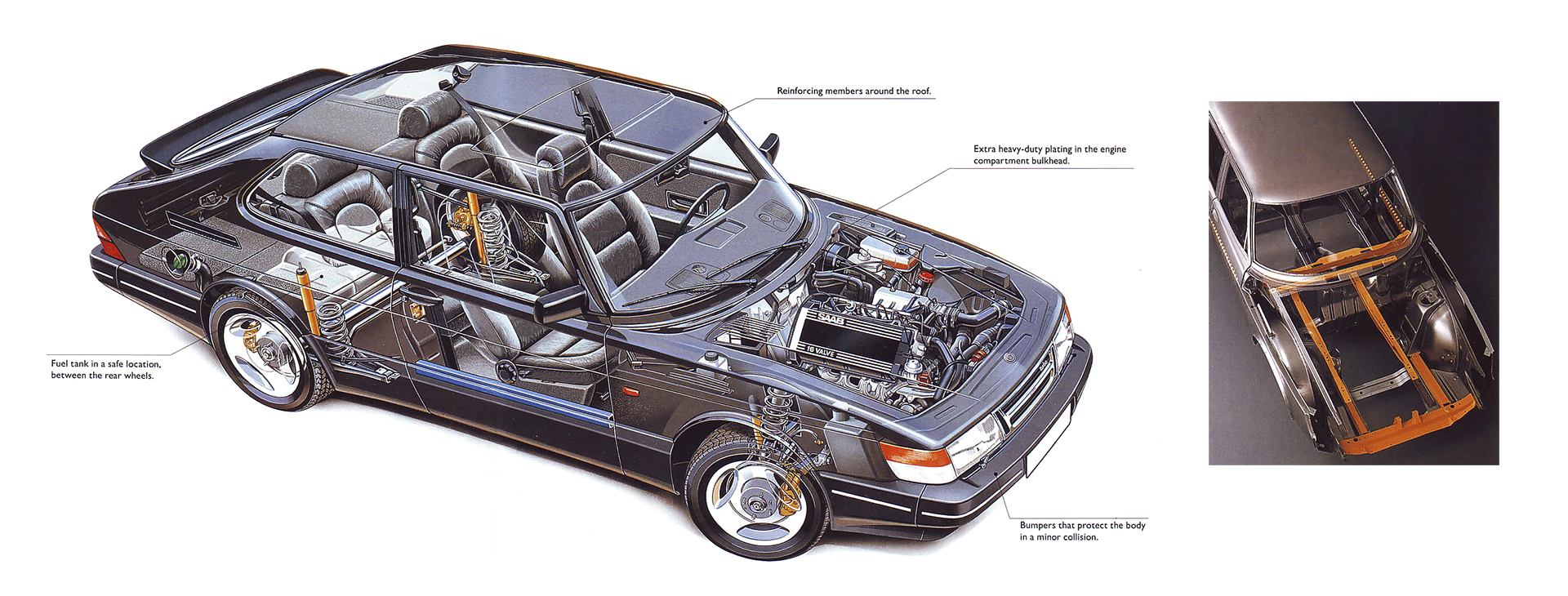
Accidents happen. Very often they're avoidable, but sometimes they're not. Sometimes they happen to careful drivers in fine cars under excellent driving conditions. With luck, no such thing will happen to you. But Saab engineers have no faith in luck. They have faith in steel, and they surround the Saab's passenger compartment with a "safety cage" built of heavy-gauge steel and reinforced door side members. They placed specially designed "crumple zones," in front of and behind the passenger compartment, to deform in a controlled manner on impact to absorb much of the energy of a collision. They provided three-point inertia-reel seat belts and Saab's Supplemental Restraint System driver's-side air bag and padded knee bolster to hold the driver and front-seat passenger firmly in place. Rear-seat passengers have three-point seat belts in the two outboard positions and a lap belt in the center position. Interior surfaces are covered in dense, energy-absorbing materials to prevent injuries. There is no unconditionally safe place on the road. The inside of a Saab is as close as anyone has come to providing one.
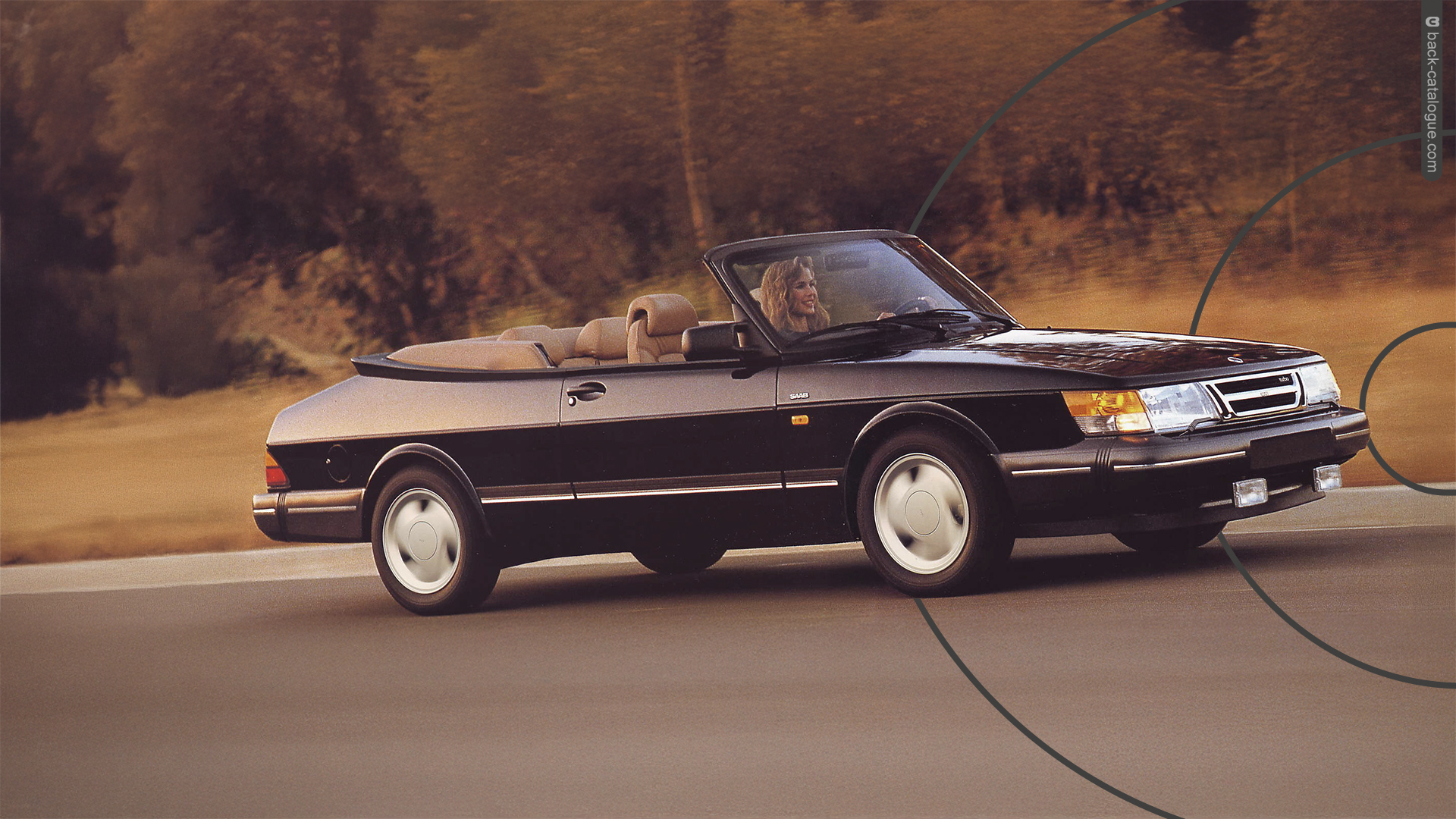
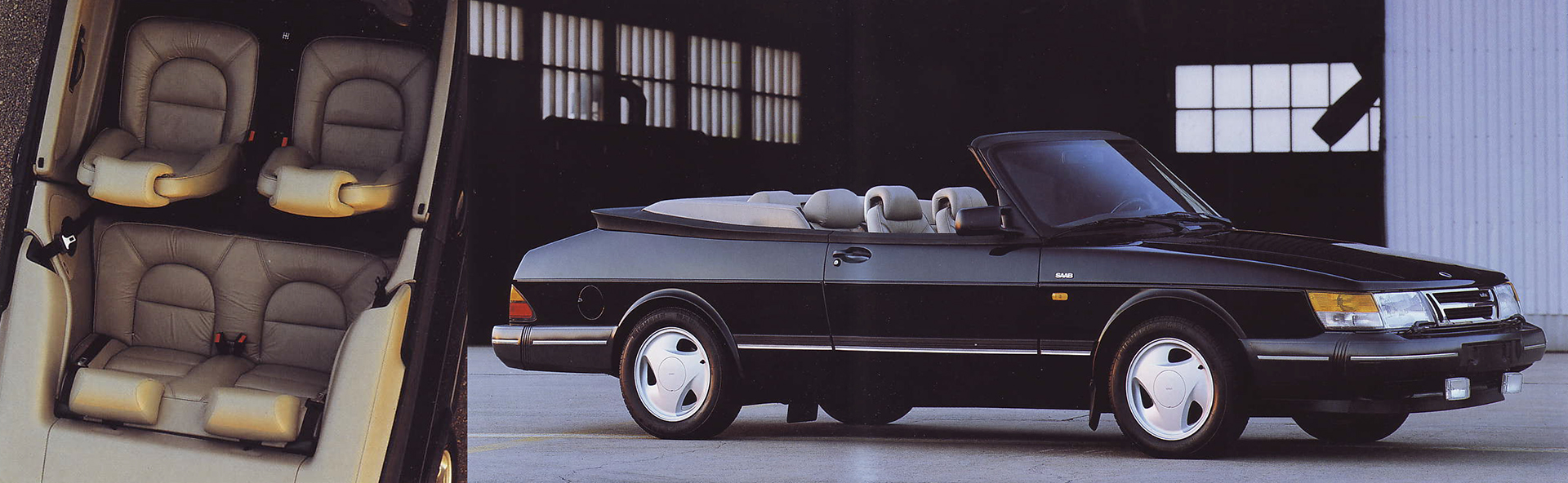
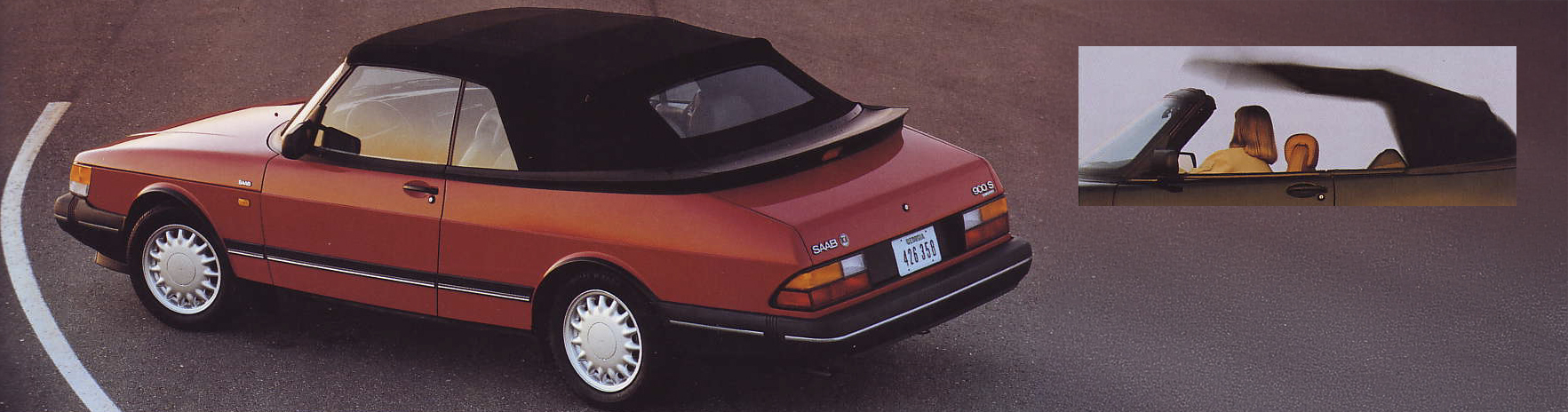
For the driver who craves the sensuality and romance of a true convertible, anything else is an altogether unacceptable compro-mise. Saab builds two cars that are true con-vertibles, built from the ground up to live without a fixed roof. Each is also a true Saab, intended from the beginning to provide long miles of dependable perfor-mance, instantaneous response, supportive comfort and powerful passenger protec-tion. Even in a car as exciting as a Saab convertible, Saab engineers think first about safety and driveability, so the power-operated tops include electrically heated glass rear windows. And while the dashing good looks of the 1992 Saab 900 Turbo Convertible and 900S Convertible may be reminiscent of a more glamorous era of European motoring, their effortless competence marks them as state-of-the-art automobiles.
Inside the 900 Convertibles, four adults can be seated comfortably for long periods. All of the supportive comfort for which Saabs are famous is present here in leather seating surfaces and firm, sculptured seats.
The convertible top is electrically operated for convenience, fully lined for comfort and quiet, and fitted with a heated glass rear window for excellent visibility.
The dashing good looks of the Saab convertibles are appropriately matched with outstanding strength and competent performance.
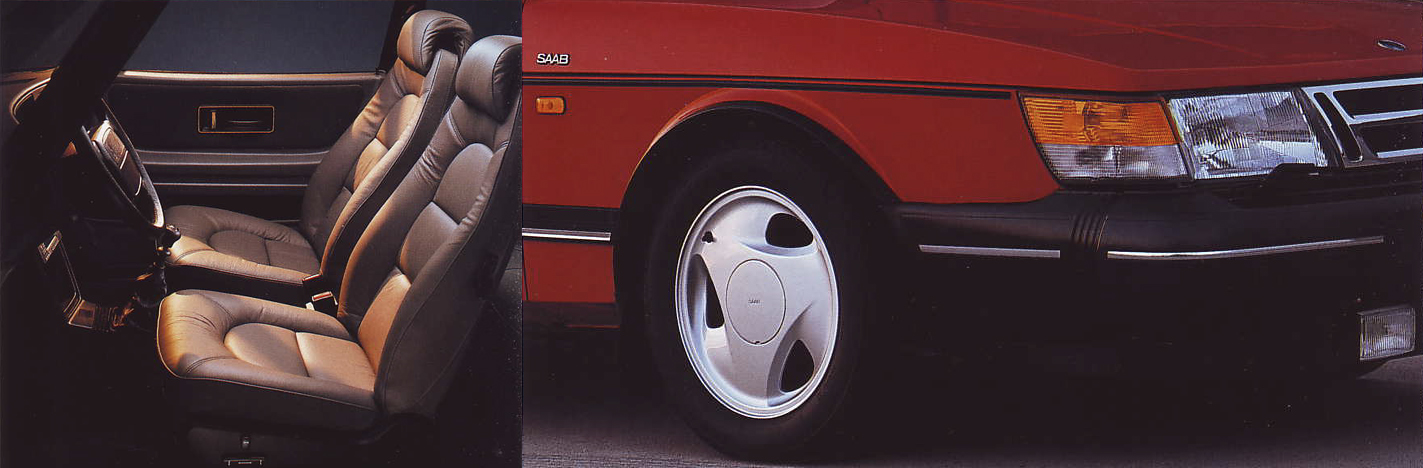
Drivers who love performance and admire applied intelligence made the 900 Turbo one of the most coveted performance sedans of the last decade. The performance is derived from, and the intelligence displayed in, a compact and lightweight engine that turns on power only when it is called for, thanks to Saab's third generation of turbocharging technol-ogy. It is that high level of technological development that enables the Turbo to produce 160 horsepower while maintaining good fuel economy. More applied intelligence shows itself in the 900 Turbo's enormous appetite for cargo, sturdy protection of passengers and unparalleled level of comfort.
The turbocharged engine delivers 160 horsepower, with plenty of low-speed torque for easy passing.
The Turbo's superior handling is imparted by well-balanced weight, a tenacious front-wheel-drive system, anti-roll bars and Saab's patented anti-lock braking system.
The electrically adjustable driver's seat is faced in rich leather, as is the sport steering wheel and the five-speed shift boot.
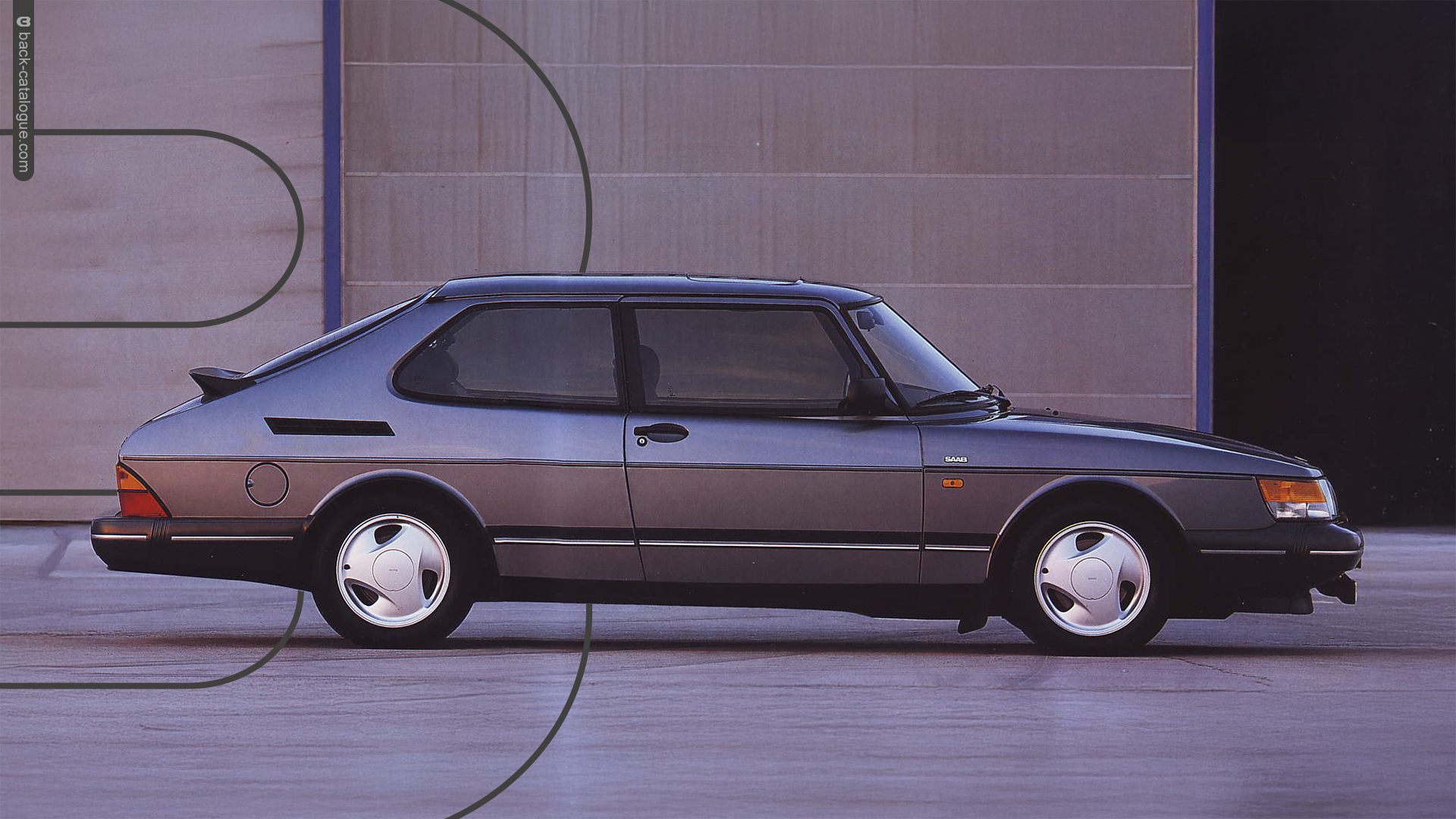
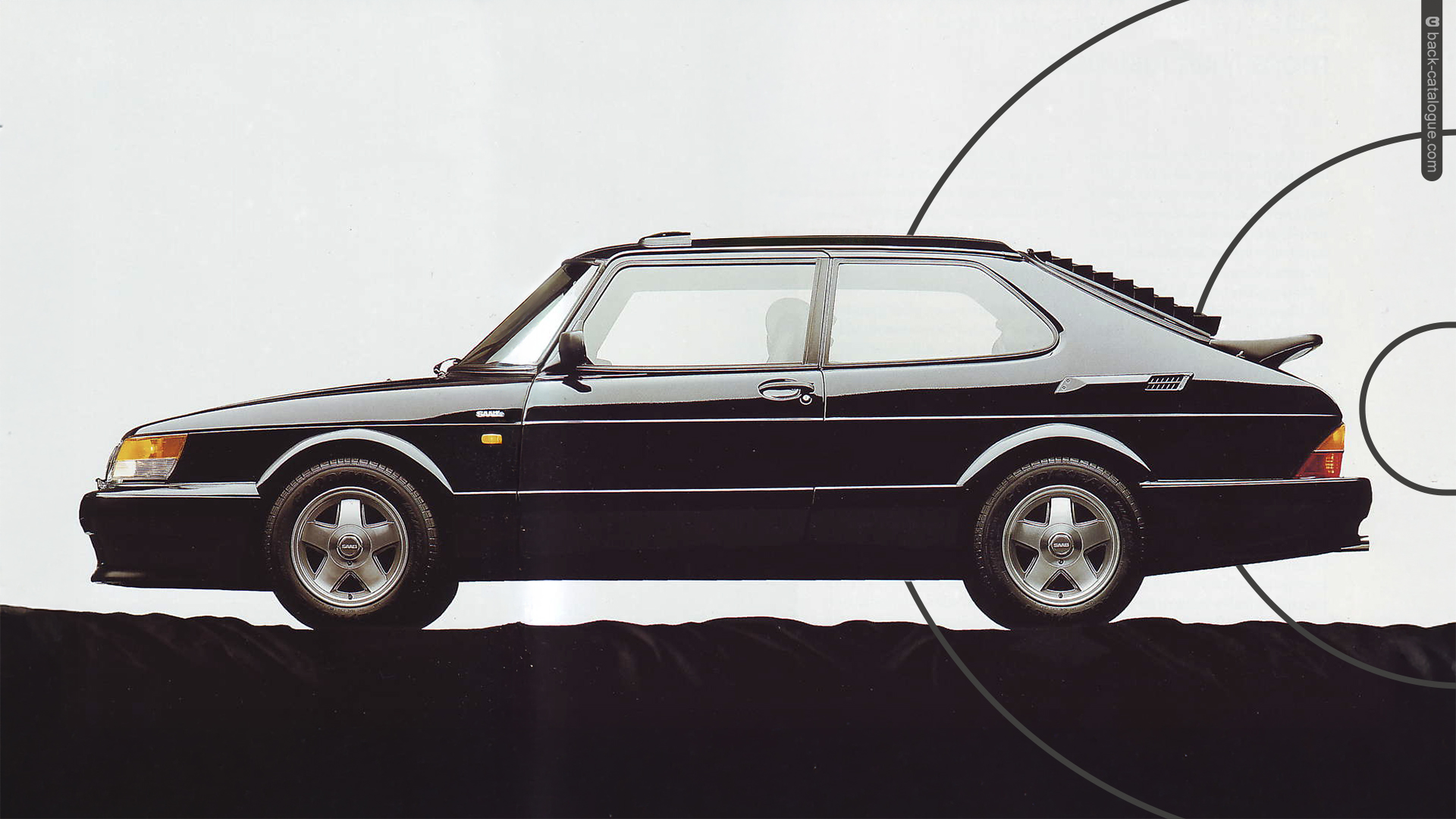
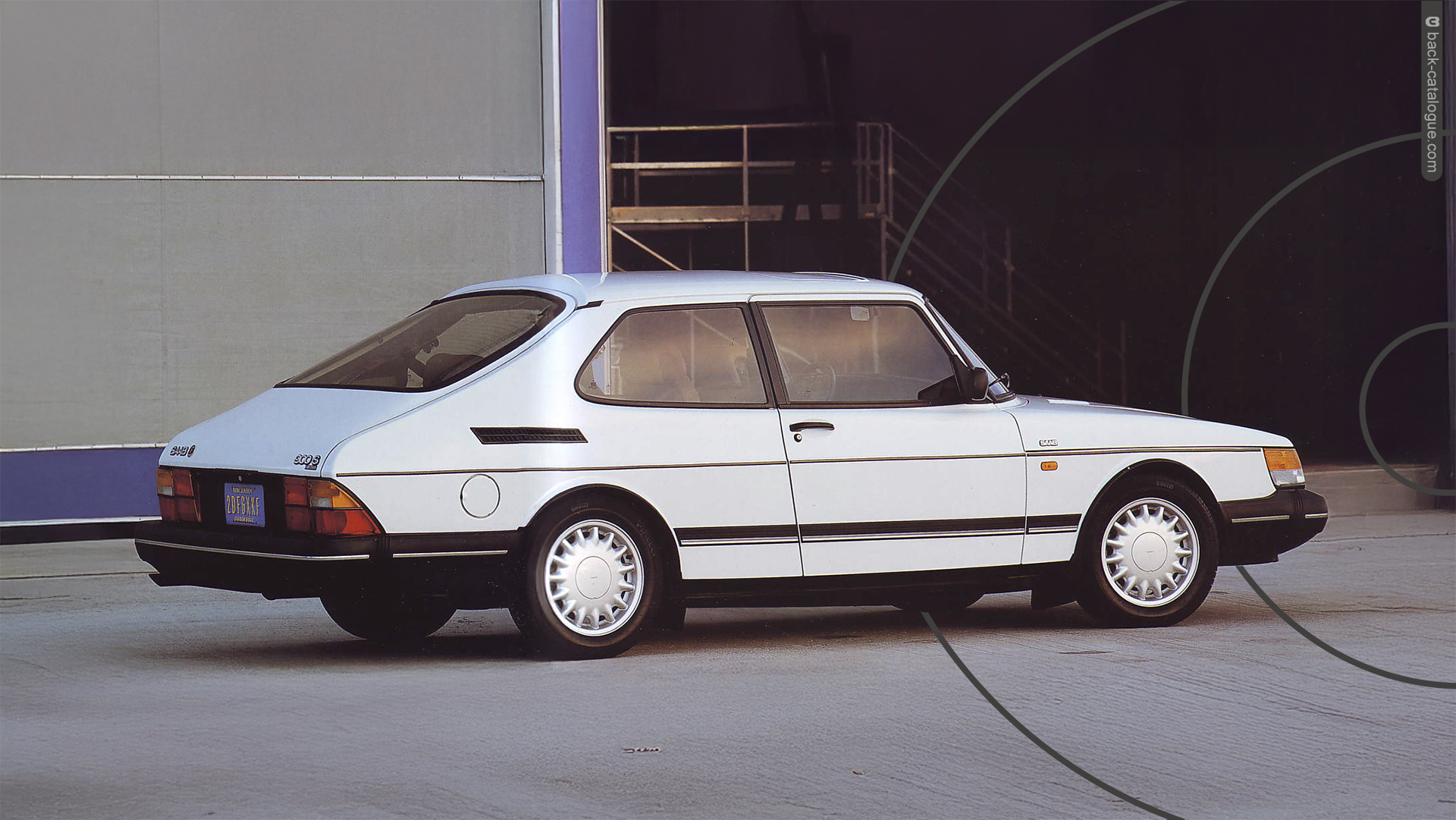
The 900 and the 900S three-door Saabs present one of the most satisfying balances in the automotive world today. They are famous for their combination of practicality and performance, offering both spirited driving and station-wagon-like hauling capacity. Their hatchback body style was pioneered by Saab years ago (and is widely imitated today) for people who love the economies and handling advantages of a modestly sized sedan but who need to occasionally carry bulky cargo. Both the sensibly priced 900 and the richly appointed 900S fully answer the needs of a driver who is unwilling to make compromises between pleasurable driving and thoughtful utility.
The three-door 900-Series models can hold up to 56.5 cubic feet of cargo when needed. The rear seat folds down, creating a large, flat cargo deck.
The headlamp wiper and washer system is one of many standard features on all Saab models. Saab was the first carmaker to use this important safety feature across its entire product line

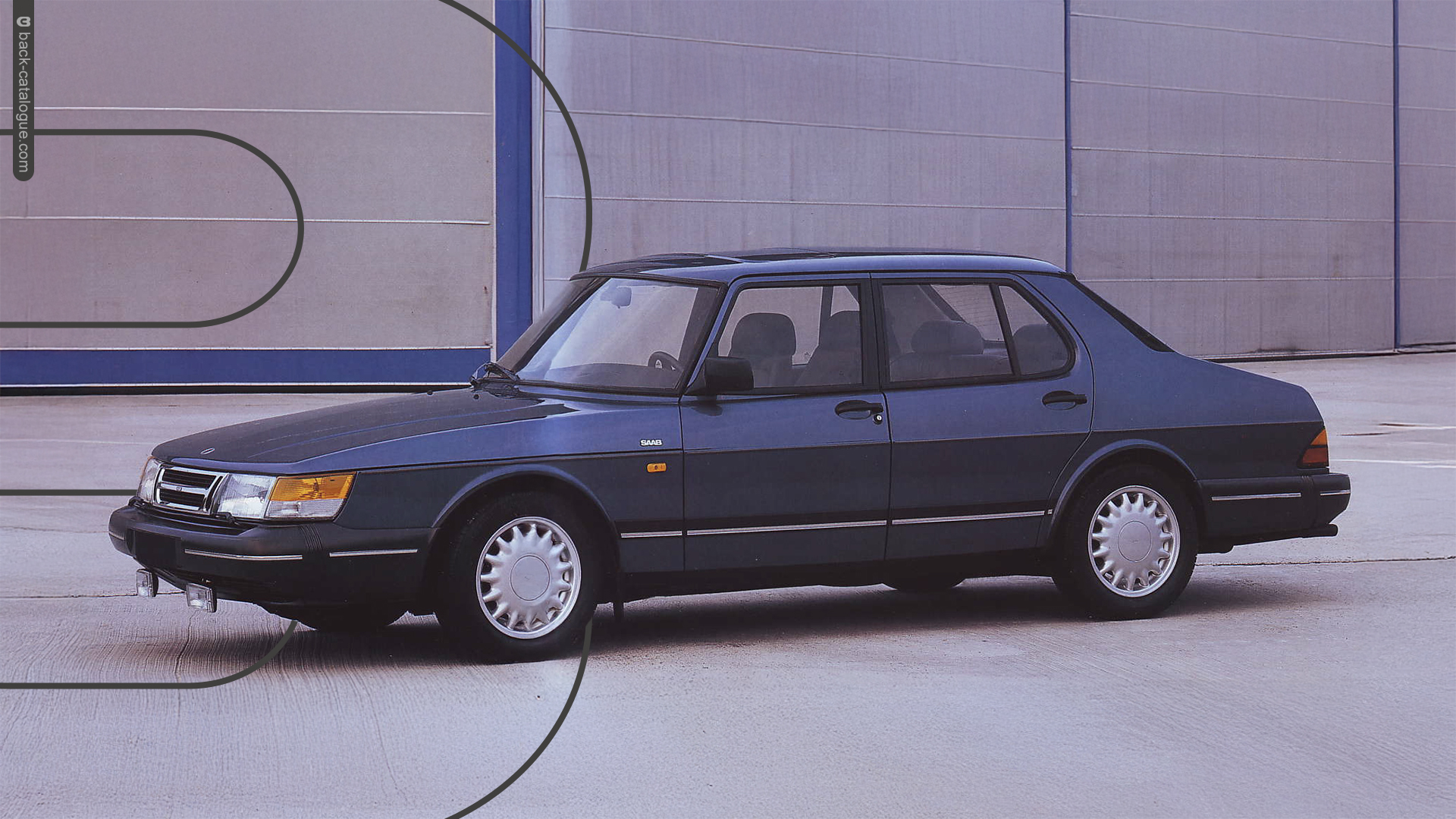
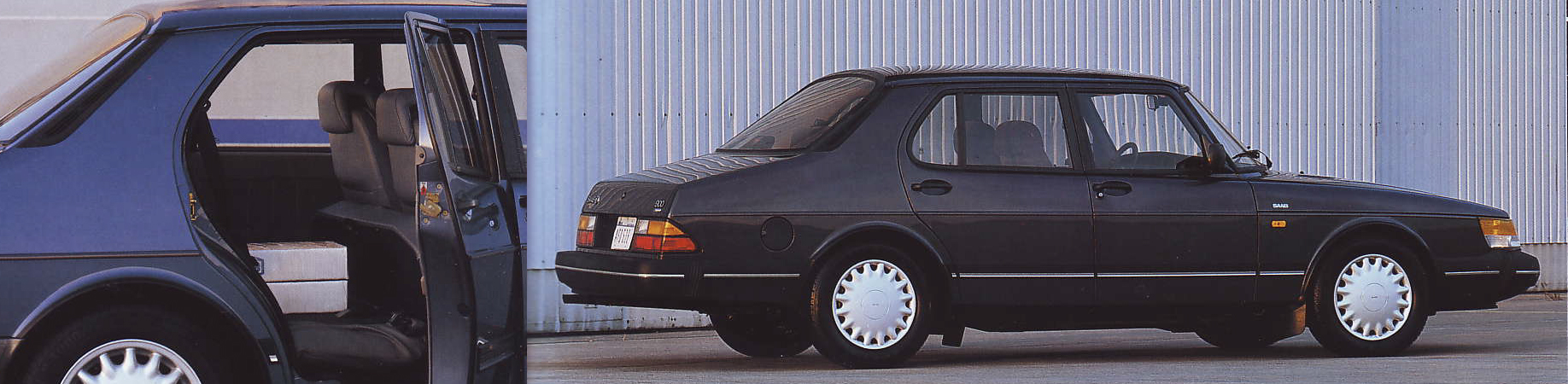
The four-door 900 and 900S manage to put an abundance of elegance and convenience into an efficiently sized package, proving that real comfort doesn't depend on useless bulk. Nor, for that matter, does real safety. The Insurance Institute for Highway Safety published a report in April of 1991 comparing cars built between 1984 and 1988. The report indicated that those four-door Saab 900's were the safest sedans on American roads, measured in terms of fatalities in highway accidents. The 1992 models, while structurally identical to the tested models, are improved with driver's-side air bags, anti-lock braking and headlamp wiper and washer system. No Saab, however, can ever be mistaken for another humdrum family sedan. While comfort, protectiveness and quiet good looks are undeniably present in these two cars, the robust and responsive performance marks them as true European sporting sedans.
With the rear seat folded down, the Saab four-door models provide 53 cubic feet of cargo space.
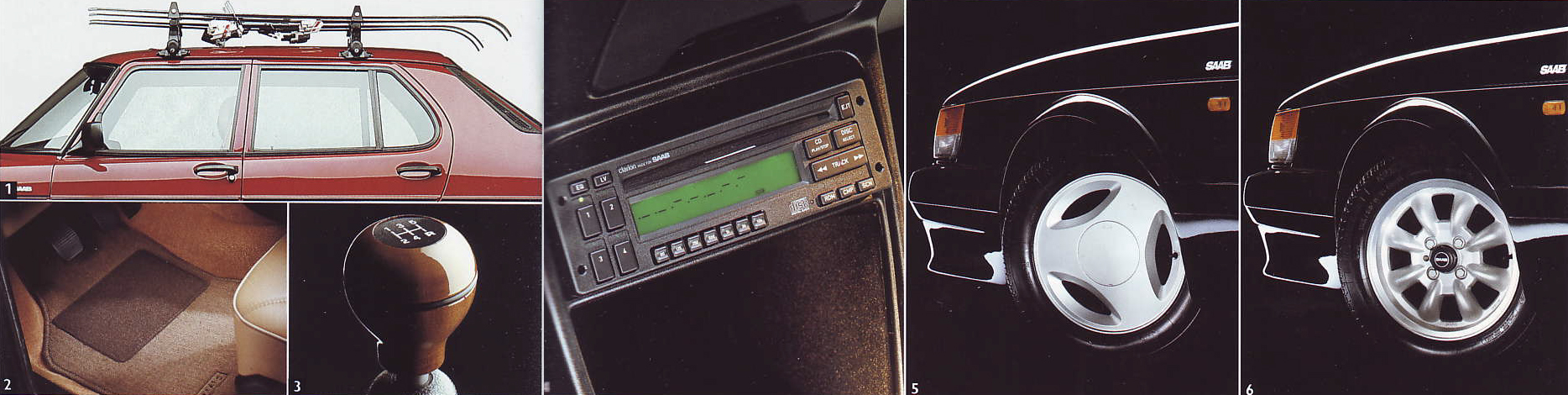
Quite obviously, the people who own Saabs aren't afraid of a little individuality. They don't need the reassurance of driving the same kinds of cars their neighbors drive. To be honest about it, most Saab owners go further than that. They actively seek to set themselves apart, to do things differently and to test unconventional solutions in the hope of finding a better way of doing things. In short, they're adventurers. They are the kinds of individuals who question, chal-lenge, invent and discover. They do things their own way. To give them as much latitude as possible without any compromise in quality, Saab dealers offer a broad array of options and accessories specifically designed for Saabs, some of which are illustrated here. They are only a few of the tools of self-expres-sion that Saab provides.