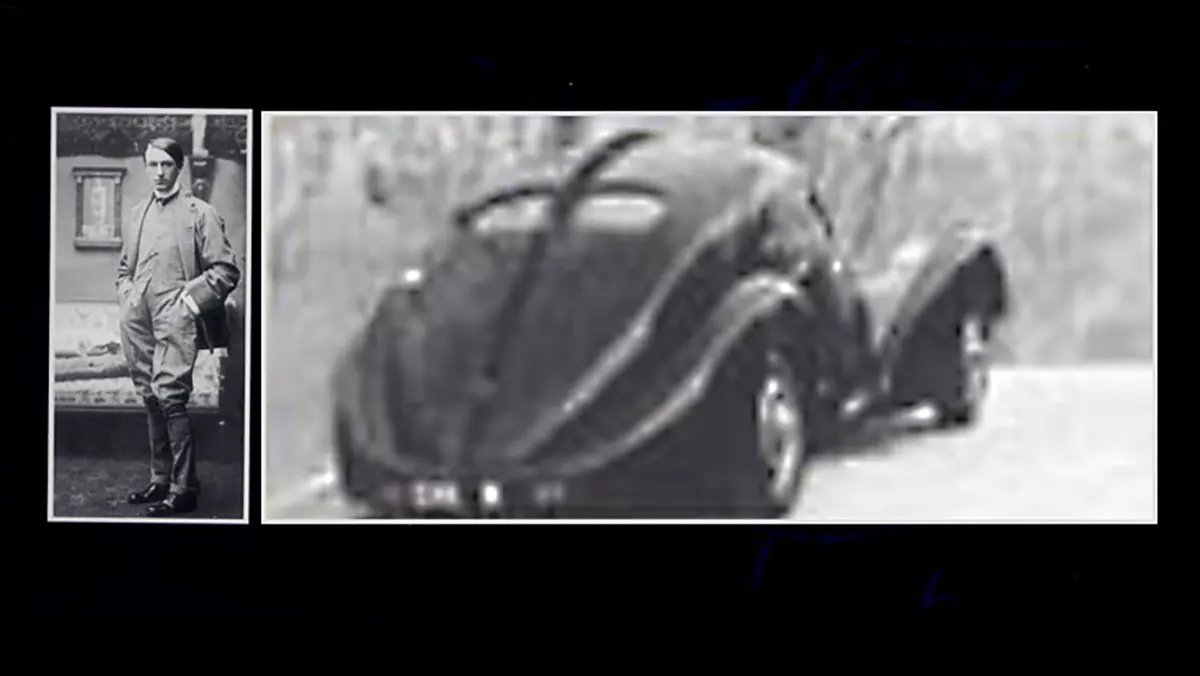
From 1909 to 1940, Ettore Bugatti built around 7,000 Bugattis, ranging from fast racing cars to derived touring automobiles. Every Bugatti that left the Molsheim factory was an authentic masterpiece — a unique creation shaped according to the personal aspirations of its maker.
A Bugatti is distinguished by the harmony of its proportions and an attention to detail that borders on perfectionism.
Horsepower (kW)
Capacity (cc)
Torque (Nm)
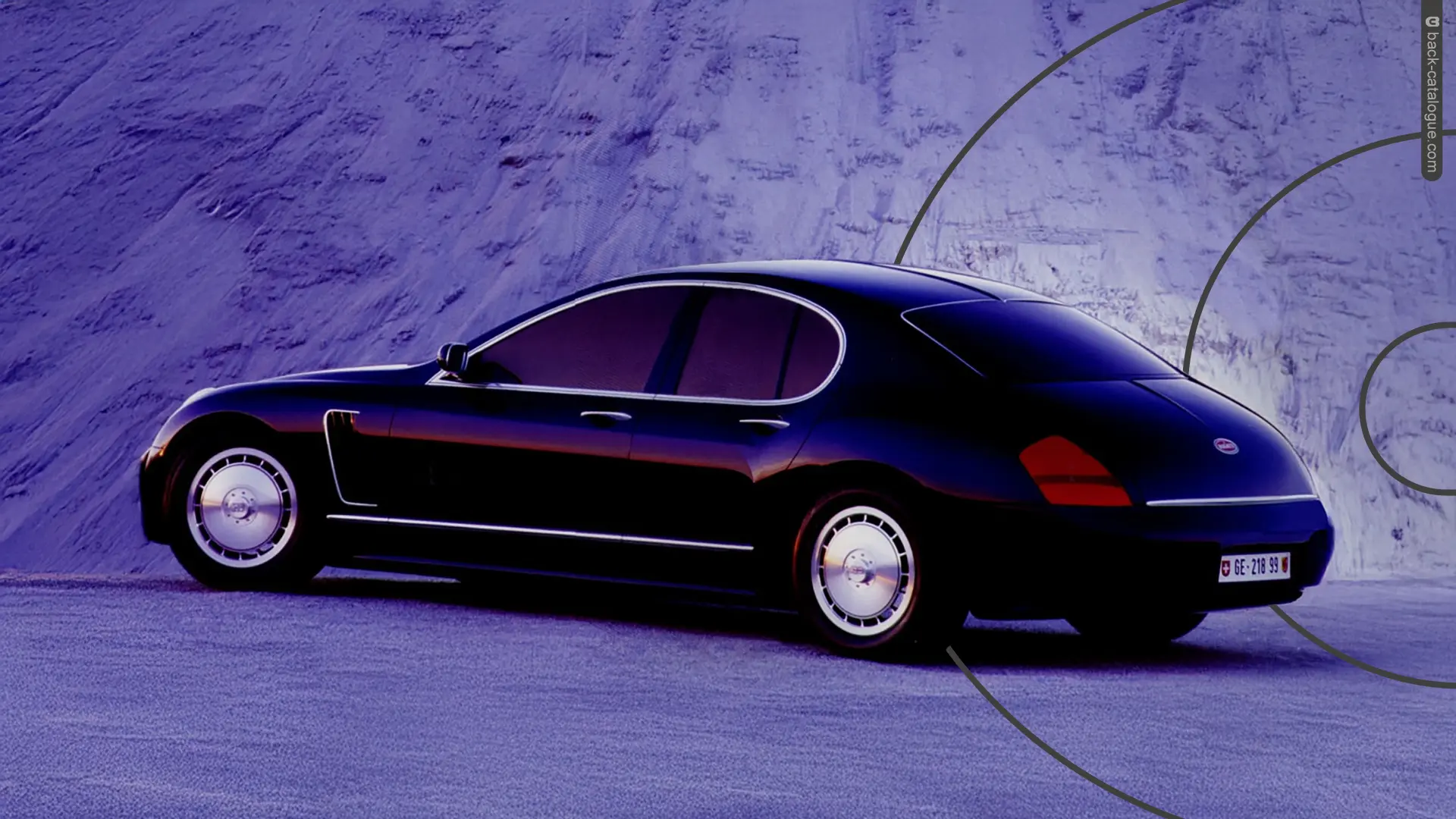
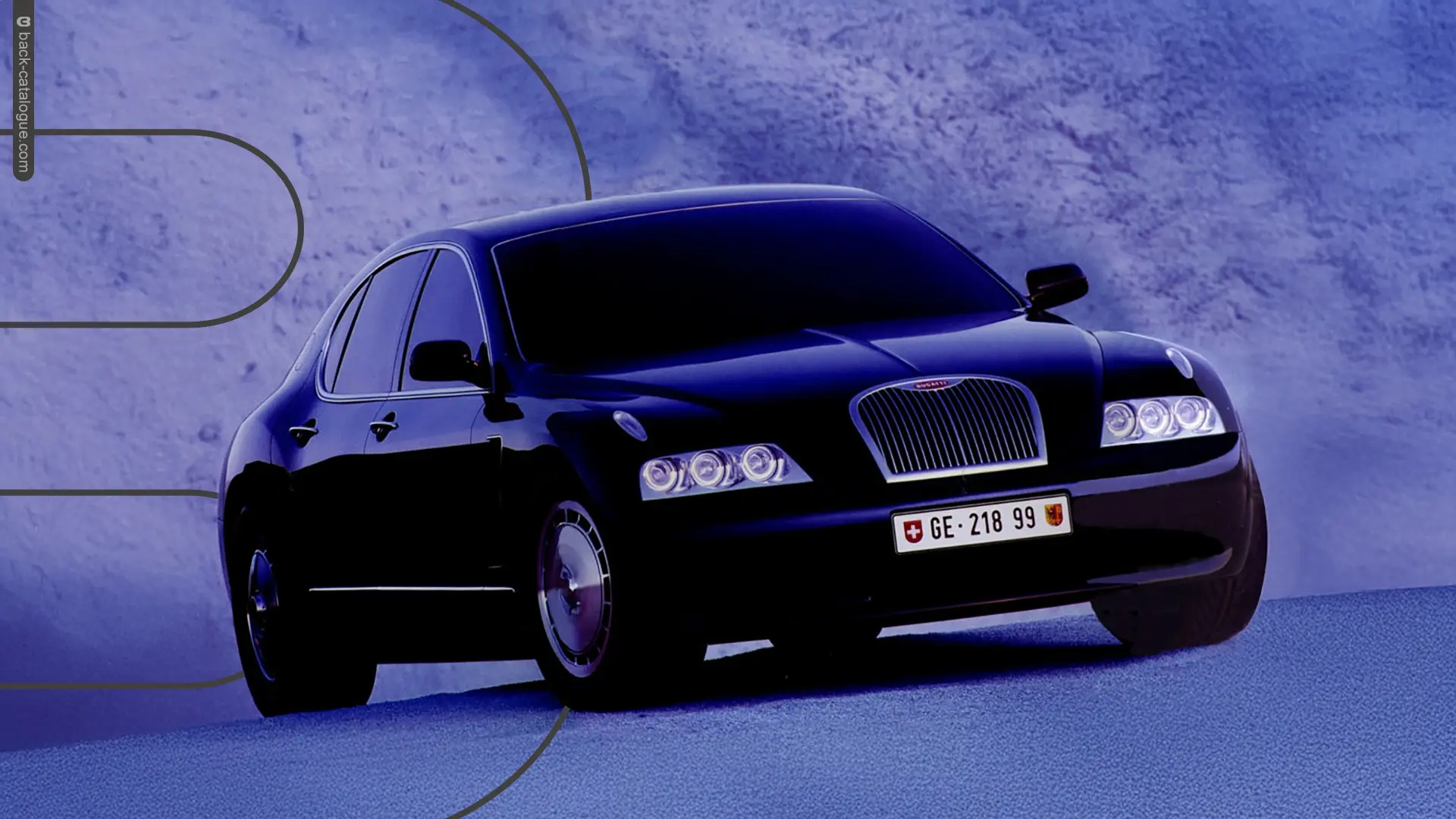
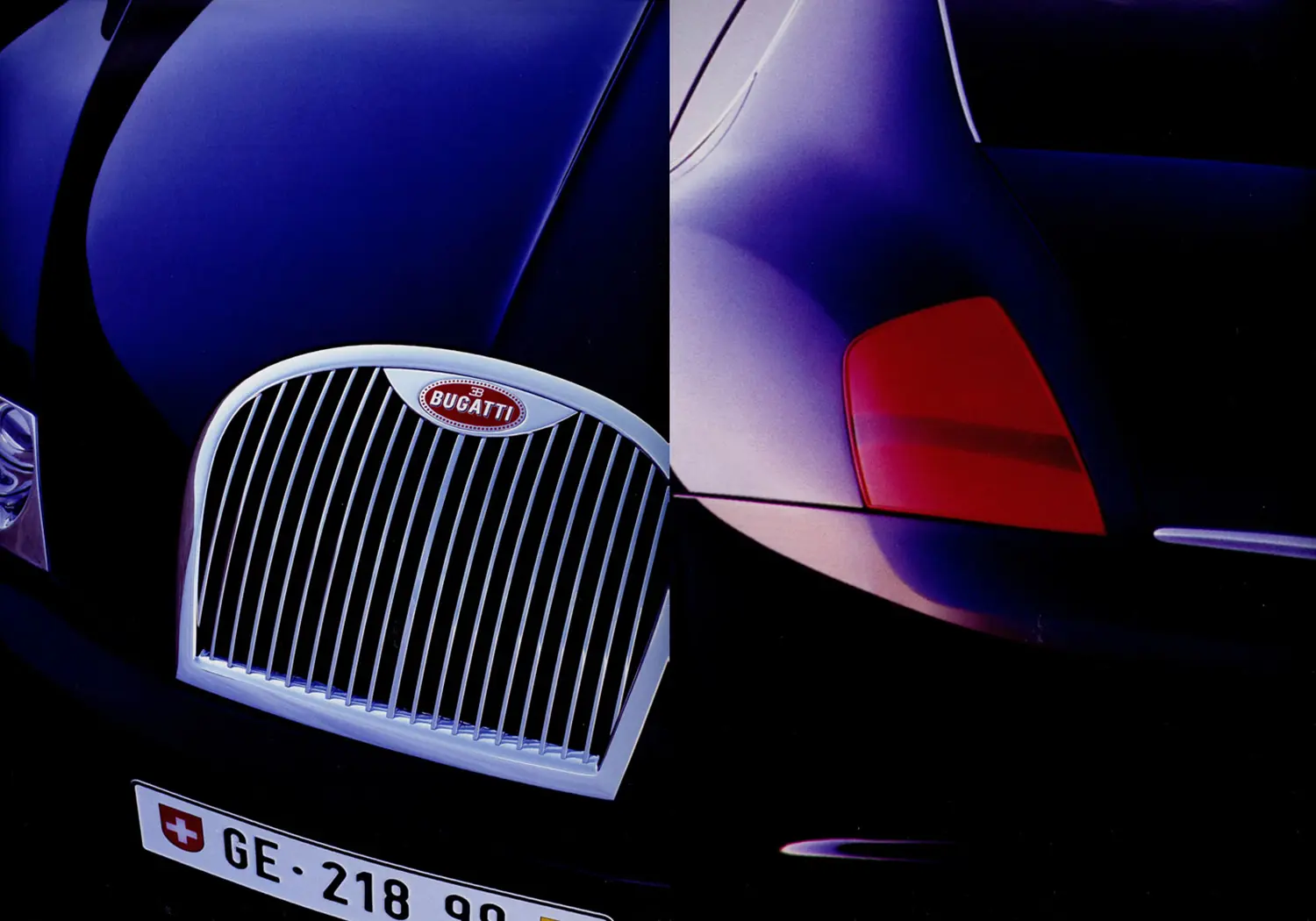
The new Type EB 218, presented here for the first time, embraces these virtues of the past and develops them further in a modern interpretation.
This four-door sedan was conceived on the basis of the EB 116 Coupé of 1998 by Italdesign, under the direction of Giorgetto Giugiaro.
The elegant bodywork rests on an aluminum space-frame structure. Its form, with its characteristic elements, recalls the Bugattis of the 1930s — the Type 50 “Profilée,” the Type 57S “Tank” that won Le Mans in 1937, and the Type 57 “Atlantic.”
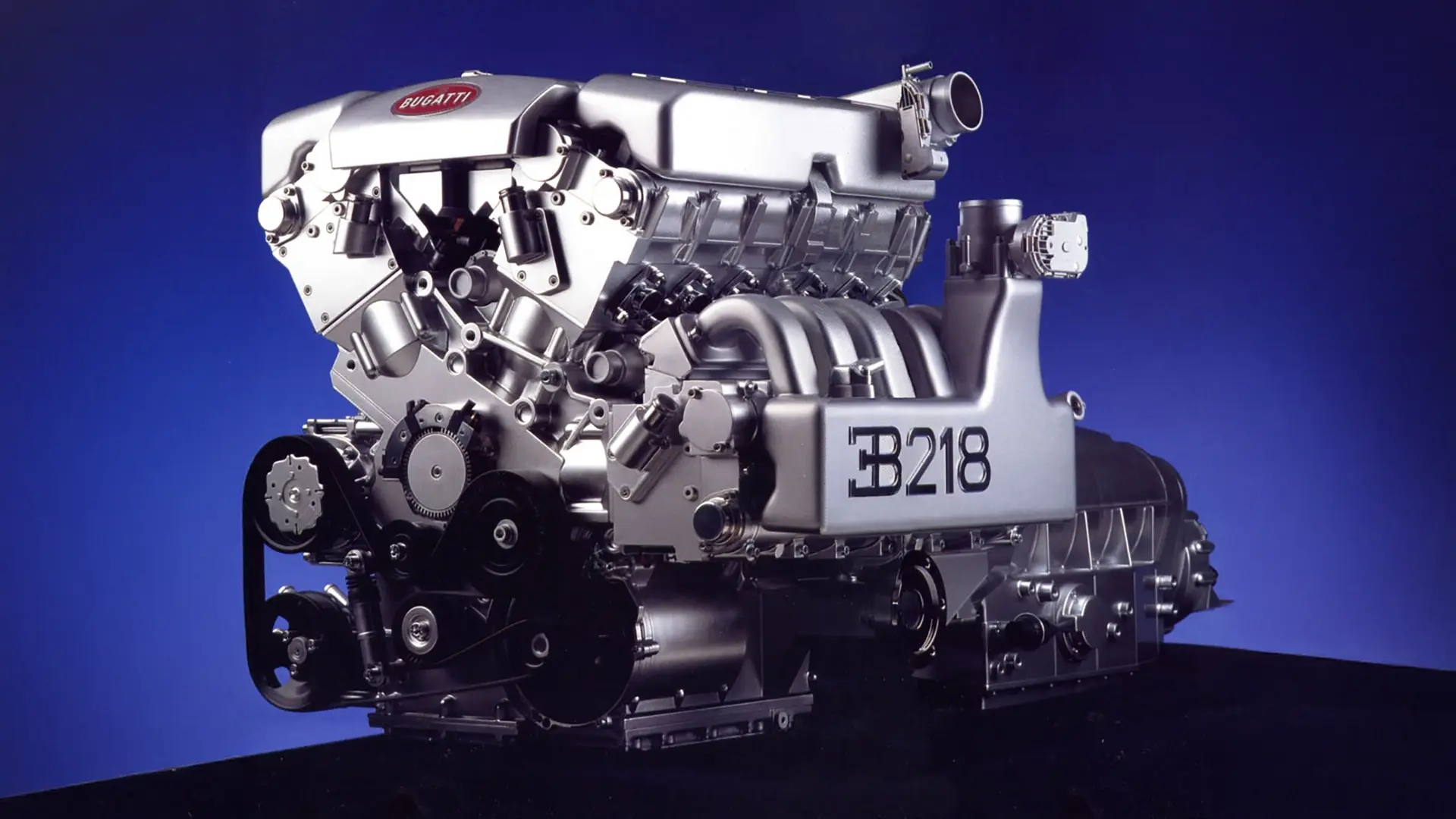
The first 18-cylinder engine in automotive history with direct petrol injection impresses with the effortless way it delivers its enormous power. The three banks of six cylinders are arranged in a W configuration, resulting in an extraordinarily compact engine with remarkable smoothness. Each bank of six cylinders is itself perfectly balanced. The 18 forged connecting rods share a common crank pin for each group of three cylinders. Power is transmitted via a front gear drive positioned at the center of the crankshaft.
Direct fuel injection into the combustion chamber ensures extremely efficient combustion. The 6.3-liter engine develops 406 kW (555 hp) at 6,800 rpm, while 650 Nm of torque delivers phenomenal acceleration and flexibility. Thanks to all-wheel drive and an aluminum chassis with a four-link axle, both driving precision and comfort reach a level that is difficult to match.
The result: an object of passion and fascination.