At the World Exhibition in Montreal, held to celebrate the 100th anniversary of the Canadian Confederation, all nations of the world took part, presenting the best of their achievements in culture, science, and technology.
One section, titled “Man the Producer,” was dedicated to new industrial achievements — products that represent our age and provide a glimpse of the direction of future technological progress. Among all the automobile manufacturers in the world, only Alfa Romeo was invited to give tangible expression to “the highest goal of mankind in the field of automobile construction.”
Working in collaboration with Nuccio Bertone, Alfa Romeo pursued an idea that lay between series production and the dream car — and found a concrete solution that could be realized in the not-too-distant future.
This idea already contained the seed of a high-class, prestigious sports car. Today, this “highest goal” has become reality — the synthesis of the best that has ever been conceived and created: a completely new way of moving within an automobile.
From the concept created for the “Expo,” Alfa Romeo retained the ultra-modern form and adopted the name that the public had unanimously given the car: Montreal.
Its heart is that of the Tipo 33.
Displacement (cc)
Top speed (km/h)
Acceleration (standing kilometer) (s)
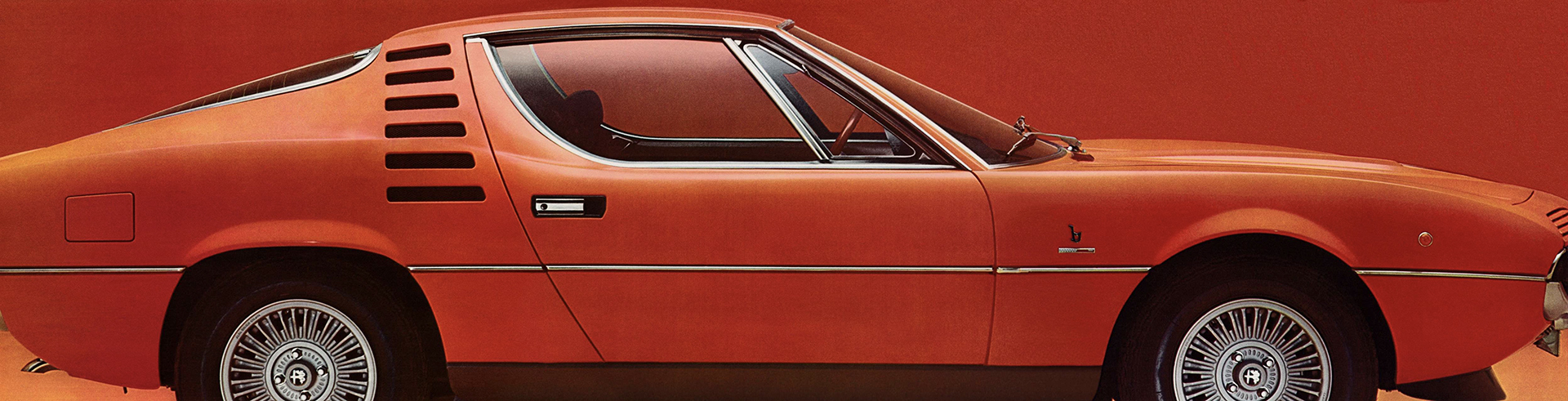
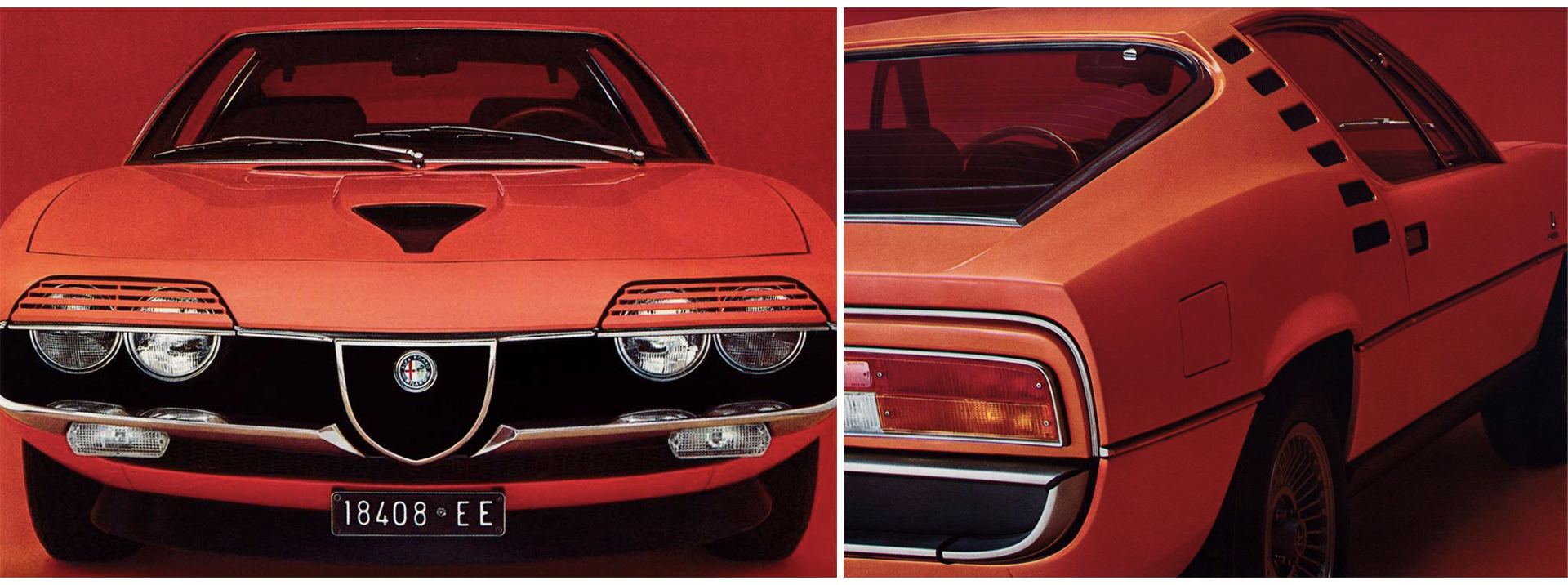
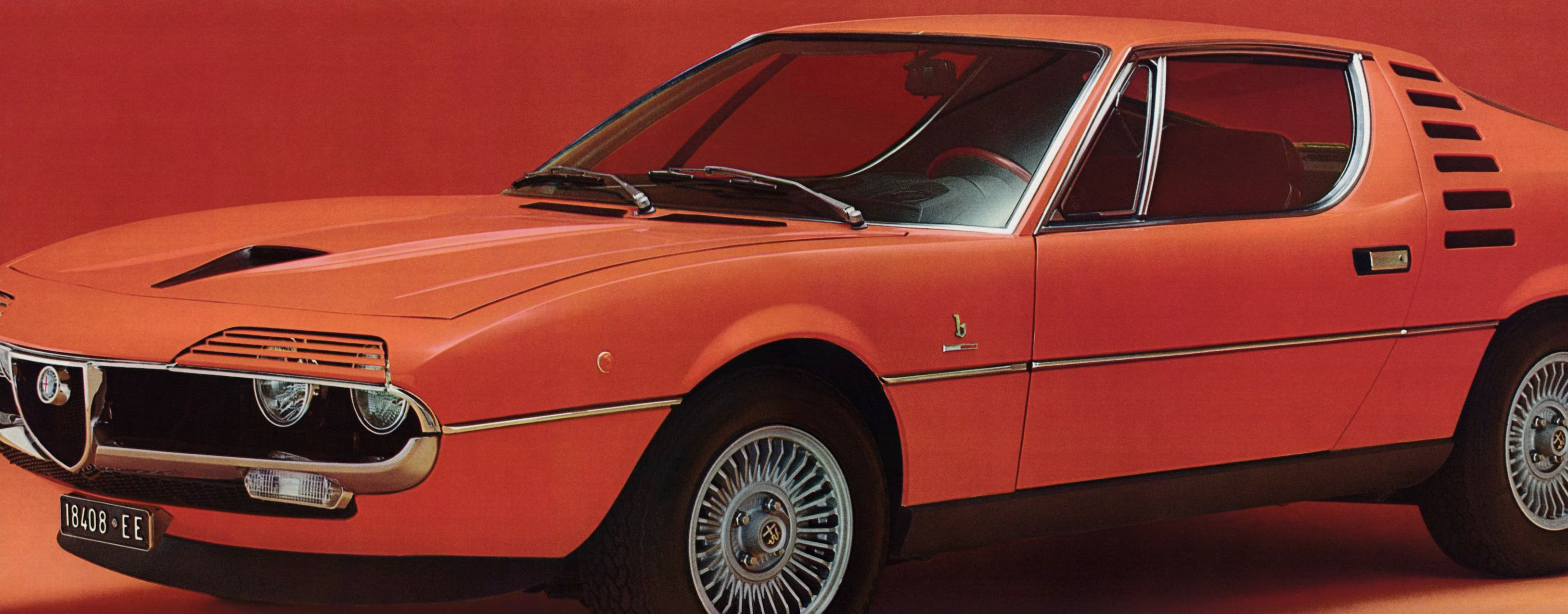
The styling conveys both performance and safety — pure Italian discipline without concessions to fleeting fashion trends, yet so full of emotion that it captured hearts instantly at the Expo.
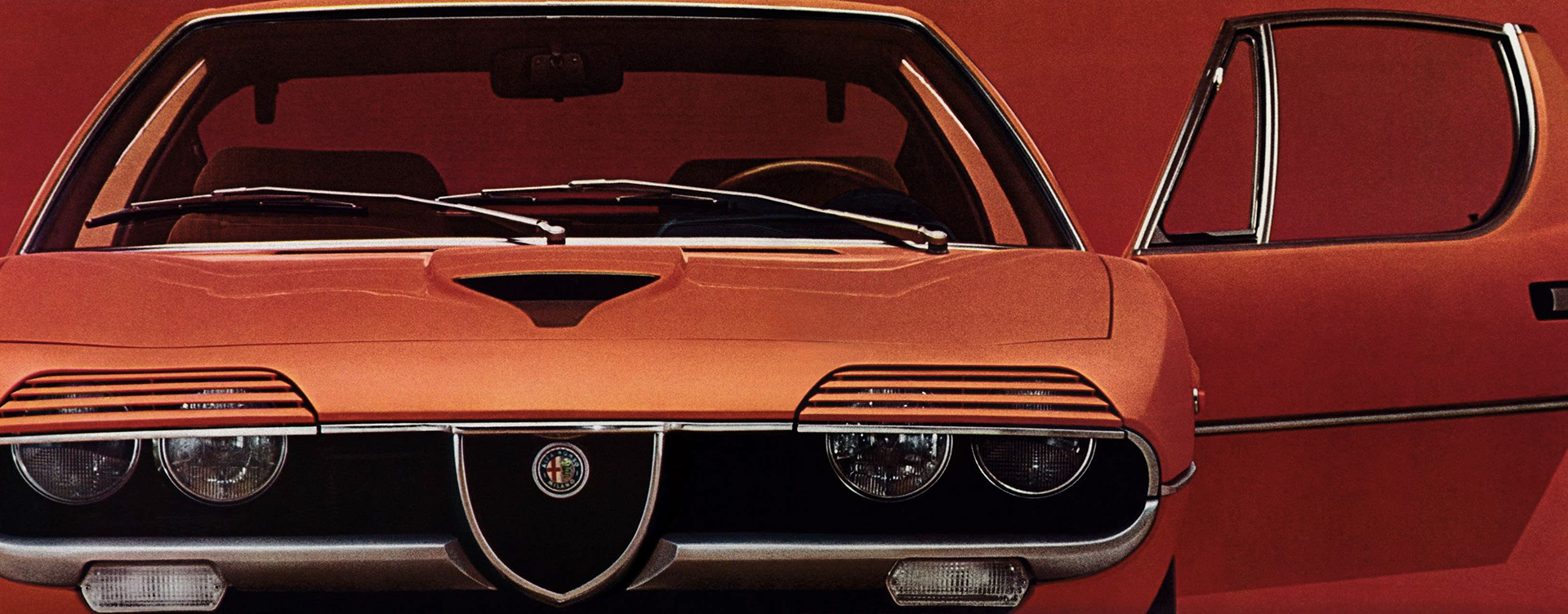
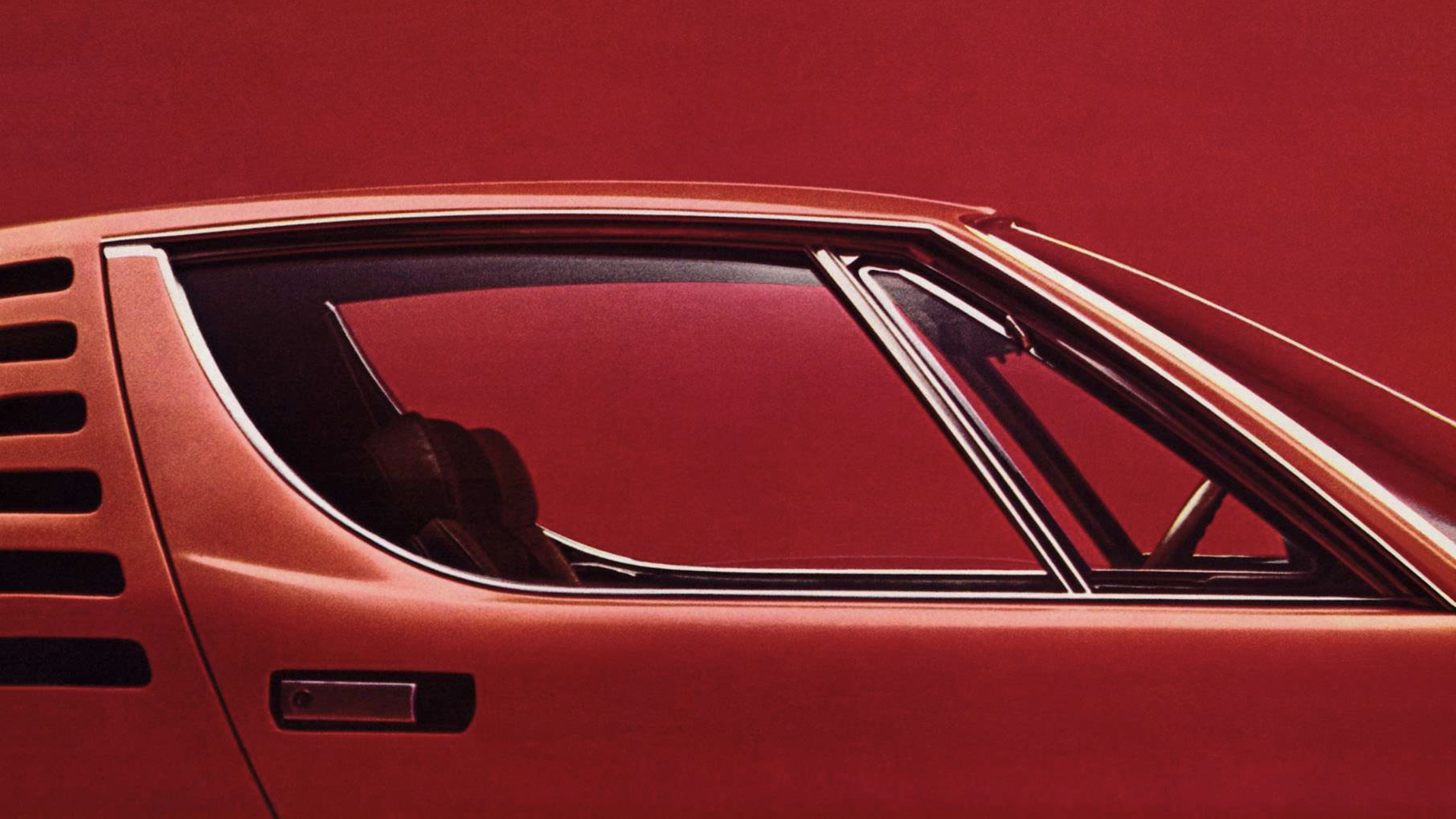
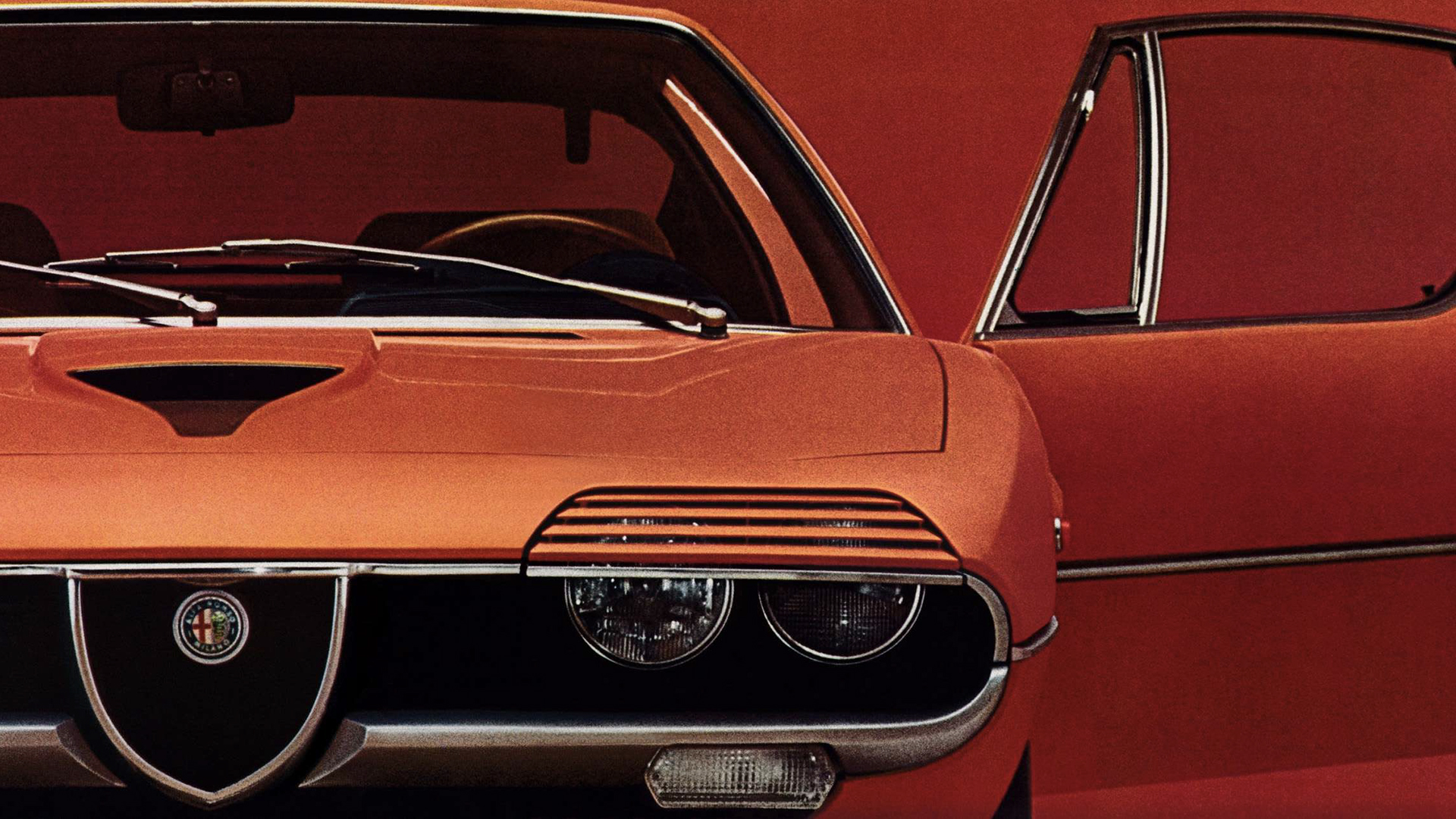
The Montreal features a truncated rear end, and its doors close like great crystal wings over a body sculpted with aerodynamic curves. The low, flowing hood is shaped to accommodate the powerful eight-cylinder engine while maintaining a smooth, harmonious line that sweeps in a broad arc from the grille to the windshield.
Aerodynamics played a decisive role in defining the car’s design — not only to reduce air resistance at high speeds but also to enhance driving comfort through improved stability, elimination of vibrations and wind noise, and excellent cabin ventilation. Large windows and distinctive air vents in the rear roof pillars provide effective airflow through the passenger compartment.
The headlights are an entirely new design: protected by a louver system operated pneumatically by vacuum. This feature offers numerous advantages. Above all, it preserves the uninterrupted flow of the body line, which continues seamlessly across the hood. The headlights remain fixed and precisely aligned; even when the louvers are lowered, they can still be used for flashing during the day. Interestingly, the headlight arrangement — thanks to the louvers — fully complies with the strictest regulations regarding height above the ground.
But it’s not just the headlights; the entire Montreal was conceived in accordance with the highest safety standards. The rear window is held open at any angle by hydraulically operated struts, giving excellent access to the luggage compartment — unusually spacious for such a high-performance coupé. The bumpers are integrated into the bodywork and doubled for maximum protection across a broad surface.
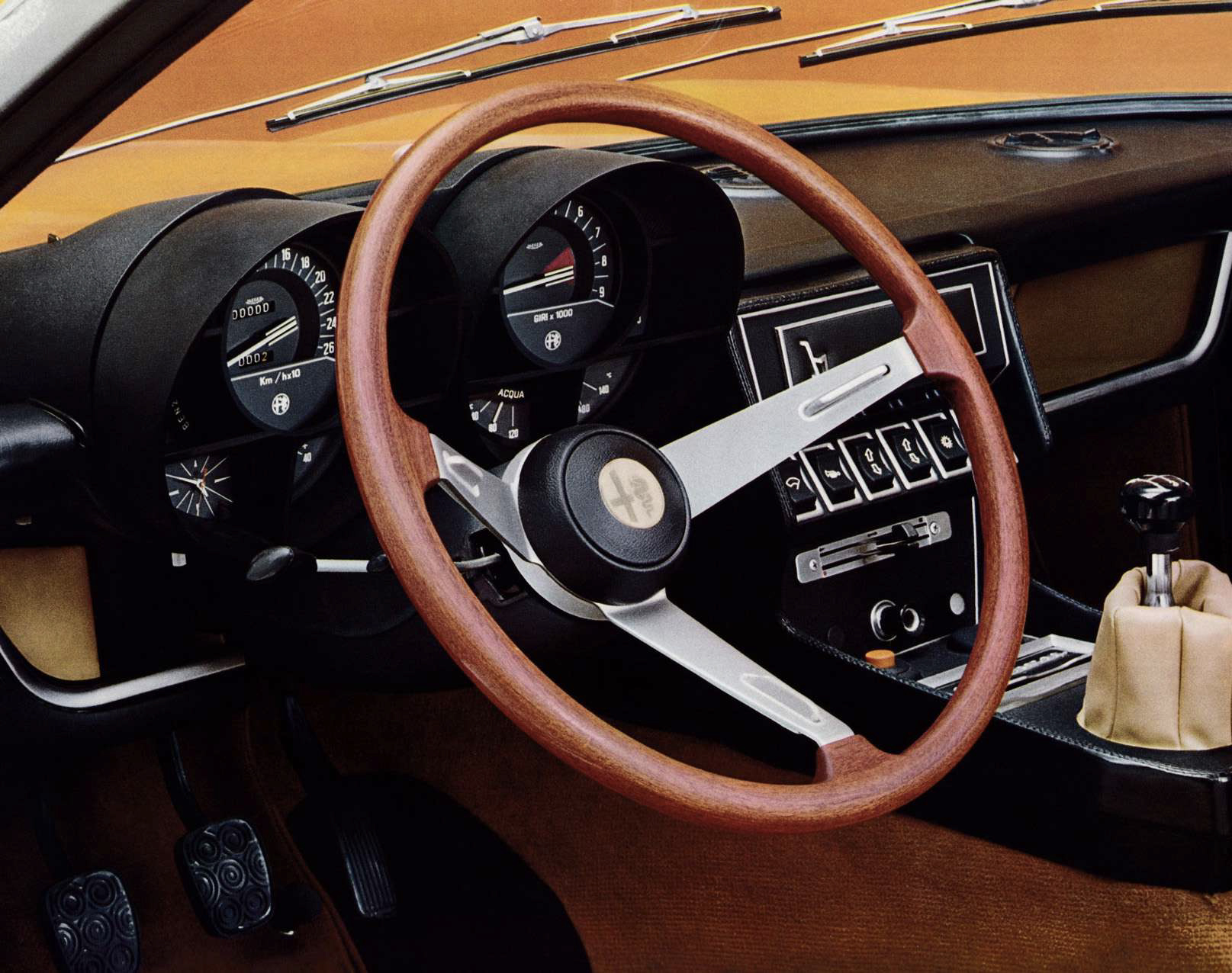
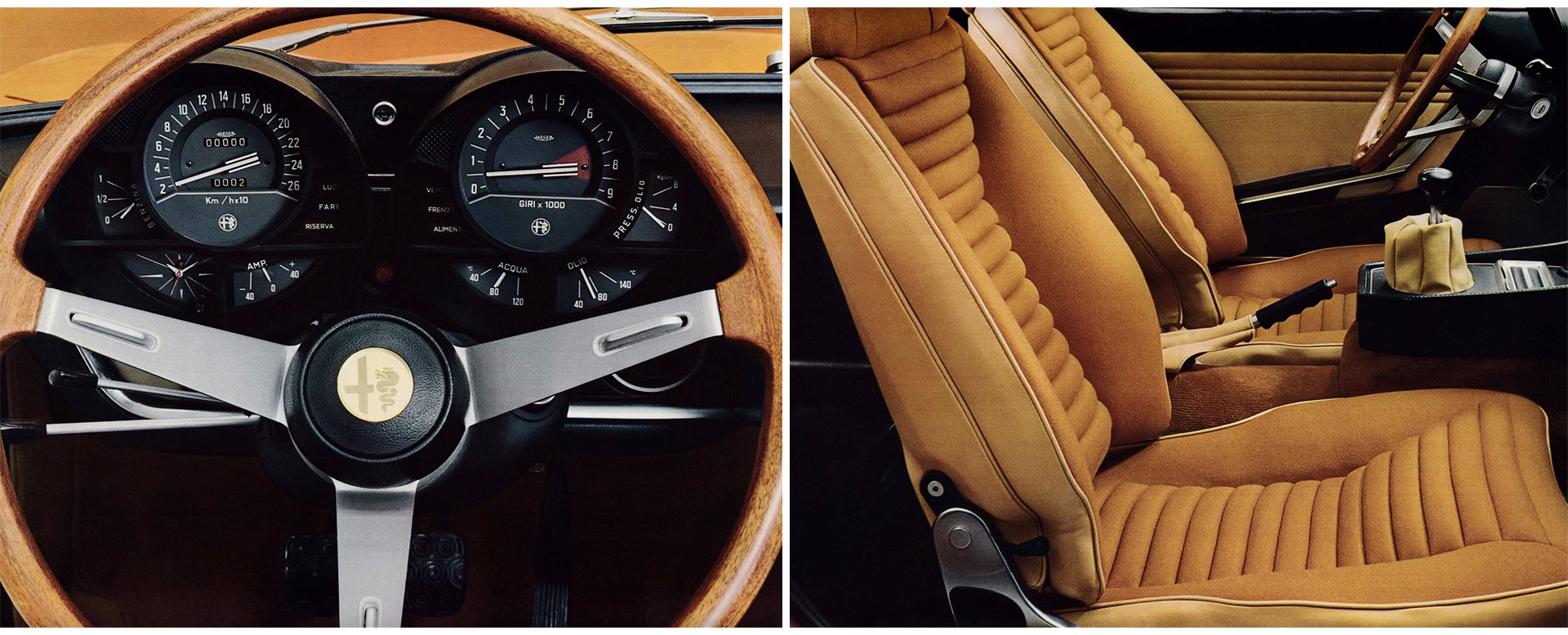
Inside, the Montreal is every bit as sporty as its exterior suggests, yet it offers both aesthetic and practical comfort — essential for driving ease and, therefore, for safety.
The driver’s position has a distinctive character: a true cockpit where everything is within easy reach, even with the seatbelt fastened. The seats are among the most rational and elegant ever designed by Bertone. They envelop the driver, almost wrapping around him thanks to their fabric structure, and are high enough to support the head. They are also deformation-resistant and adjustable in seat angle.
The steering wheel is set at a carefully calculated angle, allowing a sporty yet relaxed driving posture. It is a wooden “tulip” wheel — beautifully styled and tactile.
The instrument panel and dashboard share the same design quality, perfectly matching the car’s overall aesthetic and spirit.
The interior layout is defined primarily by two large, modern round instruments, each subdivided by separating panels that prevent reflections on the windshield—especially noticeable at night.
Embedded deeply within these round dials and directly in the driver’s field of view are all the car’s key indicators: fuel gauge, electric clock, speedometer with trip and total odometers, ammeter, fuel level, high beam, exterior lighting, fan, handbrake, low fuel pressure warning, water temperature, tachometer, oil temperature, oil pressure, turn signal indicators, and brake fluid level warning.
The control switches are grouped partly around the steering wheel and partly on the dashboard next to the driver. Within easy reach are the controls for interior and exterior lighting, windshield wipers (two speeds), horn selector switch (for city or highway use), electric window lifts (optional), and the two-speed ventilation fan.
Eight adjustable air vents are provided for heating, defrosting (including side windows), and air circulation throughout the cabin, along with additional adjustable vents on the rear pillars. The passenger compartment is surrounded by large windows, providing excellent all-around visibility.
To reduce sunlight and heat buildup in summer, tinted and heat-insulating glass is available on request. The vehicle is preconfigured for the installation of an air-conditioning system, with its ducting layout already designed.
A heated rear window is also available as an option, controlled from the driver’s seat. The interior finish has been crafted with the utmost care; thanks to the use of sound-absorbing materials, the cabin remains remarkably quiet.
It is worth noting, however, that the Montreal’s engine retains its distinctive “sound”—a sporty freedom that one would not wish to suppress, and one that only a car among the most beautiful in the world can rightfully express.
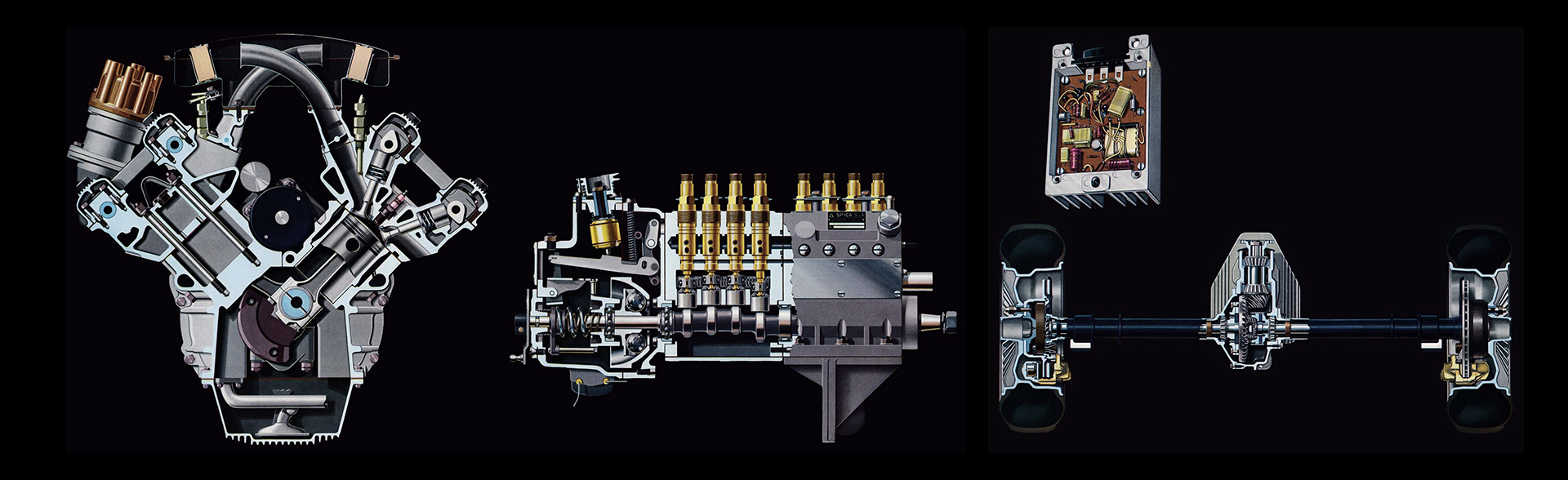
If the Montreal surpasses other cars in any one respect, it is through its engine. It possesses the characteristics typical of a racing car: an eight-cylinder unit with fuel injection, electronic capacitor ignition, and ventilated disc brakes.
Clearly derived from the Tipo 33, its valve control system features valves arranged in a tight V configuration to increase performance, and it omits the traditional oil sump — employing instead a separate, dry-sump lubrication system with its own oil reservoir. This design eliminates the passive resistance caused by the crankshaft striking the oil and, thanks to the engine’s more compact dimensions, also contributes to the car’s aerodynamic efficiency.
Special attention was given to the counterweights on the crankshaft, which allow the use of a competition-grade engine without any loss of comfort.
The 90° crankshaft provides the ideal solution for achieving perfect dynamic balance of the moving masses. To keep the dimensions as compact as possible, the counterweights were made from a particularly valuable material — a sintered tungsten alloy, chosen for its exceptional density and balance characteristics.
A particularly important component is the indirect fuel injection system, type Alfa Romeo–SPICA. This system is extremely reliable and easy to maintain. Its advantages lie in the remarkably low fuel consumption and the ability to use continuous intake pipes extending all the way to the air filter. This design makes the best use of the ram effect, which increases each cylinder’s intake efficiency through the pulsation of the air column — resulting in improved torque and power.
The ignition system is electronic with capacitor discharge, a configuration especially beneficial for an engine that must deliver extremely high performance yet also run smoothly at low output without misfiring or hesitation.
In fact, the Montreal’s ignition system ensures consistent, high-energy discharges even when the car is confined to city traffic or traffic jams — situations in which a large engine would normally suffer from the difference between its maximum potential and the low power actually being produced.
Because of its very high specific weight (17 kg/dm³), this material — a sintered tungsten alloy — had previously been reserved exclusively for aircraft engines. In the Montreal, it is just one example among many space- and weight-saving measures that contribute decisively to its exceptionally favorable power-to-weight ratio: 5.5 kg per SAE horsepower.
The engine is distinctly oversquare (bore x stroke: 80 x 64.5 mm). Two overhead camshafts per bank directly operate the valves, with extensive use of light alloys such as aluminum and magnesium (magnesium being one-third lighter than aluminum by specific weight). It features a spherical combustion chamber with a centrally located spark plug. The engine also stands out for its chain-driven water pump fan and the scavenging pump, which returns oil from the engine to the separate oil reservoir.
The engine’s strength is best expressed by two figures: 200 DIN hp (230 SAE hp) and 24 mkg DIN torque (27.5 kgm SAE). Moreover, 90% of the maximum torque is available from 3,000 to 6,600 rpm.
These numbers explain the car’s top speed of over 220 km/h and its ability to cover a standing kilometer in 28.2 seconds — figures that place it among the very highest in the Super Grand Touring category.
It is also worth emphasizing its “lower” performance — that is, the Montreal’s ability to drive smoothly and effortlessly even in city traffic, a remarkable trait for a car of such power.
One thing is certain: the Montreal is not a racing car — at least not in the sense of requiring special driving skills to control it. In fact, there may never have been a car so powerful yet so easy to handle and command.
Road holding — long a hallmark of Alfa Romeo — is further enhanced here by the compact design of the car, its well-balanced weight distribution between the axles, and the suspension system, which sacrifices nothing in comfort while ranking among the very best for driving stability.
This is also thanks to the classic Alfa Romeo rear-axle design, engineered according to the most modern technical principles. The differential housing is made of a light-alloy material, meaning that — even with the large brakes and tires now standard in sports cars — the difference between unsprung weight and independent suspension is reduced to minimal levels.
At the same time, the rear axle design preserves the engineers’ full confidence in its anchoring system against lateral movement and in the excellent road grip of the modern wide-tread tires, ensuring exceptional stability and handling.
Independent rear suspension is not necessarily the only solution for optimal handling, and Alfa Romeo’s engineers have developed an alternative system that achieves exceptional stability.
Another key safety feature of the Montreal is its limited-slip differential, which improves traction in tight corners or when the drive wheels experience uneven grip — such as on rough surfaces, wet roads, gravel, or ice.
In addition to its light steering, driving pleasure is further enhanced by the car’s five-speed gearbox. It is worth noting that the fifth gear — for many years an Alfa Romeo hallmark — has only recently been adopted by other manufacturers as an “extra” gear, used as an overdrive to save fuel when the engine reaches a sufficient cruising speed on the highway. For the Montreal, as with all Alfa Romeos, the fifth gear is a true driving gear, providing real acceleration reserve. Naturally, it also serves as an economical gear on the open road, but the five-speed layout — rather than four plus overdrive — forms the foundation of both the driving pleasure and the safety that define Alfa Romeo.
As with every Alfa Romeo, braking power is strong and precise — not only under normal conditions but also in the most demanding situations. In the Montreal, one can rely not just on the brake dimensions (total friction surface: 2,742 cm²) but also on the design of its four disc brakes with internal ventilation. This construction ensures that the discs, thanks to their mass and rigidity, cannot warp even under the hardest use. The internal radial vanes — resembling centrifugal pump blades — guarantee extremely effective cooling under high stress.
The servo-assisted disc brakes operate in a dual-circuit system with a brake pressure regulator acting on the rear wheels, completely independent of the handbrake, which acts on separate drums.
While Alfa Romeo’s active safety — and particularly that of the Montreal — is expressed through performance and the means to control it, equal attention has been devoted to passive safety, developed from racing experience and modern engineering.
Notably, the car body features a differentiated structural design — its strength increases toward the center, culminating in a passenger compartment of maximum rigidity, resistant to deformation.
Inside the car, there are no protruding parts; where necessary, everything is effectively padded. The steering wheel has a tulip-shaped design, the steering column is short, and the steering housing is recessed for added safety. The rearview mirror detaches instantly from its mount in the event of an impact.
A particularly effective safety feature is the photo-stable finish of the front cabin area: the dashboard covering, instrument panel, front roof pillars, and sun visors all share the same non-reflective black tone, despite being made from different materials — ensuring glare-free visibility and a unified, safe interior environment.
| Cylinders | 8 in V configuration, 90° |
| Bore | 80mm |
| Stroke | 64.5 mm |
| Displacement | 2593 cc |
| Power output | 200 DIN hp (230 SAE hp) at 6,500 rpm |
| Maximum torque | 24 DIN mkg (27.5 kgm SAE) at 4,750 rpm |
| Electrical system | 12 volts |
| Alternator | 720 watts (three-phase) |
| Tires | 195/70 VR 14 |
| Front track | 1374 mm |
| Rear track | 1340 mm |
| Wheelbase | 2350 mm |
| Overall length | 4220 mm |
| Overall width | 1672 mm |
| Overall height | 1205 mm |
| Kerb weight | 1270 kg |
| Top speed | 220 km/h |
| Acceleration (standing kilometer) | 28.2 seconds |
| Power-to-weight ratio | 5.5 kg per SAE horsepower |
Fuel supply: Injection through short intake manifolds with SPICA injection pump.
Ignition: Electronic capacitor-discharge ignition; Golden Lodge spark plugs mounted in the center of the spherical combustion chambers.
Valve control: Four overhead camshafts with intermediate, oil-bath–mounted cam followers directly operate the V-shaped overhead valves. Sodium-cooled exhaust valves.
Lubrication system: Dry-sump lubrication with separate oil reservoir, feed and scavenging pumps, and oil cooler.
Cooling: Circulating water-cooling system with thermostatically controlled electric fan.
Clutch: Single dry-plate diaphragm clutch with hydraulic actuation.
Transmission: Five forward gears and reverse, centrally mounted floor shift with short lever.
Front suspension: Independent suspension with wishbones, coil springs, and internally mounted hydraulic telescopic shock absorbers. Anti-roll bar.
Rear suspension: Coil springs and internally mounted hydraulic telescopic shock absorbers, with two longitudinal trailing arms and a transverse rod anchored to the platform. Hypoid rear axle drive (ratio 10/41) with limited-slip differential. Anti-roll bar.
Steering: Recirculating ball type.
Brakes: Ventilated disc brakes on all four wheels with a brake pressure regulator acting on the rear wheels. Dual-circuit braking system with vacuum servo. Total braking surface: 2,742 cm².
Handbrake: Independent of the main brake system, acting on separate drums at the rear wheels.